Owner’s manual
 View engine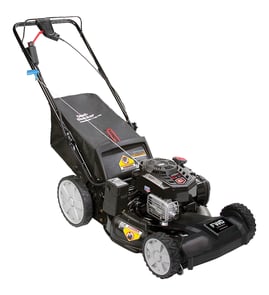



Should I use 87 or 89 gas for lawn mower?
Use 87 octane (regular unleaded) in your Craftsman lawn mower model 917370750. The manual specifies fresh, clean regular unleaded gasoline with a minimum of 87 octane; using 89 does not improve performance for this engine and can add unnecessary cost. See the fuel guidance in the owner's manual.
What to use (and what to avoid)
- Use fresh, clean, regular unleaded gasoline (87 octane minimum).
- Buy only what you can use in about 30 days to keep fuel fresh.
- Do not mix oil with gasoline.
- Avoid alcohol-blended fuel issues during storage; ethanol blends can attract moisture and contribute to fuel system corrosion.
- Do not overfill; fill to the bottom of the filler neck.
Quick comparison: 87 vs 89 for this mower
| Fuel choice | Works in model 917370750? | What you gain | Best use case |
|---|---|---|---|
| 87 octane (regular) | Yes (recommended) | Correct combustion for a standard small engine | Normal mowing and routine use |
| 89 octane (mid-grade) | Yes (but unnecessary) | No added power or protection in this application | Only if 87 is temporarily unavailable |
Why it matters
Using the correct fuel helps your mower start easier, run consistently, and reduces varnish and deposits that can clog the carburetor during storage. Fresh 87 octane regular unleaded matches what the engine is designed to burn.
Helpful fuel and storage tips
- If the mower will sit, empty the fuel system or add stabilizer before storage (per the maintenance schedule).
- Wipe up spilled fuel immediately and store gasoline away from ignition sources.
- If you have hard starting after storage, stale fuel is a top cause; drain and refill with fresh gas.
Last updated: February 2026
What are the common problems with Craftsman lawn mowers?
Common problems on the Craftsman 917370750 walk-behind mower include loss of power, uneven cutting, excessive vibration, a starter rope that’s hard to pull, poor bagging (if equipped), hard pushing, and loss of drive or slow drive speed. Our owner's manual troubleshooting chart lists the most likely causes and fixes.
Most common symptoms and what usually causes them
- Loss of power: dirty air filter, grass buildup under the deck, cutting too much grass at once, oil level too high
- Uneven cut: worn or bent blade, uneven wheel height settings, debris packed under the deck
- Excessive vibration: loose or damaged blade, bent crankshaft, damaged blade adapter
- Starter rope hard to pull: blade dragging in grass, blade adapter issues, brake not releasing correctly
- Hard to push: grass too high, cutting height too low, bag too full, handle height not set comfortably
- Loss of drive / slow drive (self-propelled): worn belt, belt off pulley, worn/broken drive cable, loose drive control system
Quick checks we recommend before replacing parts
- Shut the engine off and disconnect the spark plug wire.
- Tip the mower safely (air filter and carburetor side up) and clean packed grass from under the deck.
- Confirm all wheels are set to the same cutting height.
- Inspect the blade for bends, cracks, or heavy rounding; replace if damaged.
- For self-propelled issues, inspect the belt and drive linkage for slack or obvious wear.
Parts that commonly solve these problems (when worn or damaged)
| Symptom | Part to inspect first | Example part for this model |
|---|---|---|
| Uneven cut or vibration | Blade | Lawn mower blade 532406712 |
| Vibration or hard-to-pull rope | Blade adapter | Lawn mower blade adapter 532421176 |
| Loss of drive / slow drive | Ground drive belt | Lawn mower ground drive belt 580364604 |
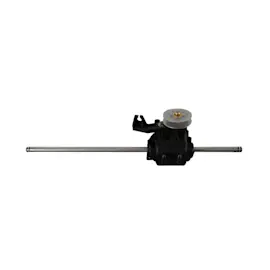
| Drive problems | Transmission | Transmission 532404844 |
Why it matters
These issues usually trace back to basic maintenance (deck cleaning, correct cutting height, blade condition) or normal wear items (blade, blade adapter, belt). Fixing the root cause improves cut quality, reduces vibration, and prevents premature wear on the drive system.
Last updated: February 2026
What year is Craftsman Model 917370750?
Craftsman model 917370750 is identified by its model number, not by a built-in “year” field. For this mower, the most reliable way to confirm the manufacturing date is to use the engine identification information and the model documentation in the owner's manual.
How to date this mower (what works)
Use these checks in order:
- Check the Briggs & Stratton engine model/type/code stamped on the engine shroud or valve cover area; the code is commonly used to determine the build date.
- Confirm you are reading the mower model correctly: the manual lists it as 917.370750 (same model, different punctuation).
- Match parts diagrams to the model to ensure you are working from the correct product family (21-inch, power-propelled rotary mower).
- Use the manual’s parts list and specs pages to verify you have the correct configuration before ordering parts.
What the manual tells us about model 917370750
The owner's manual identifies this unit as a Craftsman rotary mower with a Briggs & Stratton 625 Series engine and a 21-inch multi-cut deck. That confirms the exact product platform, which is what you need when cross-referencing engine date codes and ordering replacement parts.
Quick ID checklist
| Item to verify | Where to look | Why it matters |
|---|---|---|
| Mower model number (917.370750) | Mower housing label, manual cover | Confirms the correct parts breakdown |
| Engine model number | Engine shroud/label | Ties to the correct engine family |
| Engine code/date | Stamped/printed on engine | Used to determine build date |
Why it matters
The “year” mainly affects engine parts and tune-up specs, while the mower model number controls deck, drive, and handle parts. For example, if you are replacing a wear item like the lawn mower blade 532406712, matching the mower model is the key step.
Last updated: February 2026