Owner’s manual
 Error Codes



What's the lifespan of a bottom freezer fridge?
Most bottom freezer refrigerators typically last 15 to 20 years with normal household use and routine maintenance. For your Samsung RFG293HABP, keeping airflow clear, doors sealing well, and temperatures stable helps you reach the high end of that range; see the care and operating guidance in the RFG293HABP owner's manual.
Typical lifespan and what affects it
A bottom-mount (bottom freezer) refrigerator has more fans, sensors, and door seals than simpler designs, so maintenance and usage habits matter.
- Usage patterns: frequent door openings and warm food loads make the unit work harder
- Environment: high humidity and tight cabinet clearances increase run time
- Maintenance: dirty condenser area and blocked vents reduce efficiency
- Water and ice system care: filter changes and good water flow protect the ice maker and valve
- Repair history: repeated cooling or defrost issues can shorten overall service life
What “normal” operation looks like (so you can spot wear early)
Your manual notes that temperatures can rise when doors are opened often or warm food is loaded; the display may blink until temps return to normal. If blinking continues, a simple power reset (unplug about 10 minutes, then plug back in) is a common first step.
| Symptom | Common cause | What to do first |
|---|---|---|
| Fridge/freezer temp display blinking | Door openings or warm food load | Let temps recover; reduce door time |
| Condensation on doors | High humidity or door left ajar | Wipe moisture; confirm doors close fully |
| Ice maker slow/no ice | Water supply not ready or freezer too warm | Confirm water valve open; lower freezer temp |
Maintenance that helps you hit 15 to 20 years
- Keep air vents inside the refrigerator and freezer unobstructed
- Avoid overpacking; leave space for air circulation
- Set stable temps (many Samsung units run best near 38°F fridge and 0°F to 2°F freezer)
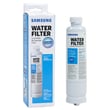
- Replace the water filter on schedule; use the correct part, such as refrigerator water filter DA29-00020B
- If you see recurring puddles or icing, address drainage early (a clogged drain can lead to bigger defrost problems)
Why it matters
A refrigerator that runs longer to maintain temperature wears the compressor, fans, and defrost system faster. Small habits (door sealing, airflow, filter changes) reduce run time and extend the life of key components.
Last updated: February 2026
What are the disadvantages of a bottom freezer?
Bottom-freezer refrigerators like the Samsung RFG293HABP keep fresh food at eye level, but the tradeoffs are more bending for frozen items, heavier drawer lifting, and drawer-related safety and wear issues. They can also be more sensitive to leveling and door alignment, which affects condensation and energy use (see the owner's manual).
Common disadvantages you may notice
- More bending and lifting: you access frozen food from a low, deep drawer.
- Harder freezer organization: stacked items in deep bins can be easy to lose.
- Heavier drawer loads: large bags, meat, and bulk items can make the drawer feel “stiff” or hard to glide.
- Kid safety concerns: heavy drawers and doors can pinch or tip; Samsung’s safety guidance warns against children climbing or hanging on doors and drawers.
- More door and drawer alignment sensitivity: if the unit is not level, doors may not seal evenly, which can increase condensation and energy bills.
What matters most for day-to-day use
Bottom-freezer designs work best when you use the refrigerator section more than the freezer. If you access the freezer many times a day, the repeated bending and pulling can be the biggest downside.
Quick comparison
| Feature | Bottom freezer | Top freezer |
|---|---|---|
| Fresh food access | Easier (eye level) | More bending |
| Freezer access | More bending | Easier |
| Freezer organization | Deep drawer, can stack | Shelves, easier to see |
| Typical “feel” when loaded | Heavier pull | Lighter door swing |
Tips to reduce the downsides on RFG293HABP
- Keep heaviest items (bulk meat, frozen juice) in the lower basket to reduce strain.
- Leave air space around vents; blocked airflow can cause temperature swings.
- Level the refrigerator so doors seal evenly; uneven doors can lead to moisture and higher energy use.
- Open and close doors smoothly; this helps the auto-close system work properly.
- If you have ice maker issues after a water hookup, allow the recommended wait time before expecting ice.
Why it matters
Most “bottom freezer problems” customers report are really usability and sealing issues: drawer weight, organization, and door alignment. Keeping the unit level and the drawer properly loaded helps prevent condensation, poor cooling, and unnecessary wear.
Last updated: February 2026
What is the most common problem with Samsung refrigerators?
The most common problems we see on Samsung refrigerators like model RFG293HABP are cooling issues (warm fresh food section or freezer), often tied to airflow restrictions from frost buildup, a weak evaporator fan, or a defrost/drain problem. Use the owner's manual for model-specific operating checks.
Most common symptoms and what they usually point to
- Fridge warm, freezer OK: restricted airflow, frost on evaporator cover, or a weak evaporator fan motor
- Freezer warm, fridge warm: condenser airflow problem, sealed system/compressor protection issue, or control problem
- Loud humming or grinding: evaporator fan hitting ice, or a failing fan motor
- Ice buildup on back wall: defrost heater or sensor issue, or a drain that is freezing/clogging
- Water under crisper or on floor: drain tube/drain path issue
Quick checks we recommend before replacing parts
- Confirm doors close fully (this model has an auto-close feature); a slightly open door can drive frost and temperature swings.
- Set temps to typical targets: 37°F fresh food and 0°F freezer; wait 24 hours for stabilization.
- Look for heavy frost behind the rear freezer panel; that usually means a defrost or airflow problem.
- Clean dust from condenser area and make sure vents are not blocked by food packages.
- If ice maker performance is the complaint, verify water supply is on and the filter is not overdue.
Parts that commonly solve these problems on RFG293HABP
If symptoms match, these model-compatible parts are common fixes:
| Symptom | Common cause | Example part for this model |
|---|---|---|
| Frost buildup, warming, fan noise | Defrost system not clearing ice | Refrigerator defrost heater DA47-00244W |
| Warm temps, inconsistent readings | Bad temperature feedback | Refrigerator temperature sensor DA32-10104N |
| Water leaks or frozen drain | Drain path not clearing | Refrigerator drain tube DA97-04049D |
| Noisy or weak airflow | Evaporator fan not moving air | Refrigerator evaporator fan motor DA31-00146H |
| Ice maker issues, slow water flow | Restricted filter | Refrigerator water filter DA29-00020B |
Why it matters
Cooling and ice maker complaints often share the same root cause: airflow and temperature control. When frost blocks the evaporator area, the fan cannot circulate cold air, temperatures rise, and the ice maker can slow down or stop.
Helpful DIY guidance
- For ice maker-specific troubleshooting, use why your Samsung fridge stopped making ice and how to fix it.
- For filter selection, replacement, and best practices, use how to replace the water filter in a Samsung refrigerator.
Last updated: February 2026