Installation guide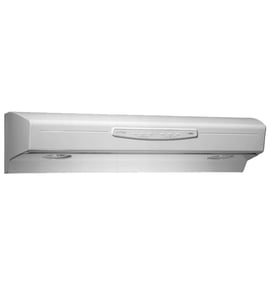



Does GE make range hoods?
Yes. GE makes range hoods, including the GE Monogram 36-inch island vent hood design used for model ZV850SB1SS. GE range hoods are built to vent smoke, steam, grease, and cooking odors through ductwork (ideally to the outdoors) for a cleaner kitchen.
What this means for your ZV850SB1SS
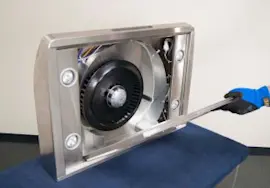
GE supports this model with installation requirements and service guidance, including key safety items like proper grounding and using metal ductwork. For model-specific installation details, use the ZV850SB1SS installation guide.
Common GE range hood features you will see
- Multiple fan speeds for different cooking loads
- Built-in lighting over the cooktop
- Grease filtration to help protect the blower and ductwork
- Ducted venting to the outdoors (recommended)
- Serviceable components such as lamps, filters, and motors
Parts you can replace on this GE hood
If your hood is noisy, not moving air, or the lights are out, these are common service items for the ZV850SB1SS:
| Symptom | Common part to check | Example part for this model |
|---|---|---|
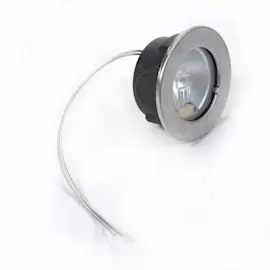
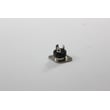
| Lights out or flicker | Bulb or socket | Lamp bulb WB25X37025, range hood light socket ceramic base WB02X10400 |
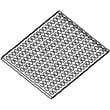
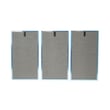
| Weak airflow | Filters, ducting restrictions | Range hood grease filter WB02X11491 |
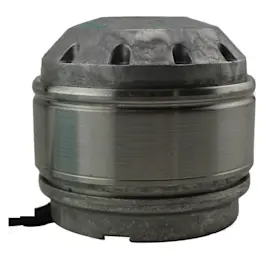
| Fan not running or noisy | Blower motor | Range hood blower motor WB26X10158 |
Why it matters
A properly vented GE range hood helps control moisture and grease buildup, improves indoor air quality, and reduces lingering odors. Following the correct installation and ducting guidance also helps the hood perform at its rated airflow.
Last updated: February 2026
How to change the light in a GE range hood?
On the GE ZV850SB1SS range hood, changing the light typically means removing the light lens or cover, swapping the bulb, then reinstalling the cover. Always shut off power at the breaker before you touch the bulb, socket, or wiring.
Safe steps to change the hood light
- Turn power off at the service panel (breaker) before servicing the hood.
- Let the bulb cool completely; halogen-style bulbs get extremely hot.
- Remove the light lens, trim ring, or cover (most styles either twist-lock or release with a small screw).
- Pull the old bulb straight out or twist it a quarter-turn (depends on bulb base style).
- Install the new bulb without touching the glass (use a clean glove or tissue).
- Reinstall the lens/cover, restore power, and test the light.
If the new bulb still does not light
These checks help you decide whether you have a bulb issue, a socket issue, or a power/control issue.
- Confirm the hood has power (fan or other lights work).
- Reseat the bulb firmly; many “bad bulb” symptoms are a loose connection.
- Inspect the socket for heat damage, corrosion, or looseness.
- If the socket is damaged, replace the range hood light socket ceramic base WB02X10400.
- If multiple lights are out or lights act erratically, a control component such as the range hood transformer WB17X10002 can be involved.
Quick comparison: bulb vs. socket problem
| Symptom | Most likely cause | What we replace first |
|---|---|---|
| One light out, others OK | Bulb | Bulb (match the original type) |
| Bulb looks fine but flickers | Loose bulb or worn socket | Socket |
| Socket is scorched or brittle | Overheating at contacts | Socket |
| No lights and fan also dead | Power supply issue | Check breaker and wiring first |
Why it matters
A loose bulb or heat-damaged socket can overheat and cause intermittent lighting. Replacing a worn socket and using the correct bulb type helps the GE hood run cooler and more reliably.
For model-specific access points and any trim removal details, follow the ZV850SB1SS installation guide.
Last updated: February 2026
Why is the fan not working on my GE stove?
On the GE ZV850SB1SS range hood, a “fan not working” problem is usually caused by a power supply issue, a failed blower motor, or a control component (switch/control, triac, or transformer) not sending power to the motor. We recommend confirming power first, then checking the blower wheel and motor.
Quick checks (most common fixes)
- Turn off power at the breaker, then restore it (this rules out a tripped circuit).
- Verify the hood has power (lights working can be a clue, but not a guarantee).
- Check that the blower wheel spins freely by hand (with power off); grease buildup can bind it.
- Clean the grease filter and confirm it is seated correctly; heavy restriction can make the fan seem weak.
- If the motor hums but will not start, the blower motor bearings can be worn or the motor can be failing.
Parts that commonly cause “fan not working” on this model
If power is present and the fan still will not run, these parts are the usual suspects for the ZV850SB1SS:
| Symptom | Most likely part | What it affects |
|---|---|---|
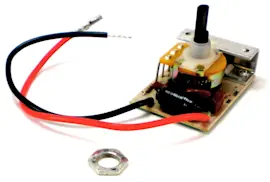
| No fan at any speed, motor gets no power | Control component (triac) | Sends power to the motor |
| Motor gets power but will not run or is hard to turn | Blower motor | Spins the blower wheel |
| Lights work but fan is dead or intermittent | Transformer or control circuit | Supplies/conditions power for controls |
Helpful model-matched parts:
Installation and safety notes that matter
The installation instructions for this hood call out key safety and performance items that can affect fan operation and airflow:
- Switch power off at the service panel before servicing or cleaning.
- Use metal ductwork and vent outdoors (do not vent into walls, ceilings, attics, crawl spaces, or garages).
- Do not use an external solid-state speed control device; it can damage the hood’s wiring and controls.
For wiring, grounding, and ducting requirements, follow the installation guide.
Why it matters
A non-working fan is not just an inconvenience; it reduces smoke and grease capture and can lead to heavier grease buildup inside the canopy and filters, which then makes future airflow and motor problems more likely.
Last updated: February 2026