Owner’s manual
 Error Codes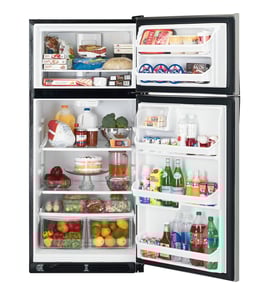

How to tell cubic feet of Kenmore refrigerator by model number?
For Kenmore model 25371132101, the model number by itself usually does not state the exact cubic-foot capacity; the most reliable way is to look up the capacity in the specifications section of the 25371132101 owner's manual or estimate it by measuring the usable interior space.
Fast ways to find the cubic feet
1) Check the manual specs (best option)
The owner’s guide for this refrigerator is written for your specific model and is the right place to confirm the official capacity and other specs. Use the 25371132101 owner's manual and look for sections labeled Specifications, Product data, or similar.
2) Estimate cubic feet by measuring (good for a quick approximation)
If you want a practical estimate, measure the usable interior space (not the outside cabinet).
- Empty the compartment you are measuring (fresh food and freezer can be estimated separately)
- Measure width x depth x height in inches (usable space only)
- Multiply the three numbers to get cubic inches
- Divide by 1,728 to convert cubic inches to cubic feet
- Subtract a little for shelves, bins, and air channels if you measured “wall to wall”
Example calculation
| Measurement | Inches | Notes |
|---|---|---|
| Width | 28 | Inside wall to inside wall |
| Depth | 18 | Front edge to back wall (usable) |
| Height | 40 | Floor to ceiling (usable) |
| Estimated capacity | 11.7 cu ft | (28 x 18 x 40) / 1,728 |
What the model number can and cannot tell you
Kenmore model numbers help identify the product family and parts system, but they are not a dependable “capacity code.” For the 253 prefix, the digits are mainly used for identification, not a published cubic-foot value.
Why it matters
Cubic feet helps you compare refrigerators, choose replacement shelves and bins, and understand expected cooling load. It also helps when you are matching accessories and storage layouts to your Kenmore top-mount refrigerator.
Last updated: January 2026
What is the upper part of a fridge called?
On the Kenmore 25371132101 top-mount refrigerator, the upper section is the freezer compartment. It’s the insulated area designed to keep foods frozen, and on some models it also houses the automatic ice maker and its related components.
What you’ll find in the upper (freezer) compartment
Common items and functions in the freezer section include:
- Freezer shelves or bins for frozen food storage
- Air vents that circulate cold air between freezer and fresh-food sections
- Defrost system components (heater, thermostat, timer/control)
- Ice maker components if your refrigerator is equipped with one
- Temperature control features that help maintain freezing temperatures
Quick terminology guide
| What people call it | Correct name | What it does |
|---|---|---|
| Upper part of the fridge | Freezer compartment | Freezes food and helps cool the refrigerator section |
| Main food section | Refrigerator compartment | Keeps fresh foods cold (not frozen) |
| Bottom front grille | Toe grille | Allows airflow for efficient operation |
Why it matters
Knowing the correct name helps when you’re looking up parts, reading troubleshooting steps, or following maintenance instructions. For example, the manual notes that a red glow in freezer vents during the automatic defrost cycle is normal, and it also describes ice maker-related sounds if your unit has one.
Where to confirm features for your exact unit
Because some features vary by configuration (like an automatic ice maker), we recommend checking the feature and component descriptions in the 25371132101 owner's manual.
Last updated: January 2026
What is the average lifespan of 25371132101?
The average lifespan of the Kenmore 25371132101 top-mount refrigerator is about 13 years with normal household use and basic maintenance (cleaning coils, keeping door seals tight, and maintaining proper airflow). For model-specific care steps, use the owner's manual.
What affects lifespan the most
A top-mount refrigerator usually lasts longest when the sealed system and airflow components stay clean and unobstructed.
- Keep condenser coils and the condenser fan area clean to reduce compressor run time
- Make sure doors close and seal fully; warm air leaks create excess frost and longer run times
- Maintain proper cabinet clearance for ventilation
- Avoid frequent temperature changes and overpacking (blocks airflow)
- Replace failed wear items promptly (light bulbs, door bins, gaskets)
Typical lifespan by component (what usually fails first)
These are common service-life patterns for top-mount refrigerators; they help you decide what is worth repairing.
| Component | Typical role | Common symptom when failing |
|---|---|---|
| Door gasket | Keeps warm air out | Frost buildup, sweating, warm temps |
| Evaporator fan blade | Circulates cold air | Warm fridge, noisy freezer |
| Defrost parts | Prevents ice buildup | Heavy frost, poor cooling |
| Compressor (sealed system) | Creates cooling | No cooling, clicking, long run times |
If you’re chasing a door-seal issue on this model, the parts list includes a refrigerator gasket 242193213.
Why it matters
Knowing the expected lifespan helps us weigh repair cost versus benefit. A 25371132101 that is cooling well and has good door seals often delivers many more years; a unit with sealed-system problems usually requires a higher-cost repair.
Last updated: March 2026