Owner’s manual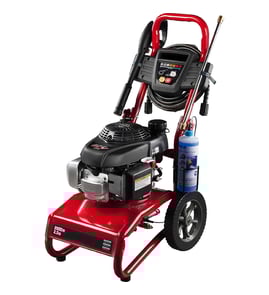



How many gpm is a 3000 PSI pressure washer?
For the Craftsman pressure washer model 580754882, the rated flow at 3000 PSI is 2.4 GPM (gallons per minute). Many pressure washers also list a higher GPM at a lower PSI, so always match the rating to the pressure you plan to use.
On this Craftsman gas pressure washer, the manual lists multiple performance points:
- 3000 PSI max at 2.4 GPM
- 2500 PSI at up to 2.7 GPM
- Different spray patterns/nozzles can change the effective cleaning force at the surface
For the exact published specs and operating guidance, use the 580754882 operator’s manual.
| Rated pressure | Rated flow | What you’ll notice |
|---|---|---|
| 3000 PSI | 2.4 GPM | Stronger impact, slower rinsing volume |
| 2500 PSI | up to 2.7 GPM | Slightly less impact, faster rinsing volume |
PSI is the “punch”; GPM is the “rinse power.” In real cleaning time, higher GPM usually removes loosened dirt faster because it carries debris away more quickly.
- Use a fully open garden hose supply and a clean inlet screen/filter.
- Keep the spray tip a safe distance from surfaces; getting too close can cause damage.
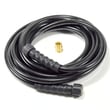
- Avoid long, restrictive hoses unless you need reach; if you do, use a proper pressure washer hose such as the pressure washer extension hose, 25-ft 6189.
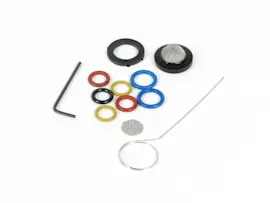
- Check for leaks at fittings and replace worn seals; the Craftsman kit-o-ring 706619 is commonly used for sealing points.
- If pressure surges or drops, inspect pump connections and mounting; loose hardware can contribute to vibration and leaks.
Last updated: January 2026
Is it worth repairing a pressure washer?
Yes, it’s worth repairing a Craftsman pressure washer model 580754882 when the problem is a wear item (like a leaking O-ring or loose hardware) and the total repair cost stays well below the price of a comparable new gas unit; major pump damage usually shifts the value toward replacement.
- Repair if the washer starts and runs well, but has a leak, vibration, or a simple connection issue.
- Repair if the fix is a seal or O-ring replacement (the manual specifically advises replacing O-rings or seals, not using sealant).
- Replace if the pump is severely damaged or performance is consistently poor after basic maintenance.
- Replace if the unit has repeated failures across multiple systems (pump, engine, hose, gun).
- Repair if you can complete the work safely (spark plug wire disconnected before repairs).
| Situation | Usually makes sense | Why |
|---|---|---|
| Small leak at a fitting | Repair | Often an O-ring/seal issue; low parts cost |
| Loose pump mounting or vibration | Repair | Hardware is serviceable and straightforward |
| High-pressure hose damage | Replace the hose (not repair) | Safety risk; hoses are not repair items |
| Pump failure (no pressure, internal damage) | Replace washer or pump assembly (if available) | Pump repairs can exceed the unit’s value |
The 580754882 manual calls out a few items that should be replaced rather than repaired because of injury risk.
- Never repair a high-pressure hose; replace it.
- Never use sealant on leaking connections; replace the O-ring or seal.
- Always relieve trapped pressure at the spray gun before stopping work.
- Before adjusting or repairing, disconnect the spark plug wire and keep it away from the plug.
Reference: 580754882 owner’s manual
If the issue is mounting, leaks at connections, or general wear, these are the types of parts that often keep a repair economical:
- Craftsman kit-o-ring 706619 for connection leaks
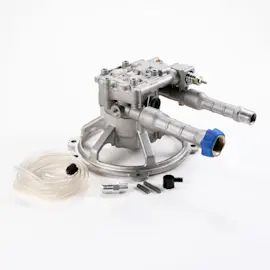
- Pressure washer pump mounting hardware 315139GS for pump mounting issues
- Water inlet screen cleaning and basic engine oil checks (before each use)
A pressure washer can trap high water pressure even after the engine is off; choosing the right repair (replace hose, replace O-ring, correct mounting) protects you and prevents repeat leaks or sudden failures.
Last updated: January 2026
Can I put 93 octane in my pressure washer?
Yes. On the Craftsman 580754882 gas pressure washer, 93-octane unleaded gasoline will run fine; it just is not required for normal operation. For best day-to-day use, we recommend fresh, clean unleaded gas and following the fuel guidance in the 580754882 owner's manual.
Use regular unleaded unless your engine label/manual specifies otherwise.
- Use fresh unleaded gasoline (most owners use 87 octane)
- Higher octane (88 to 93) is acceptable, but usually provides no added benefit
- Do not use old gas that has been sitting for months
- Do not mix oil into the gas (this is a 4-cycle engine setup)
- Do not spill fuel on a hot muffler or engine; let the unit cool before refueling
| Fuel choice | Will it work? | Best use case |
|---|---|---|
| 87 octane unleaded | Yes | Normal cleaning jobs, everyday use |
| 93 octane unleaded | Yes | Fine if that is what you have available |
Using the right fuel helps the engine start easier, run smoother, and reduces varnish and deposits in the carburetor and fuel system. The manual also calls out key pre-start checks like verifying oil level and adding proper fuel before starting.
If the engine surges, stalls, or is hard to start after switching fuel, we recommend these checks:
- Drain and replace with fresh gasoline
- Check the oil level before starting
- Confirm the water supply is on and the pump is purged (squeeze the trigger to purge air)
- Inspect the water inlet screen for clogs
- Look for leaks at the gun, hose, and fittings; replace worn seals using the Craftsman kit-o-ring 706619 if needed
Last updated: January 2026
What PSI should my pressure washer be?
For the Craftsman pressure washer model 580754882, the rated maximum outlet pressure is 3000 PSI (at 2.4 GPM). For most home cleaning jobs, you typically use less than max PSI by choosing the right spray tip and keeping a safe distance from the surface; see the 580754882 operator’s manual for operating guidance.
We recommend matching PSI to the surface so you clean effectively without damaging paint, wood, or concrete.
- Cars, patio furniture, grills: lower pressure, wider fan tip
- Decks and fences (wood): moderate pressure, keep the wand moving
- Vinyl siding: moderate pressure, spray downward to avoid forcing water behind panels
- Concrete driveways and sidewalks: higher pressure, consistent distance
- Stains and mildew: use detergent as directed, then rinse with a wider fan
Even though your unit is rated at 3000 PSI max, real-world pressure at the nozzle changes based on setup and conditions.
| Factor | What you may notice | What to do |
|---|---|---|
| Nozzle tip size/angle | Narrower spray feels stronger | Start with a wider fan, step down only if needed |
| Water supply | Weak pressure or surging | Use a supply that can provide strong flow and at least 20 PSI at the hose end |
| Air in the pump | Pulsing spray | Purge air by running water and squeezing the trigger before starting |
| Hose/gun leaks | Low pressure | Check fittings and O-rings; replace worn seals |
Using the right PSI helps prevent surface damage (gouging wood, etching concrete, stripping paint) and reduces wear on the pump and seals. If you see leaks at connections, an O-ring service kit such as the Craftsman kit-o-ring 706619 is commonly used to restore sealing.
Last updated: January 2026