Owner’s manual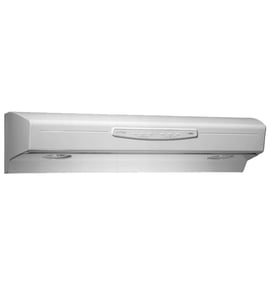





Does a range hood need a dedicated outlet?
A Kenmore range hood like model 23352045590 typically does not need a dedicated outlet or dedicated circuit; it can usually share a properly sized kitchen small-appliance circuit. We recommend a dedicated circuit when nuisance tripping, dimming lights, or other loads on the same circuit cause unreliable fan or light operation.
- Use a properly grounded power source and follow the wiring diagram and electrical notes in the 23352045590 owner's manual.
- Avoid sharing the circuit with high-draw appliances (microwave, toaster oven, air fryer, space heater).
- If the hood is hardwired, use an approved junction box and strain relief; do not run the cord through sharp metal.
- If you notice flickering lights or the fan slowing when other appliances run, move the hood to a less-loaded circuit.
- If a breaker trips, stop using the hood until the circuit is checked.
A dedicated circuit is the right call when any of these are true:
- The hood shares a circuit with other heavy kitchen loads.
- The breaker trips or the hood cuts out at higher fan speeds.
- You are remodeling and can easily run a new line.
- Local electrical code or your installer requires it.
| Situation | Dedicated circuit? | Why |
|---|---|---|
| Hood shares with countertop outlets and trips breaker | Yes | Prevents overload and nuisance trips |
| Hood shares circuit but runs normally | Not required | Load is acceptable |
| New install or remodel | Recommended | Simplifies troubleshooting and improves reliability |
Range hoods combine a fan motor and lighting; if the circuit is overloaded, you can get poor ventilation performance, flickering lights, or repeated breaker trips. Correct wiring also protects switches and components such as the light switch S97016438.
Last updated: February 2026
How do I know what model range hood I have?
To identify your range hood model, we look for the model/serial label on the hood itself. On Kenmore model 23352045590, the label is commonly on the top of the hood, on the underside, or behind a grease filter; match the printed model number exactly.
Check these spots first (use a flashlight):
- Top of the hood (often near the wiring cover area)
- Underside of the hood near the lights or fan opening
- Behind the aluminum/grease filters (remove the filters and look on the inner frame)
- Inside the control area (near the switches, depending on design)
If you see multiple numbers, use the one labeled Model (not the part number from a component).
Use this quick checklist to avoid ordering the wrong parts:
- Copy the model number exactly, including all digits (example: 23352045590)
- Compare it to the model list shown in the 23352045590 owner's manual
- If the label is greasy or faded, wipe gently with a damp cloth and mild dish soap, then re-check
- Do not use numbers stamped on parts like a switch, knob, or cover; those are part identifiers
| What you found | What it usually is | Example from this hood |
|---|---|---|
| Model number | Identifies the whole range hood | 23352045590 |
| Part number/ID | Identifies one replaceable part | 97007716 (cover) |
| Hardware number | Identifies a screw/nut size or kit | 99150490 (screw) |
The model number controls which parts fit (like a light switch, bulb holder, or control panel cover) and which wiring diagram applies. Using the exact model number helps us match the correct Kenmore range hood parts the first time.
Last updated: February 2026
How many cfm do I need for 48 range?
For a 48-inch range, we size ventilation at about 600 to 1,200 CFM based on cooking style and duct layout. The Kenmore range hood model 23352045590 is commonly used over 30-inch or 36-inch cooktops; for a 48-inch range, choose CFM using the guidelines below and verify your hood’s configuration details in the 23352045590 owner’s manual.
Use these targets to match how much heat, smoke, and grease you generate:
- 600 to 800 CFM: light to moderate cooking (simmering, occasional sautéing)
- 900 to 1,200 CFM: frequent high-heat cooking (searing, griddle, heavy frying)
- Choose the higher end if you cook with lots of oil, spices, or high BTU burners
- If you have long duct runs or several elbows, increase CFM to offset resistance
- If you run ventless (recirculating), focus on filter condition and fit as much as airflow
Even a strong blower can feel weak if the duct system restricts airflow.
| Installation factor | Effect on airflow | Best practice |
|---|---|---|
| Long duct run | Reduces delivered CFM | Keep ducting short and direct |
| Multiple elbows | Adds resistance | Minimize turns; use smooth bends |
| Undersized duct | Chokes airflow | Match duct size to hood outlet |
| Dirty grease filters | Blocks intake | Clean on schedule |
High airflow can require additional planning.
- Make-up air may be required by local code at higher CFM levels
- Too much CFM in a tight home can cause backdrafting from fireplaces or gas appliances
- A properly sized hood often runs quieter because it captures smoke without needing max speed
Right-sizing CFM helps capture smoke and grease at the source, reduces lingering odors, and limits residue buildup on cabinets and walls.
Last updated: February 2026
What are the parts of a range hood called?
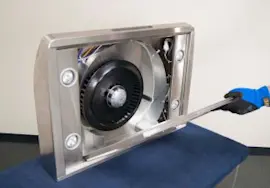
On the Kenmore range hood model 23352045590, the main parts are typically the canopy (hood body), blower and venting pieces, control panel and switches, lights, and filters. These names match the parts list and wiring diagram shown in the 23352045590 owner's manual.
- Canopy: the main hood body that captures smoke and grease.
- Blower assembly: the fan motor and wheel that move air.
- Scroll housing: the blower housing that directs airflow.
- Damper assembly: helps prevent outside air from backdrafting into the kitchen.
- Control panel: where the fan speed and light controls are mounted.
- Switches and wiring: fan speed control switch, light switch, receptacle, and related hardware.
- Lighting parts: bulb holder and lens/cover.
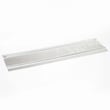
- Filters: aluminum grease filters; some setups also use ventless (charcoal-style) filters.
| Part name (common term) | What it’s for | Example from available parts |
|---|---|---|
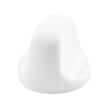
| Light switch | Turns the hood lights on/off | Light switch S97016438 |
| Bulb holder | Holds the light bulb socket assembly | Bulb holder S99270530 |
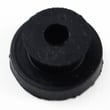
| Motor isolator | Reduces vibration and noise from the motor | Range hood motor isolator S99100497 |
| Control panel cover | Covers and protects the control area | Cover control panel S99090983 |
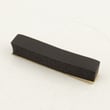
| Foam seal | Seals gaps (often used in ventless installs) | Foam seal (gray) S99100441 |
Using the correct part name makes troubleshooting and ordering faster. For example, “fan is loud” often points to blower parts or a motor isolator, while “lights won’t turn on” points to the light switch, bulb holder, or wiring connections.
- Match the part name to the symptom (airflow, noise, lights, or controls).
- Confirm the model number 23352045590 before ordering.
- Use the exploded-view diagram and key numbers in the 23352045590 owner's manual to cross-check placement.
Last updated: February 2026
What is the life expectancy of a range hood?
Most range hoods, including the Kenmore 23352045590, last 10 to 20 years; 15 years is a typical midpoint. Lifespan depends most on how often you cook, how well you keep grease filters clean, and whether the fan motor and switches stay protected from grease buildup (see the 23352045590 owner's manual).
These are the most common failure points that shorten range hood life:
- Fan motor and blower components (noise, slow airflow, won’t start)
- Fan speed control switch (intermittent speeds, stuck on one speed)
- Light switch or bulb holder (lights flicker or won’t turn on)
- Grease filters and venting (restricted airflow makes the motor run hotter)
- Wiring connections (heat and vibration can loosen terminals over time)
A little routine care helps the hood reach the high end of the 10 to 20 year range:
- Clean or replace grease filters on a regular schedule based on cooking frequency.
- Wipe the underside and fan intake area to prevent grease from migrating into switches.
- Run the fan during cooking and for a few minutes after to clear heat and moisture.
- Keep the damper moving freely so airflow is not restricted.
- If the hood is ventless, keep the ventless filter kit maintained so the blower is not overworked.
| Symptom | Most likely fix | Typical decision |
|---|---|---|
| Fan is loud or vibrating | Check mounts; replace isolators | Repair is usually worth it |
| Fan won’t run but lights work | Switch or motor issue | Repair first |
| Lights don’t work but fan runs | Switch or socket issue | Repair first |
| Weak airflow | Filter/duct restriction | Clean first |
If vibration is the main issue, replacing the range hood motor isolator S99100497 often reduces noise and stress on the blower assembly.
A range hood that is kept clean moves more air with less strain, which reduces heat buildup at the motor and controls. That directly improves performance and helps the hood reach its full expected service life.
Last updated: February 2026
Why is the fan not working on my Kenmore range hood?
If the fan is not working on your Kenmore range hood model 23352045590, the most common causes are a failed motor speed control (fan) switch, a wiring or power supply problem, or a problem in the blower motor circuit. Use the wiring diagram and parts list in the 23352045590 owner's manual to pinpoint the exact failure.
- Confirm the hood has power (reset the kitchen breaker or GFCI if it feeds the hood).
- Try every fan speed setting; a dead speed control switch can leave all speeds inoperative.
- Listen for motor hum; humming with no airflow often points to a stuck blower wheel or failing motor.
- Check for a jam (grease buildup, debris) that prevents the blower wheel from turning.
- Inspect wire connections at the switch and motor receptacle area for looseness or heat damage.
On this Kenmore design, the fan circuit is typically controlled by a motor speed control switch and supported by vibration isolators and wiring connections.
| Symptom | Most likely cause | What to do next |
|---|---|---|
| No fan on any speed, lights still work | Motor speed control switch or wiring | Test switch continuity; inspect harness connections |
| Motor hums but fan won’t spin | Blower wheel jam or failing motor | Check for obstruction; spin wheel by hand (power off) |
| Fan runs but is extremely loud/vibrates | Mounting/isolator issue | Inspect and replace isolators if worn |
Relevant model-listed parts include the range hood motor isolator S99100497 (helps reduce vibration and stabilize the blower assembly).
A non-working range hood fan reduces smoke and odor removal and can allow grease and moisture to build up on cabinets and surfaces. Restoring proper airflow also helps keep the blower assembly from overheating under heavy cooking loads.
If you want a guided diagnosis path for common failures, follow our range hood fan doesn't work troubleshooting steps to narrow the problem to the switch, motor, or wiring.
Last updated: February 2026