Owner’s manual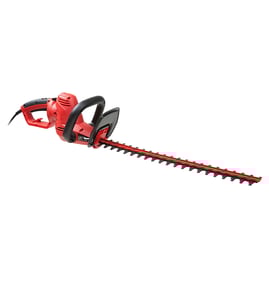

Can WD-40 be used on hedge trimmer blades?
Yes. On the Craftsman 13879771 hedge trimmer, we use WD-40 as a light cleaner and moisture-displacing spray on the blades; apply a thin coat and wipe off the excess so it does not attract debris.
- Turn the trimmer off and disconnect power (unplug cord or remove the battery).
- Brush off clippings and sap; a stiff nylon brush works well.
- Lightly spray WD-40 along both sides of the cutting blades.
- Run the blades briefly (only after reconnecting power) to spread the film, then disconnect power again.
- Wipe off excess; leave only a thin coating.
| Product | Good for | Avoid when |
|---|---|---|
| WD-40 (light spray) | Cleaning, thin protective film | You want a heavy, long-lasting lubricant layer |
| Silicone spray (light) | Reducing sticking from sap | You are cutting very dusty material (can hold grit) |
| Heavy grease or thick oil | Gear cases (if specified) | Blade surfaces (collects dirt and clogs cutting action) |
A thin coating helps reduce sap buildup and surface corrosion during storage. Too much lubricant can trap grit and clippings, which increases drag, heats the blades, and can make the trimmer cut poorly.
For the correct cleaning steps, storage guidance, and any blade-care notes specific to your Craftsman 13879771, follow the maintenance section in the owner's manual.
Last updated: February 2026
Does Craftsman make a cordless hedge trimmer?
Yes. Craftsman makes cordless hedge trimmers (along with corded electric and gas models). If you are shopping parts for your Craftsman 13879771 hedge trimmer, use the diagrams and specifications in the owner's manual to match the correct replacement parts and hardware.
Cordless models vary by battery platform, blade length, and cutting capacity. These are the specs that matter most when comparing options:
- Battery system and voltage (for example, 20V MAX platforms)
- Blade length (commonly around 18 to 24 inches)
- Tooth gap and cutting capacity (often about 3/4 inch to 1 inch)
- Weight and balance (important for overhead or extended trimming)
- Runtime expectations (depends on battery amp-hour rating and load)
| Type | Best for | Tradeoffs |
|---|---|---|
| Cordless | Quiet trimming, no cord management, typical yard work | Runtime depends on battery and load |
| Corded electric | Long sessions near an outlet | Extension cord handling and reach limits |
| Gas | Heavy cutting and long runtime | More noise, fuel mixing, more maintenance |
Battery-powered hedge trimmers typically use different switches, wiring, and motor assemblies than corded models, and gas units add fuel and ignition components. Matching the exact model number (like 13879771) keeps you from ordering the wrong parts and helps your trimmer run safely and smoothly.
Use these steps to stay on track:
- Confirm the model number on the data label matches 13879771
- Check the exploded-view diagrams for the correct assembly location
- Inspect common wear items (blade hardware, guards, fasteners)
- Look for pinched or broken wires if the unit will not start
- Follow the safety and service notes in the manual before disassembly
Last updated: February 2026
Is it worth repairing a hedge trimmer?
Yes, repairing a Craftsman hedge trimmer like model 13879771 is usually worth it when the tool is otherwise in good shape and the issue is a wear item (dull blades, loose hardware, damaged cord). If the motor is failing or the housing is cracked, replacement is typically the better value.
Use this checklist before you spend time or money:
- Blades are dull but straight: repair is worth it (sharpening and cleaning restores performance).
- Blades are bent, cracked, or missing teeth: replacement parts or professional blade service is the right fix.
- It runs but cuts poorly: usually maintenance (blade sharpness, lubrication, debris in the cutter bar).
- It will not start: often electrical (switch, cord, internal wiring) and can be diagnosed.
- Motor smells burnt, smokes, or loses power under light load: replacement is usually the better choice.
- Cracked handle or unsafe trigger lockout: fix before using; safety controls must work correctly.
Most hedge trimmer repairs fall into a few common buckets:
| Symptom | Most common cause | Typical fix |
|---|---|---|
| Ragged cuts, branches tear | Dull blades | Clean, sharpen, lubricate |
| Blades bind or stop | Sap/debris buildup, lack of lubrication | Clean cutter bar, lubricate, check alignment |
| Runs intermittently | Damaged cord or loose wiring | Inspect cord, test continuity, repair wiring |
| Dead, no sound | Switch, cord, internal connection | Electrical testing and part replacement |
Using a hedge trimmer with blunt or binding blades makes the motor work harder, increases wear, and can damage plants by tearing instead of cutting cleanly. Basic maintenance often restores cutting performance and extends the life of the trimmer.
- Follow the maintenance and safety steps in the owner's manual.
- For electrical troubleshooting, our DIY guide how to use a multimeter to test electrical parts video helps you safely check cords, switches, and continuity.
Last updated: February 2026