Installation guide
 Owner’s manual
 Error Codes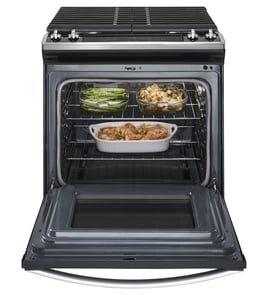



How to find Whirlpool gas range model number?
On your Whirlpool WFG381LVQ1 gas freestanding range, the model number is on the rating label located on the oven frame behind the storage drawer panel. Pull the storage drawer out to access the label, then write down the full model number and serial number for parts and service.
The rating label is easiest to find from the front of the range.
- Turn the range off and let it cool completely.
- Pull the storage drawer straight out; lift slightly if it stops on the drawer stops.
- Look at the oven frame behind the drawer opening (the metal frame area).
- Find the rating label; it lists MODEL and SERIAL.
- Record the model number exactly as printed (for example, WFG381LVQ1).
For the official location and diagrams, use the WFG381LVQ1 owner's manual.
Copy these items exactly; they help us match the correct Whirlpool parts and diagrams.
| Label item | Example format | Why you need it |
|---|---|---|
| Model number | WFG381LVQ1 | Identifies the correct parts list |
| Serial number | Letters and numbers | Helps confirm production details |
| Gas type (if shown) | Natural gas or LP | Helps ensure correct burner and valve parts |
Whirlpool ranges often have similar-looking designs across multiple model numbers. Using the exact model number prevents ordering the wrong oven igniter, burner head, control, or trim piece for your specific WFG381LVQ1 configuration.
Last updated: February 2026
How to find part number for Whirlpool oven?
For your Whirlpool WFG381LVQ1 gas freestanding range, the fastest way to get the correct part number is to first confirm the model and serial label location, then use that exact model number to look up the part by name in the parts list. The label is on the oven frame behind the storage drawer panel (not on the door).
- Pull the range forward slightly if needed, then remove the storage drawer.
- Look on the oven frame behind the storage drawer panel for the model and serial label.
- Write the model number exactly as shown (for this range: WFG381LVQ1).
- Identify the part you need by function (example: oven not heating, oven light out, burner not lighting).
- Match the part name to the parts list for WFG381LVQ1 and confirm it fits your symptom.
If you are troubleshooting a specific symptom, these are common part categories to check first:
| Symptom | Common part to check | Example part for this model |
|---|---|---|
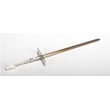
| Oven temperature seems off | Oven temperature sensor | Range oven temperature sensor WPW10181986 |
| Oven light is out | Oven light bulb | Light bulb 8009 |
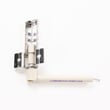
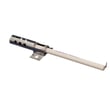
| Broil will not ignite or heats weakly | Broil burner igniter | Range oven igniter WP8054129 |
| Door will not unlock after self-clean | Door lock assembly | Range oven door lock assembly WPW10107820 |
Whirlpool ranges often have similar-looking parts across different models, but the mounting, wiring connectors, and calibration can vary. Using the exact WFG381LVQ1 model number from the label helps ensure the replacement part fits and the repair solves the problem the first time.
For the exact label location and model identification details, use the WFG381LVQ1 owner's manual.
Last updated: February 2026
How to reset Whirlpool gas oven?
To reset a Whirlpool gas oven like model WFG381LVQ1, we cancel the current cycle first, then restore power to clear the control. If the oven still will not heat after reset, we follow the troubleshooting checks in the WFG381LVQ1 owner's manual.
- Press OFF/CANCEL to stop any active Bake, Broil, or timed cycle.
- If the display is unresponsive, turn the range power off at the breaker for 1 minute.
- Turn power back on and set the clock if needed.
- Start a simple test: press BAKE, choose a temperature, then press START.
- If “End” or a stuck setting remains, press OFF/CANCEL again to clear the display.
Use these checks from the installation and operation guidance:
- Confirm the range is plugged into a grounded 3-prong outlet.
- Check the household fuse or circuit breaker.
- Make sure the gas supply line shutoff valve is fully open.
- After the oven has been on about 5 minutes, check for heat; if it is still cold, press OFF/CANCEL.
- If you suspect a failed ignition system, the broil/bake ignition circuit often points to the range oven igniter WP8054129.
| Reset method | What it clears | What it will not fix |
|---|---|---|
| OFF/CANCEL | Active cooking cycle, many display states | No-heat caused by igniter, gas valve, or wiring issues |
| Breaker power cycle | Control glitches, frozen keypad | Mechanical or electrical part failures |
A proper reset prevents false symptoms (like a stuck timed cycle or control glitch) from looking like a bad part. If the range has power and gas but still will not ignite, focusing next on ignition and temperature sensing speeds up an accurate repair.
Last updated: February 2026
What are the most common stove parts to replace?
On the Whirlpool WFG381LVQ1 gas freestanding range, the most commonly replaced parts are the oven igniter, oven temperature sensor, oven light bulb, door gasket, and surface burner components. These parts wear from heat and daily use and can cause no-heat, poor baking results, weak ignition, or heat loss.
These are frequent fixes we see on WFG381LVQ1 when performance changes over time:
- Oven igniter: if the oven will not heat or takes a long time to light, check the range oven igniter WP8054129.
- Oven temperature sensor: if baking temperatures seem off or fluctuate, the range oven temperature sensor WPW10181986 is a common suspect.
- Oven light bulb: if the light is out, use the correct appliance bulb such as the light bulb 8009.
- Door gasket: if heat leaks, cooking is uneven, or the door does not seal well, the door gasket W11542153 often restores proper sealing.
- Surface burner parts: if a burner lights unevenly or the flame pattern is poor, a worn or clogged burner head like the burner head WPW10406243 is common.
| Symptom | Most likely part to check first | What you may notice |
|---|---|---|
| Oven will not heat | Oven igniter | No glow, no ignition, long preheat |
| Oven temperature inaccurate | Oven temperature sensor | Overbakes or underbakes |
| Oven light not working | Light bulb | No interior light |
| Heat escaping around door | Door gasket | Hot handle, longer cook times |
| Burner flame uneven | Burner head | Yellow tips, uneven ring of flame |
Replacing the right wear part first saves time and helps your range heat safely and consistently. For gas ranges, ignition and flame quality directly affect preheat time, baking results, and overall performance.
- Confirm the symptom (no heat vs. slow heat vs. uneven heat).
- Clean and dry burner caps and grates before reinstalling (wet parts can cause poor ignition).
- Replace oven light only when the oven is cool and power is disconnected.
- After any move or install, verify the anti-tip bracket and leveling using the installation guide.
Last updated: February 2026
What is the life expectancy of a Whirlpool stove?
Most Whirlpool stoves, including the Whirlpool WFG381LVQ1 gas freestanding range, typically last 15 years with normal household use and basic maintenance. Gas ranges often reach this lifespan because the core heating system is mechanically simple and many wear items are replaceable.
- Average expected life: 15 years
- Common real-world range: 12 to 18 years
- Shortened life drivers: heavy daily use, poor ventilation, frequent self-clean overheating, power surges
- Extended life drivers: regular cleaning, stable gas supply, prompt part replacement
| Usage pattern | Typical lifespan | What usually fails first |
|---|---|---|
| Light (occasional cooking) | 16 to 20 years | knobs, igniters, door gasket |
| Normal (daily cooking) | 12 to 18 years | igniter, sensor, control |
| Heavy (multiple meals daily) | 10 to 15 years | igniter, gas valve components, control |
Replacing a few common wear parts on time often keeps a range reliable longer.
- If baking temps drift or the oven overheats, check the oven temperature sensor: range oven temperature sensor WPW10181986
- If the oven or broil burner struggles to light, a weak igniter is a common cause: range oven igniter WP8054129
- If the oven door leaks heat or cooking is uneven, inspect the door seal: door gasket W11542153
- Keep burner heads and ports clean and dry after boil-overs.
- Avoid slamming the oven door; it stresses hinges and the door seal.
- Use self-clean only when needed; high heat can shorten the life of electronics and door components.
- Replace failed consumables promptly (for example, the oven light bulb).
- Verify the range is level; uneven leveling can affect baking and door sealing.
A 15-year life expectancy helps you decide whether to repair or replace. If your WFG381LVQ1 is under about 12 years old, repairs like an igniter or sensor replacement are usually practical; beyond that, compare repair cost to overall condition and performance.
For model-specific care and operating guidance, follow the WFG381LVQ1 owner’s manual.
Last updated: February 2026
What size gas line for Whirlpool gas range?
For the Whirlpool WFG381LVQ1 gas freestanding range, we recommend a 3/4-inch rigid gas supply pipe to the range location; smaller pipe on long runs can restrict flow. If you are on LP (propane), 1/2-inch minimum piping or tubing is typically acceptable (your LP supplier may size it). See the WFG381LVQ1 installation guide for the approved connection options.
Use the sizing below as your starting point, then match it to your home’s run length and local code requirements.
- Rigid supply line to location: 3/4-inch rigid pipe (recommended)
- LP (propane) systems: 1/2-inch minimum piping or tubing (LP supplier often determines final sizing)
- Flexible connector (if allowed by local codes): new CSA design-certified connector, typically 4 to 5 ft long
- Regulator connection: the range regulator inlet uses 1/2-inch male pipe thread
- Shutoff valve: install a manual gas shutoff valve in the supply line
| Fuel type | Supply line to range location | Notes |
|---|---|---|
| Natural gas | 3/4-inch rigid pipe recommended | Smaller pipe on longer runs can cause low gas supply |
| LP (propane) | 1/2-inch minimum | LP supplier commonly specifies final materials and sizing |
- Use a new CSA-approved gas supply line and connector
- Securely tighten all gas connections; support fittings so you do not twist the regulator
- Use pipe-joint compound rated for LP gas on threaded joints (avoid standard thread tape where not permitted)
- Do not kink or crush flexible metal tubing when moving the range
- If converting to LP, have a qualified technician perform the conversion
Correct gas line sizing helps the oven and surface burners maintain steady flame and proper heat. Undersized piping can cause weak ignition, slow preheat, and uneven cooking performance.
Last updated: February 2026
Why is my Whirlpool cooktop igniter not working?
On our Whirlpool WFG381LVQ1 gas freestanding range, a cooktop igniter usually stops working because the range has no power, the gas supply is off, or the burner cap is mis-seated so the spark cannot light the gas. Start with the basic checks in the WFG381LVQ1 installation guide.
- Confirm the range is plugged in and the circuit breaker is on.
- Verify the gas shutoff valve is fully open.
- Make sure the burner cap is seated correctly on the burner base (alignment matters).
- Turn the knob to LITE/IGNITE and listen for clicking; sparking continues only while the knob is held at LITE.
- If it is the first time lighting after install or service, purge air by trying a surface burner for up to several seconds.
The igniters on this model click several times until the flame is detected. If you hear clicking but get no flame, the problem is usually gas flow, cap alignment, or a dirty/wet burner area, not the control itself.
| Symptom | Most likely cause | Best next step |
|---|---|---|
| No clicking on any burner | No power to range | Check outlet, breaker, and power cord connection |
| All burners click, only one won’t light | Cap/head misaligned or clogged | Re-seat cap; clean and dry burner parts |
| Clicking and gas smell, no ignition | Spark not reaching gas | Clean/dry around igniter; re-seat cap and burner head |
| One burner clicks intermittently | Worn switch or loose connection | Inspect knob/switch area; service if persistent |
If cleaning and alignment do not restore ignition, these parts are common culprits on gas ranges:
- Burner head WPW10406243 (cracked, warped, or clogged ports)
- Spark module WPW10331686 (weak or no spark output)
- Wiring connections to the igniter electrode and module (loose or heat-damaged)
A properly seated burner cap and a powered igniter system are required for safe, reliable lighting. When ignition is delayed, gas can accumulate briefly before lighting, which can cause a stronger “whoosh” at ignition.
Last updated: February 2026