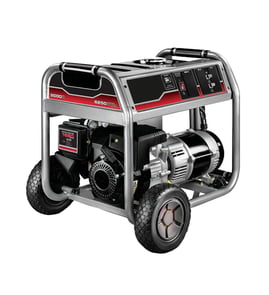

How long will a Coleman PM0645250 generator run?
A Coleman PM0645250 generator typically runs up to about 14 hours at 50% load on a full tank. Actual runtime drops as you add electrical load (watts) and rises when you run lighter loads, especially after the engine is fully warmed up.
What affects runtime the most
- Load level (watts): Higher running watts burn more fuel per hour.
- Motor starting surges: Refrigerators, well pumps, and compressors increase fuel use during cycling.
- Engine condition: A dirty air filter, worn spark plug, or carburetor varnish increases consumption.
- Fuel quality: Fresh, stabilized gasoline runs more consistently than old fuel.
- Operating conditions: High altitude and high heat reduce available power and efficiency.
Quick runtime planning guide
Use this as a practical expectation for PM0645250-STYLE portable generators.
| Load level | Example loads | What to expect |
|---|---|---|
| 25% load | Lights, TV, chargers | Longest runtime; fewer refuels |
| 50% load | Essentials mix | Up to about 14 hours per tank |
| 75% to 100% load | Multiple large loads, power tools | Shortest runtime; plan frequent refueling |
How we recommend estimating your real-world runtime
- Add up running watts for what you plan to power.
- Keep the generator near 40% to 60% load for a strong balance of fuel use and stable output.
- Do a simple fuel test: run your normal load for 1 hour, then refill and measure gallons added.
- Calculate: runtime (hours) = tank capacity (gallons) ÷ gallons used per hour.
Why it matters
Knowing expected runtime helps you schedule refueling safely, avoid surprise shutdowns during an outage, and reduce overload conditions that can trip breakers or stress the alternator.
If you need maintenance or repair items for the Coleman PM0645250, start with the model parts list; you can also search by model number on Sears PartsDirect.
Last updated: February 2026
What are the most common issues with PM0645250?
The most common issues we see with the Coleman PM0645250 generator are no-start or hard-start problems, low or no AC output, and surging or unstable power under load. These usually trace back to fuel quality, ignition/spark, airflow, or basic electrical checks.
Common symptoms and likely causes
- Won’t start / starts then dies: stale fuel, clogged carburetor jets, dirty air filter, fouled spark plug, low oil shutdown (if equipped)
- Surging (hunting) at no load: partially clogged carburetor, air leak at intake, governor linkage sticking
- No AC power at outlets: tripped breaker, bad receptacle, loose wiring, failed capacitor (if used), failed voltage regulator (if used)
- Low voltage / weak power: overloaded generator, engine speed too low, poor connections, failing alternator components
- Runs rough under load: restricted fuel flow, dirty air filter, weak ignition, load exceeds capacity
Quick checks we recommend first (safe and fast)
- Reduce load to zero; unplug everything and restart.
- Check fuel; drain old fuel and refill with fresh gasoline.
- Inspect spark plug; clean/replace if fouled and confirm a strong spark.
- Check air intake; clean/replace the air filter and clear debris.
- Reset AC protection; check and reset any breakers or GFCI outlets.
Electrical troubleshooting basics
If the engine runs normally but you have no output, use a meter to confirm what’s happening.
| What you observe | What it usually means | What to do next |
|---|---|---|
| Breaker trips immediately | Shorted load or wiring fault | Try with no load; inspect cords and receptacles |
| 0 volts at all outlets | Open circuit or regulation issue | Check breakers, receptacles, wiring connections |
| Low voltage (example: 60 to 90 VAC) | Low RPM or alternator/regulator issue | Verify engine speed; inspect alternator wiring |
For step-by-step meter technique, use how to use a multimeter to test electrical parts video.
Why it matters
Surging and low voltage can damage sensitive electronics and motors. Fixing fuel and airflow issues early also prevents carburetor varnish and hard-start problems that turn into bigger repairs.
Last updated: March 2026
What spark plug goes into a Coleman PM0645250 generator?
For the Coleman PM0645250 generator, the correct spark plug depends on the exact engine family installed on your unit (some versions use different plug sizes and heat ranges). We match the right plug by confirming your engine model and the plug’s thread size, reach, and seat type, then ordering the exact replacement through Sears PartsDirect.
How to identify the correct spark plug for PM0645250
Use these checks before you buy:
- Engine model number: Look on the engine shroud, valve cover, or blower housing tag (the generator model is PM0645250, but the engine model can differ).
- Old spark plug markings: Remove the plug and read the code stamped on the ceramic/metal shell.
- Thread diameter: Most small engines use 14 mm or 10 mm threads.
- Reach (thread length): Common reaches are 3/8 in. or 1/2 in.; the wrong reach can damage the piston or reduce spark quality.
- Seat type: Flat gasket seat is common; tapered seat is less common.
Typical spark plug specs you can verify (before ordering)
These are the key fit points we use to match a plug correctly:
| What to match | What it affects | What to look for |
|---|---|---|
| Thread diameter | Whether it screws in safely | 10 mm or 14 mm are common |
| Reach | Combustion chamber clearance | 3/8 in. or 1/2 in. are common |
| Seat type | Sealing and heat transfer | Gasket vs. tapered |
| Heat range | Starting, fouling, plug life | Must match the engine spec |
Quick replacement tips (safe and reliable)
- Let the generator cool completely; disconnect the spark plug wire.
- Blow debris away from the plug well before removal.
- Install the new plug by hand first to avoid cross-threading.
- Set the spark plug gap to the engine specification (a feeler gauge works best).
- Reattach the boot firmly and test-run under a light load.
Why it matters
A mismatched spark plug can cause hard starting, misfiring under load, carbon fouling, or even internal engine damage if the reach is wrong. Matching the plug by engine model and physical specs keeps your Coleman generator running smoothly and protects the cylinder head threads.
Last updated: February 2026