 Owner’s manual


What is the most common problem with Whirlpool washers?
The most common Whirlpool washer problems are no-drain/no-spin, water fill issues, leaks, and excessive vibration. On the Whirlpool WFW9550WW00 front-load washer, these symptoms usually trace back to drain restrictions, oversudsing, unbalanced loads, or water supply problems outlined in the WFW9550WW00 owner's manual.
- Won’t drain or spin: Check for a kinked/clogged drain hose and confirm the drain height is not over 96 inches.
- Won’t fill or fills slowly: Make sure both hot and cold faucets are fully open; check inlet hose screens for clogs and hoses for kinks or freezing.
- Leaking: Verify inlet hose connections are tight and rule out household plumbing leaks.
- Loud noise or vibration: Level the washer and confirm it sits on a solid floor; redistribute bulky or single-item loads.
- Excess suds (SUD routine): Reduce detergent amount and use HE detergent; the cycle can pause while extra suds are removed.
| Symptom | Most likely cause | Best first action |
|---|---|---|
| F20 (water inlet problem) | Water supply restricted | Open faucets; clean inlet screens; unkink hoses |
| F21 (drain problem) | Drain path restricted | Check drain hose for kinks/clogs; verify drain height |
| Won’t start | Door not latched or power issue | Close door firmly; confirm grounded outlet |
| Vibrates or “walks” | Not level or load imbalance | Level feet; redistribute load |
If your checks point to a failed component (not just a kink, clog, or oversudsing), these model-matched parts are common suspects:
- Filter WPW10730972 (helps protect the drain system from debris)
- Washer water inlet valve WPW10247305 (controls water entering the washer)
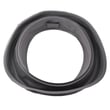
- Bellow WP8182119 (door boot; common leak source on front-load washers)
Drain, fill, and vibration problems can trigger error codes, extend cycle times, and cause leaks or premature wear. Addressing the simple causes first (hoses, leveling, detergent, load size) prevents unnecessary part replacement and repeat failures.
Last updated: February 2026
Where to find model number on whirlpool front load washer?
On the Whirlpool WFW9550WW00 front-load washer, the model number is printed on the model and serial number label on the cabinet. The most common spot is inside the door opening (door jamb); you may also see it along the cabinet edge near the lower front area.
- Open the washer door and inspect the door jamb area.
- Look along the front cabinet opening near the latch side.
- Check the lower front cabinet edge (near the base) if you do not see it at eye level.
- Wipe the area with a damp cloth; detergent residue can hide the print.
The label typically includes both identifiers you may need for parts and service.
| You will see | What it’s used for |
|---|---|
| Model number (example: WFW9550WW00) | Matching the correct Whirlpool washer parts |
| Serial number | Service history, warranty, and production details |
We use the complete model number to match exact-fit parts (for example, a door seal or drain components) and to pull the correct diagrams. It also helps when you reference troubleshooting steps in the WFW9550WW00 owner's manual.
- Use a flashlight and view from an angle to reduce glare.
- Take a close-up photo and zoom in.
- Write down the full model and serial number and keep it with your paperwork.
Last updated: February 2026
What is the capacity of wfw9550ww00?
The Whirlpool WFW9550WW00 front-load washer has a 3.8 cu. ft. capacity, which is a common “full-size” high-efficiency (HE) drum size for this Duet-style platform. For cycle-specific load guidance, use the WFW9550WW00 owner's manual.
A 3.8 cu. ft. HE front-load washer is designed to wash larger loads with less water by tumbling clothes through a shallow pool of water.
- Handles everyday mixed loads comfortably
- Works well for bulky items (comforters, blankets) when loaded loosely
- Cleans best when you do not pack the drum tight
- Needs HE detergent to control suds and protect performance
- Spins at high speed to remove more water, reducing dry time
Use this as a practical reference for a 3.8 cu. ft. front-load washer like the WFW9550WW00.
| Load type | What to watch for | Best practice |
|---|---|---|
| Mixed clothes | Overfilling reduces tumble action | Fill loosely to about 3/4 full |
| Towels | Heavy, can unbalance | Mix sizes, avoid all large towels |
| Bedding | Can trap air and shift | Load evenly, one bulky item at a time |
| Delicates | Needs room to float and tumble | Use mesh bags, lighter fill |
Capacity affects cleaning and reliability. Overloading can cause poor wash results, excess vibration, longer cycle times, and drain issues. If you are troubleshooting draining or slow spins, checking the pump filter is a common first step; the filter WPW10730972 is the model-matched part used in the drain system.
- Choose the correct cycle for fabric type and soil level
- Use the right amount of HE detergent (too much causes oversudsing)
- Leave the door slightly open between loads to help reduce odor
- If you see an error code, match it to the symptom using Whirlpool duet he front load washer error codes
Last updated: February 2026
Does a Whirlpool front load washer have a filter to clean?
Yes. The Whirlpool WFW9550WW00 front-load washer uses a drain system that can trap lint and small items; keeping the drain path clear helps prevent slow draining and F21-type drain problems. We recommend checking and cleaning the pump filter area as part of regular maintenance using the steps in the WFW9550WW00 owner's manual.
On many Whirlpool front-load designs, the filter is part of the drain pump cleanout area. It catches debris (coins, hair pins, lint) before it reaches the pump impeller.
Common signs it needs attention:
- Washer drains slowly or not at all
- Standing water left in the drum
- Rattling or grinding during drain
- Drain-related error codes (often F21)
Use this approach for WFW9550WW00-STYLE front-load washers.
- Unplug the washer.
- Place towels and a shallow pan under the lower front area.
- Open the lower access area (if equipped) and locate the pump cleanout.
- Drain water slowly, then remove debris from the trap.
- Reinstall the cap tightly and run a quick rinse/drain to confirm no leaks.
If cleaning doesn’t restore normal draining, these model-matched parts are often involved:
| Symptom | Most common cause | Model-matched part to check |
|---|---|---|
| Won’t drain or drains slowly | Clogged pump cleanout or restriction | Filter WPW10730972 |
| Leaks at the door area | Torn door boot | Bellow WP8182119 |
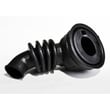
| Intermittent drain problems | Hose restriction or collapse | Hose WPW10467168 |
A restricted drain path makes the washer work harder, can leave loads too wet, and can trigger drain errors. Regular cleaning also helps reduce odor issues when combined with proper HE detergent use and the washer’s cleaning cycle described in the manual.
For code-specific guidance, use Whirlpool duet he front load washer error codes.
Last updated: February 2026
Are Whirlpool washer parts interchangeable?
Many Whirlpool washer parts are not interchangeable across models; for Whirlpool WFW9550WW00, we recommend using factory-specified parts matched to your exact model so the part fits right, seals correctly, and the washer operates as designed. Use the WFW9550WW00 owner's manual to confirm the correct part and procedure.
Parts can look similar but still differ in mounting points, electrical connectors, hose diameters, or software compatibility.
- Model-specific fit: Even within Whirlpool front-load platforms, revisions are common.
- Function-specific calibration: Sensors and valves can have different flow rates or signal ranges.
- Leak prevention: Door boot and hose connections must match exactly to avoid drips.
- Safe operation: Door lock and wiring must align with the control’s expectations.
- Correct installation steps: The manual’s instructions assume the correct OEM-style part.
Use this checklist for WFW9550WW00 when comparing parts:
| Check | What to match | Example on this model |
|---|---|---|
| Model number | Exact model on the rating label | WFW9550WW00 |
| Part ID | Exact replacement identifier | WPW10253483 |
| Part type | Same function and location | Door lock vs. hinge |
| Connections | Same plugs, ports, clamps | Harness connectors, hose ends |
These are common “looks-the-same” parts where exact matching matters on front-load washers:
- Door seal/boot: bellow WP8182119
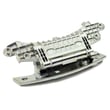
- Door locking system: latch WPW10253483
- Water fill components: washer water inlet valve WPW10247305
- Drain path components: tub-to-pump hose, pump filter housing, clamps
- Drive system components: belt and pulley alignment
Using the correct Whirlpool factory-specified part helps prevent leaks, repeat failures, and installation headaches. It also keeps troubleshooting straightforward because the washer’s design assumptions (fit, flow, sensing, locking) stay consistent.
Last updated: February 2026
Is it worth repairing a Whirlpool washer?
Yes, repairing a Whirlpool washer is worth it when the fix is targeted (leak, no-fill, no-drain, door won’t lock) and the machine is otherwise in good condition. For the Whirlpool WFW9550WW00, we see key replacement parts still available, which keeps repair a practical option for many common failures.
- If the washer is leaking at the door boot, a bellow replacement is a straightforward, high-value repair.
- If it will not fill correctly, check the inlet screens and consider inlet components.
- If it will not start or the door will not lock, the door lock is a common fix.
- If it will not drain or has long drain symptoms, the drain filter and hoses are frequent causes.
- If the tub will not spin properly, inspect the drive belt and pulley.
A practical guideline is to repair when the total repair cost (parts + labor) is less than about 50% of the cost of a comparable new washer, especially if the repair addresses a single failed component.
| Situation | Usually worth repairing? | Why |
|---|---|---|
| One clear failure (leak, no-fill, door lock) | Yes | Predictable parts and labor |
| Multiple symptoms across systems | Maybe | Costs add up quickly |
| Major structural damage or repeated breakdowns | No | Reliability drops |
These are common, fixable items for WFW9550WW00 that can restore normal operation:
- Bellow WP8182119 (door boot leak, mold tears, water at front)
- Filter WPW10730972 (drain issues, debris restriction)
- Washer water inlet valve WPW10247305 (no fill, slow fill, wrong temperature fill)
- Latch WPW10253483 (door won’t lock, won’t start)
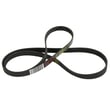
- Belt WPW10388414 (no spin, weak spin, squeal)
A front-load washer like the Whirlpool WFW9550WW00 is built around serviceable systems (door seal, drain path, inlet, drive). When you match the symptom to the correct part, you avoid replacing the whole appliance for a repair that restores performance and prevents water damage.
Use the troubleshooting guidance and error information in the WFW9550WW00 owner's manual before ordering parts:
- Confirm the exact symptom (leak location, fill behavior, drain time, spin behavior)
- Check for an error code and follow the recommended checks
- Inspect hoses, clamps, and wiring connections for obvious issues
Last updated: February 2026
What parts fail in a washing machine?
In the Whirlpool WFW9550WW00 washer, the parts that fail most often are the ones that move water, lock the door, and handle vibration and drive power. Many “washer won’t fill,” “won’t drain,” leaks, and error-code problems trace back to hoses, inlet components, the door lock, or the drain system; our WFW9550WW00 owner's manual helps you pinpoint the symptom.
- Water inlet system (faucets, inlet hoses, valve screens, inlet valve): slow fill, no fill, or intermittent filling
- Drain system (drain hose, pump path, filter area): standing water, long drain times, “won’t spin” because it can’t drain
- Door latch/lock system: door looks closed but won’t start, cycle stops, door won’t lock
- Door boot/bellow and clamps: water leaks at the front door opening, musty odor from trapped moisture
- Drive system (belt, pulley): poor tumble/spin, squealing, burning rubber smell, basket not reaching speed
- Water level sensing (pressure switch and air path): overfilling, underfilling, stopping mid-cycle
| Symptom | Likely area | Example part for WFW9550WW00 |
|---|---|---|
| Leaks at door | Door boot/retainers | Bellow WP8182119 |
| Won’t lock or start | Door lock | Latch WPW10253483 |
| Won’t fill or fills poorly | Inlet valve or flow sensing | Washer water inlet valve WPW10247305 or washer inlet flow meter WPW10110225 |
| Weak spin/tumble | Drive components | Belt WPW10388414 or pulley WP8182650 |
| Drain issues | Hose/pump path | Hose WPW10467168 |
- Use HE detergent only; regular detergent can cause oversudsing, longer cycles, errors, and component stress.
- Inspect inlet hoses for bulges, kinks, cuts, wear, or leaks.
- Replace inlet hoses on a schedule: every 5 years.
- If the washer won’t fill, check that hot and cold faucets are on and inlet hoses are not kinked.
- If the washer won’t start, confirm the door is firmly closed and latched.
Catching a worn hose, clogged inlet screen, or failing door lock early helps prevent water damage, nuisance error codes, and “no start” situations. It also reduces strain on the drive belt, pump path, and water-level sensing system.
Last updated: February 2026






