Owner’s manual
 View engine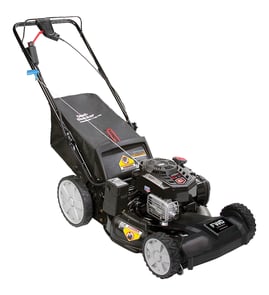


Are gas lawn mowers being phased out?
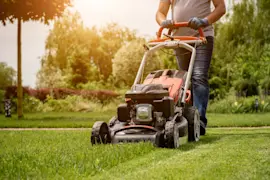
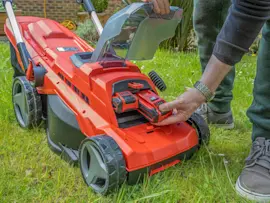
Gas walk-behind mowers like the Craftsman 917371120 are still widely used and supported with parts and service, but the market is steadily shifting toward battery-electric models. In practice, that means gas mowers are not “gone”, but new-product availability is gradually changing by location and retailer.
What “phased out” usually means
Most changes happen in new sales, not in ownership or repair support. Even where rules change, you can typically still:
- Maintain and repair existing gas mowers
- Buy common maintenance items (blades, filters, oil, spark plugs)
- Replace wear parts as needed
- Keep using the mower as long as it runs safely
For model-specific maintenance and safe operating guidance, use the 917371120 owner’s manual.
What to expect over the next few years
You will see the biggest shift in residential mowing, where battery mowers are popular for lower noise and simpler upkeep.
| Topic | Gas mower (like 917371120) | Battery-electric mower |
|---|---|---|
| Maintenance | Fuel, oil, spark plug, air filter | Battery care, blade care |
| Storage concerns | Fuel can go stale; winterizing matters | Battery storage and charging habits |
| Power for heavy grass | Typically strong | Varies by battery system |
How this affects parts and repairs
Even as new sales shift, keeping a gas mower running is straightforward when you stay ahead of wear items.
Common examples on this model include:
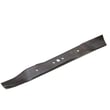
- Lawn mower blade 532406712 if the blade is bent, cracked, or won’t hold an edge
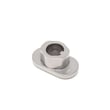
- Lawn mower blade adapter 532418373 if the blade is loose or the adapter is damaged
- Checking fasteners like lock nuts and washers during blade service
Why it matters
If your area or preferred retailer is moving toward electric, planning ahead helps: keep up with tune-ups, store fuel properly, and replace worn cutting components early so your Craftsman mower stays reliable season after season.
Last updated: January 2026
How many HP is a 200cc lawn mower?
A 200cc lawn mower engine typically produces about 5 to 6.5 horsepower (HP), depending on the engine design and the RPM where power is measured. For Craftsman model 917371120, the manual identifies a Briggs & Stratton 122L02-1320-F1 engine, but it lists displacement-related service specs rather than a published HP rating; use the 917371120 owner's manual for the engine identification details.
What “200cc” means (and why HP varies)
Engine displacement (cc) is the cylinder volume; it does not convert to one fixed horsepower number. Two 200cc engines can make different HP because of:
- Governor setting and maximum RPM
- Torque curve and cam timing
- Carburetion and emissions tuning
- Muffler and air filter design
- How the manufacturer reports power (gross vs. net)
Quick reference: typical HP by engine size
These ranges are what we commonly see on walk-behind mower engines.
| Engine size | Typical HP range | Typical use |
|---|---|---|
| 140cc to 160cc | 3.5 to 5.0 HP | Standard 21-inch push mowers |
| 190cc to 200cc | 5.0 to 6.5 HP | Taller grass, bagging, self-propelled decks |
| 210cc to 223cc | 6.0 to 7.5 HP | Heavy-duty mowing and larger decks |
How to estimate HP from torque (if you have torque specs)
Some engines list torque instead of HP. You can estimate horsepower using:
- HP = (Torque in lb-ft × RPM) ÷ 5252
If your engine label lists torque, use the governed RPM (often around 3,000 to 3,600 RPM on many walk-behind mowers) for a realistic estimate.
Why it matters
Knowing the approximate HP helps you choose the right blade, bagging setup, and mowing pace. Higher-power engines usually handle thick grass better and recover RPM faster when the blade load increases.
Last updated: January 2026
Should I use 87 or 93 for lawn mower?
For the Craftsman rotary lawn mower model 917371120, use fresh regular unleaded gasoline with a minimum 87 octane (87 AKI). Using 93 octane does not improve performance in a properly running small engine; fuel freshness and correct operation matter more. See the 917371120 owner's manual for operating and safety guidance.
What to use (and what to avoid)
- Use 87 AKI (regular) from a busy station; buy only what you will use soon.
- Use clean, fresh fuel; small-engine fuel can start degrading in about 30 days.
- Avoid old gas, contaminated gas, or gas stored in open/dirty containers.
- Avoid over-priming; it can flood the engine and make starting harder.
- If you mow at higher elevation, follow the engine guidance in the manual for best results.
Quick comparison: 87 vs 93 octane
| Fuel choice | Works in 917371120? | What you gain | When it makes sense |
|---|---|---|---|
| 87 octane (regular) | Yes | Correct baseline fuel | Normal mowing conditions |
| 93 octane (premium) | Yes | No meaningful benefit | Only if required by a specific engine condition or tuning |
Why it matters
Using the right fuel helps your mower start easier, run smoother, and avoid issues like hard starting from stale gas or flooding from incorrect priming. Keeping the engine area clear of grass and chaff also supports airflow and engine life.
Related maintenance tip
If you are doing seasonal maintenance, follow a winter storage routine so fuel does not varnish in the carburetor. Use the how to winterize a lawn mower guide as a checklist.
Last updated: January 2026