Owner’s manual
 Error Codes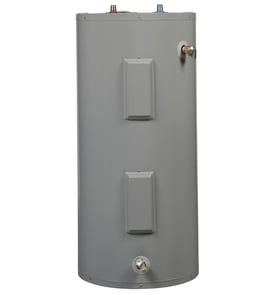


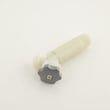
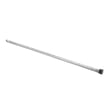
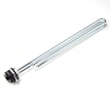
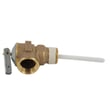

Can you replace parts on a water heater?
Yes. On the American water heater model E1F40RD045V, we can replace many service parts (such as thermostats, heating elements, the drain valve, and the anode rod) to restore performance and extend service life; tank leaks or severe internal corrosion typically point to replacing the entire heater. See the E1F40RD045V use & care manual for model-specific safety and procedures.
These are typical repairable items on this electric model:
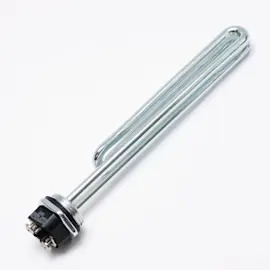
- Heating element (when you have no hot water or slow recovery)
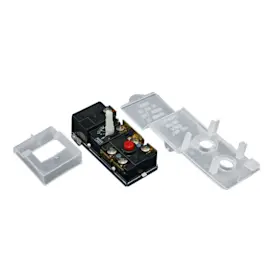
- Upper and lower thermostats (when temperatures fluctuate or overheat)
- Element gasket (when an element area seeps after service)
- Drain valve (when it drips or will not close)
- Dip tube (when hot water runs out quickly)
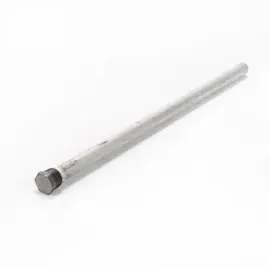
- Anode rod (for corrosion protection and odor-related issues)
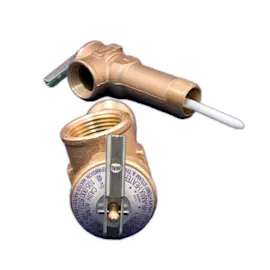
- T&P relief valve (when it drips or will not reseat)
If you already know the failed component, matching it to a model-listed part is the safest way to avoid fit and wiring issues.
Electric water heater repairs can be straightforward, but the hazards are real.
- Shut off power at the breaker and verify power is off
- Shut off the cold water supply valve
- Open a hot faucet to relieve pressure
- Let water cool if needed before draining
- Never energize the heater unless the tank is completely full
| Symptom | Often involved part | Typical next step |
|---|---|---|
| No hot water | Upper thermostat or heating element | Check reset, then test/replace as needed |
| Not enough hot water | Lower thermostat or element | Inspect for sediment, test element |
| Water in drain pan | Drain valve or T&P relief valve | Identify source, replace leaking valve |
| Rotten egg odor | Anode rod | Inspect and replace if depleted |
For step-by-step troubleshooting and repair guidance, we recommend starting with:
Replacing the right part on E1F40RD045V can restore safe water temperature control, reduce energy waste, and prevent nuisance leaks. It also helps protect the tank from corrosion when maintenance items like the anode rod are kept up.
Last updated: January 2026
How much should a 40 gallon electric water heater cost?
A 40-gallon electric water heater typically costs $400 to $1,000 for the unit, and $1,200 to $3,000 installed once you include labor, basic materials, and any permit requirements. For the American E1F40RD045V, the exact total depends mostly on installation conditions, not the model number alone.
- Budget tank (basic warranty/features): $400 to $600
- Mid-range tank (better warranty/features): $600 to $900
- Premium tank (higher warranty/features): $900 to $1,000+
- Installed total (common range): $1,200 to $3,000
- Higher-end installs: can exceed $3,000 when access, code upgrades, or plumbing/electrical changes are needed
- Permit and inspection requirements in your area
- Electrical updates (breaker, wire size, disconnect)
- New shutoff valve, expansion tank, or piping changes
- Drain pan and drain line additions (especially in finished spaces)
- Haul-away of the old tank and difficult access (attic, tight closet)
We recommend confirming these items before you compare quotes; they often explain big price differences.
| Item to confirm | Why it affects cost |
|---|---|
| Voltage and circuit size | May require electrical work to match code and load |
| Location and access | Tight spaces increase labor time |
| Closed system needs | Expansion control parts may be required |
| Drain pan/drain routing | Prevents water damage; may require extra materials |
A “cheap” quote can become expensive if it skips common safety and code-related items. Using the guidance in the E1F40RD045V manual helps you understand installation basics (electrical requirements, piping, and safety items) so you can compare estimates more accurately.
Last updated: January 2026
How to tell if an electric water heater is bad?
If your American electric water heater model E1F40RD045V is “bad,” you will usually see repeated no-hot-water or not-enough-hot-water symptoms even after you confirm power is on and the thermostats are set correctly. Common causes are failed heating elements, failed thermostats, heavy sediment, or a leaking tank (end of tank life); see the E1F40RD045V user manual for model-specific troubleshooting and safety steps.
- No hot water at all (often points to power, high-limit trip, upper thermostat, or upper element)
- Hot water runs out fast (often lower element issue or heavy sediment)
- Water heats very slowly (element weakening, sediment insulating the element)
- Breaker trips or high-limit keeps tripping (wiring issue, thermostat problem, element short)
- Popping, rumbling, or sizzling sounds (sediment buildup in the tank)
- Water in the drain pan or visible tank leakage (tank failure, replacement is typically the fix)
- Confirm power: check the breaker and that the unit is properly wired.
- Check thermostat settings: many homes start at 120°F for comfort and scald reduction.
- Reset the high-limit: if tripped, reset the red button (then watch if it trips again).
- Look for leaks: fittings, T&P discharge line, drain valve, and the tank itself.
| Symptom | Most likely cause | Typical fix |
|---|---|---|
| No hot water | Upper thermostat or element failed | Test and replace thermostat/element |
| Not enough hot water | Lower element failed or sediment | Replace element; flush tank |
| Dripping from relief valve | Pressure/thermal expansion or bad valve | Correct pressure/expansion; replace valve |
| Rotten egg odor | Anode rod reaction with water | Inspect/replace anode rod |
If testing points to a failed thermostat or element, use model-compatible parts such as the element 100108290 or lwr t-stat 100108421.
Catching element, thermostat, or sediment problems early can restore hot water and reduce energy costs. A leaking tank is different; it usually signals end-of-life and helps you avoid water damage by acting quickly.
Last updated: January 2026
Is it cheaper to repair or replace a water heater?
For the American water heater model E1F40RD045V, it’s usually cheaper to repair when the issue is limited to serviceable components (like a thermostat, heating element, or drain valve). It’s usually more cost-effective to replace when the tank itself is failing (leaks, heavy corrosion) or when repeated repairs add up.
We use a simple decision rule: repair the parts you can service safely and economically; replace the unit when the tank is the problem or when repair costs keep stacking up.
- Repair makes sense when:
- No tank leak and no visible rust-through
- You have no hot water or not enough hot water due to a likely electrical/control issue
- The fix points to common replaceable parts like the lwr t-stat 100108421 or element 100108290
- The drain valve is seeping and the tank is otherwise sound (see drain valve 100109106)
- Replacement makes sense when:
- The tank is leaking from the body of the heater (not a fitting)
- There is significant corrosion around the tank, element ports, or seams
- You have recurring failures (elements/thermostats) caused by heavy sediment or water conditions
- Repair cost is approaching 50% or more of the cost of a comparable new heater
| Scenario | Usually cheaper | Why |
|---|---|---|
| Bad thermostat or high-limit trip | Repair | Parts and labor are typically moderate |
| Failed heating element | Repair | Common service item; restore heat output |
| Dripping T&P valve (after diagnosing pressure/expansion) | Repair | Often a valve or system-pressure correction |
| Tank leak | Replace | Tank is not a serviceable “part” |
A repair on E1F40RD045V can restore performance quickly when the problem is electrical or a replaceable component. But once the tank is compromised, money spent on parts rarely improves reliability.
- Follow the safety and access steps in the E1F40RD045V manual.
- If you suspect a control issue, check both upper and lower thermostats; they should be set the same.
- If you’re seeing water in the drain pan, confirm whether it’s from a fitting/valve versus the tank.
- If you have odor or water quality issues, the anode rod can be a factor (see water heater anode rod 100109594).
Last updated: January 2026
What is the average lifespan of an electric hot water heater?
Most electric tank-style water heaters, including the American E1F40RD045V, typically last 10 to 15 years. Lifespan depends most on water quality, sediment buildup, and whether key wear items (like the anode rod) are inspected and replaced on schedule; see the E1F40RD045V use & care manual.
| Water heater type | Typical lifespan | Notes |
|---|---|---|
| Electric tank (standard) | 10 to 15 years | Most common residential style |
| Electric tankless | 20+ years | Longer life, different maintenance |
We see these factors make the biggest difference:
- Sediment and scale in the tank (can cause noise, slow recovery, and premature tank failure)
- Anode rod condition (a depleted anode accelerates tank corrosion)
- Water pressure and thermal expansion issues (can stress the tank and valves)
- Thermostat setting (higher temps increase stress and scale)
- Maintenance frequency (routine flushing and inspections help)
For the E1F40RD045V, the manual calls out maintenance items that directly impact longevity:
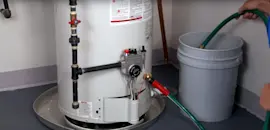
- Flush the tank about every 6 months to reduce sediment buildup
- Inspect the anode rod about every 3 years; replace it if it is more than 50% depleted (a common life-extender)
- Operate the temperature and pressure relief valve yearly to confirm it works correctly
- Keep both thermostats set reasonably (many homes start around 120°F)
If you need the wear part that protects the tank, use the model-matched water heater anode rod 100109594.
Once the tank itself corrodes through, replacement is usually the practical fix. Preventing corrosion and sediment buildup is the most reliable way to avoid leaks, keep recovery time normal, and control operating costs.
Last updated: January 2026