







How can I tell if my pressure washer pump is bad?
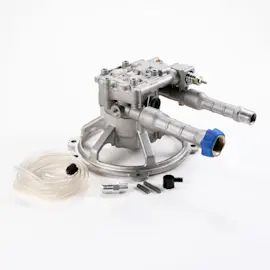
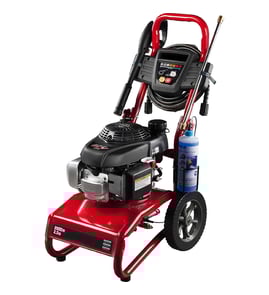
On the Craftsman 580751350 1500-psi pressure washer, a bad pump usually shows up as low or no pressure, surging or pulsing at the wand, water leaking from the pump head, or abnormal grinding noises. If basic setup checks do not restore steady pressure, the pump’s internal seals, check valves, or unloader system is typically the cause.
These issues can mimic a failed pump and are faster to rule out:
- Confirm the garden hose delivers strong flow; most pressure washers need a steady supply (typically 3/4-inch hose, full-open spigot).
- Remove and clean the spray tip/nozzle; a partial clog causes low pressure and pulsation.
- Check the inlet screen/filter for debris and rinse it clean.
- Purge air from the system: connect water, squeeze the trigger, and let water run steadily before starting the engine.
- Inspect the high-pressure hose and fittings for kinks, collapsed sections, or suction leaks.
If the items above check out, these pump symptoms are strong indicators:
- Pressure stays low even with a clean nozzle and good water supply.
- Pressure surges (rapid pulsing) that does not improve after purging air.
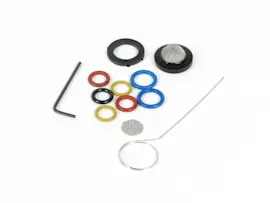
- Water leaks from the pump head/manifold area (often seal or O-ring wear).
- Milky pump oil (on pumps with an oil reservoir) which indicates water contamination.
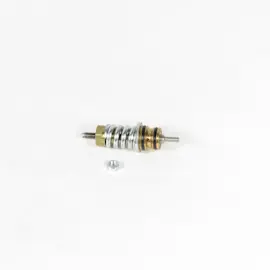
- Engine bogs or stalls when you pull the trigger, especially if the unloader is sticking.
| Test | What to do | What it tells you |
|---|---|---|
| Nozzle swap test | Try a different spray tip (same style) | If pressure returns, the original tip was restricted |
| Bypass behavior | With water on, start engine; observe pressure change when trigger is pulled/released | Big swings can point to unloader or check valve issues |
| Leak inspection | Run briefly and look for seepage at pump head seams and fittings | External leaks often mean seal or manifold damage |
Running the Craftsman 580751350 with a weak or leaking pump can cause poor cleaning performance and can accelerate wear on the unloader, seals, and check valves. Catching a restriction or air leak early can prevent unnecessary pump replacement.
For help identifying the correct replacement parts by model number, use the parts list for this model or search by model on Sears PartsDirect.
Last updated: February 2026
What is a good PSI for a gas pressure washer?
For most home cleaning, a good gas pressure washer PSI range is about 1,300 to 2,800 PSI. Your Craftsman 580751350 is a 1500-PSI pressure washer, which fits well for lighter-duty jobs like patio furniture, small decks, and rinsing siding with the right nozzle and technique.
- 1,300 to 2,000 PSI: cars, patio furniture, grills, light mildew on siding
- 2,000 to 2,800 PSI: decks, fences, driveways (with care), heavier grime
- 2,800 to 3,500+ PSI: tougher concrete cleaning and pro-level work (higher risk of damage)
PSI is the “cutting force,” but GPM (gallons per minute) is the “rinsing power.” For many jobs, a slightly lower PSI with decent flow cleans faster and more evenly.
| Spec | What it affects | What to look for at home |
|---|---|---|
| PSI | How hard the spray hits | 1,300 to 2,800 PSI |
| GPM | How quickly you rinse dirt away | Higher is usually better |
| Cleaning units (PSI x GPM) | Overall cleaning output | Compare models by this number |
- Start with the widest spray tip (lower impact) and move narrower only if needed.
- Use detergent/soap for oily grime instead of jumping to higher PSI.
- Keep the nozzle moving; don’t “park” the spray on wood, paint, or soft stone.
- Increase distance from the surface to reduce the chance of etching or splintering.
- Match the washer to the job; a 1500-PSI unit is ideal for routine home cleanup.
Too much PSI can gouge wood, strip paint, etch concrete, and force water behind siding. Using the lowest effective PSI protects surfaces and usually delivers better-looking results.
For more DIY help and tool guidance, use our must have tools for appliance repair resource.
Last updated: February 2026
What kind of gas goes in a Craftsman 580751350 pressure washer?
Use clean, fresh, unleaded gasoline (regular) with a minimum 87 octane (87 AKI). For the Craftsman 580751350 1500-psi pressure washer, avoid old fuel and avoid mixing oil into the gas (it is a 4-cycle setup).
- Use unleaded gasoline, 87 octane (AKI) or higher.
- Use fresh fuel (gas that has not been sitting for weeks or months).
- Avoid E85 and other high-ethanol fuels.
- Avoid stale gas (varnish smell, dark color, or stored in an open container).
- Do not use 2-cycle mix (gas mixed with oil).
- Shut the engine off and let it cool.
- Fill outdoors, away from ignition sources.
- Use a clean fuel can and a funnel to prevent dirt in the tank.
- Do not overfill; leave room for expansion.
- Wipe up spills before starting.
Most small-engine pressure washers run best on E10 (up to 10% ethanol) or ethanol-free fuel when available. If you only have E10, using fresh gas and not storing it long-term helps prevent hard starting and surging.
| Fuel type | OK to use? | Best for |
|---|---|---|
| Unleaded 87 AKI (fresh) | Yes | Everyday use |
| Ethanol-free unleaded | Yes | Best storage stability |
| E10 (up to 10% ethanol) | Yes | Common pump gas |
| E15 / E85 | No | Can cause running issues |
The right gasoline helps the carburetor, fuel lines, and engine run cleanly. Old or high-ethanol fuel is a top cause of no-start, surging, and poor pressure on a gas pressure washer.
For more help identifying the exact model tag before ordering maintenance items, use how to find your appliance model number (and what it means for parts).
Last updated: February 2026