


How to replace a GE dryer belt?
To replace the belt on your GE electric dryer model DWLR473ET1WW, we unplug the dryer, open the cabinet, remove the old belt, then route the new belt around the drum and through the idler and motor pulleys so the idler applies tension before reassembling.
Before you start (safety and prep)
- Unplug the dryer from the wall outlet.
- If it is hardwired, switch the breaker OFF and confirm power is off.
- Pull the dryer forward so you can access the rear vent.
- Disconnect the vent duct to prevent crushing it during service.
- Take a quick photo of the belt path before removing anything.
Belt routing overview (what “correct” looks like)
The belt must sit in the drum’s belt groove, then travel down to the motor pulley and around the idler pulley so the idler keeps the belt tight.
| Area | What to check | What it prevents |
|---|---|---|
| Drum | Belt is centered in the wear groove | Belt walking off the drum |
| Idler pulley | Pulley spins freely and applies tension | Squealing, slipping, no tumble |
| Motor pulley | Belt is seated in the pulley groove | Burning rubber smell, poor start |
Step-by-step: replacing the belt (typical GE design)
- Remove the lint screen and the screws in the lint screen housing (if equipped).
- Release the top panel clips (or remove top screws), then lift the top.
- Remove the front panel (support the drum as the front comes off).
- Slip the old belt off the drum and off the pulleys.
- Slide the new belt around the drum with the ribbed side against the drum.
- Reach under the drum and route the belt around the motor pulley and the idler pulley so the idler tensions the belt.
- Rotate the drum by hand 1 to 2 turns; the belt should track smoothly.
- Reinstall the front panel, top, lint screen housing screws, and lint screen.
Parts that commonly cause belt problems
If the belt keeps slipping, squeals, or breaks quickly, we check these wear items:
- Idler pulley WE12X83 (worn bearing or seized pulley)
- Dryer motor pulley WE12X41 (grooved or damaged pulley)
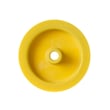
- Dryer drum front bearing WE3X77 (drum drag that overloads the belt)
Why it matters
A correctly routed, properly tensioned belt keeps the drum turning at the right speed, prevents overheating from friction, and reduces strain on the drive motor.
Last updated: February 2026
What are the main parts of a dryer?
For the GE DWLR473ET1WW electric dryer, the main parts are the drum system (belt, motor, idler), the airflow system (blower wheel, lint screen, venting), the heating and temperature-safety system, and the door and controls. These parts work together to tumble clothes, move heated air, and exhaust moisture.
Core dryer systems (and what they do)
- Drum and drive system: tumbles the load using the drum, belt, motor, and idler pulley.
- Airflow system: pulls air through the drum and pushes it out the exhaust; lint control starts at the lint screen.
- Heating system (electric): creates heat using a heater assembly and cycles heat using thermostats.
- Safety temperature controls: shuts heat off if temperatures get unsafe (common examples are safety thermostats and thermal cutoffs).
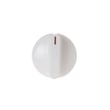
- User interface and starting: timer/controls and the start switch tell the dryer when to run.
- Door system: latch/strike/hinges keep the door closed so the dryer can run.
Common parts you may actually replace on DWLR473ET1WW
These are some model-matched parts customers often look for when troubleshooting noise, no-start, or poor drying:
- Dryer blower wheel WE16M15 (air movement, drying time)
- GE dryer lint screen WE18X54 (lint capture, airflow)
- Idler pulley WE12X83 (belt tension, squealing)
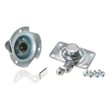
- Dryer rotary start switch WE4X881 (start issues)
- Htr asm 240v WE11X103 (no heat on electric)
Quick symptom-to-part guide
| Symptom | Most likely system | Example model-matched part |
|---|---|---|
| Takes too long to dry | Airflow restriction or weak airflow | Dryer blower wheel WE16M15 or GE dryer lint screen WE18X54 |
| Squealing or thumping | Drum drive support/tension | Idler pulley WE12X83 or dryer drum bearing components |
| Won’t start | Start circuit or door closure | Dryer rotary start switch WE4X881 or door strike/latch parts |
| Runs but no heat | Electric heating circuit | Htr asm 240v WE11X103 |
Why it matters
Knowing the main parts helps you troubleshoot faster: most “no heat” problems trace to the heating and safety circuit, while “long dry times” usually trace to airflow (lint screen, blower, vent). That keeps repairs focused and prevents repeat failures.
For a deeper overview of how these components fit together, use our what are the main parts of a clothes dryer guide.
Last updated: February 2026
What is the most common problem with a GE electric dryer?
On a GE electric dryer like model DWLR473ET1WW, the most common failure we see is no heat caused by a failed heating circuit component (often the heater assembly or a safety thermostat). The dryer can still run and tumble normally, but clothes stay cold and damp.
What “runs but won’t heat” usually points to
If your DWLR473ET1WW tumbles but does not dry, these are the most common culprits to check first:
- House power issue: dryer is getting 120V but not full 240V (motor runs, heater stays off)
- Restricted airflow from lint buildup or a crushed/blocked vent
- Failed heater assembly (common on electric dryers)
- Open safety thermostat or thermal cutoff (overheat protection)
- Loose/burned wire connection at the heater or terminal block
A common heat-safety part on this model is the t'stat safe WE4X800.
Quick checks we recommend before replacing parts
- Confirm full power: reset the double breaker; verify the outlet supplies 240V (an electrician can test quickly).
- Check airflow: clean the lint screen, then run a timed dry cycle with the vent disconnected briefly; strong airflow at the outlet points to a vent restriction.
- Inspect the lint screen condition: a damaged or poorly fitting screen can reduce airflow and drying performance; replace if needed with the GE dryer lint screen WE18X54.
- Look for heat at the start: on timed dry, you should feel warm air within a few minutes if the heater circuit is working.
Symptom-to-likely-cause guide
| What you notice | Most likely cause | What to do next |
|---|---|---|
| Tumbles, no heat at all | Power supply issue or heater circuit open | Check breaker/outlet; then test heater and thermostats |
| Long dry times, some heat | Vent restriction or weak airflow | Clean venting; check blower and lint screen |
| Stops heating mid-cycle | Overheating, safety thermostat opening | Fix airflow first; then test/replace thermostat |
Why it matters
A no-heat problem is frustrating, but it is also a strong diagnostic clue. On electric dryers, heat depends on proper 240V supply and good airflow; fixing venting issues first helps prevent repeat failures of heater and thermostat parts.
For more GE dryer troubleshooting patterns, we also use the GE gfd model series error codes guide as a reference for common symptom logic.
Last updated: February 2026
Where to find part number on GE dryer?
On your GE DWLR473ET1WW electric dryer, the model and serial tag (often used to look up the correct replacement part number) is typically located on the door opening, either on the inside of the door or on the front door frame.
Where to check first
- Open the dryer door and inspect the door frame around the opening
- Check the inside edge of the dryer door itself
- Look near the latch area and hinge side (common tag locations)
- Wipe dust off the label so the model and serial characters are readable
What to write down (so you get the right part)
For parts ordering and compatibility, we recommend recording these items exactly as shown:
- Model number (example: DWLR473ET1WW)
- Serial number
- Optional: product code or manufacturing date (if listed)
Model number vs. part number (quick comparison)
| Item | What it identifies | Where you’ll use it |
|---|---|---|
| Model number | Your exact dryer version | To find the correct parts list for DWLR473ET1WW |
| Serial number | Production run details | To confirm revisions when parts changed |
| Part number / part ID | A specific replacement part | To order the exact component |
Example: a part ID you might see on this model’s parts list
If you already know what failed, match the part by name and ID. For example, a worn belt-tension pulley is listed as the idler pulley WE12X83.
Why it matters
GE often uses multiple revisions within a model family; using the exact DWLR473ET1WW model number (and serial number when available) prevents ordering a door switch, start switch, lint screen, or heater component that does not fit.
Last updated: February 2026
Why is the drum not rotating on my GE dryer?
On the GE DWLR473ET1WW electric dryer, a drum that won’t rotate is usually caused by a broken or slipped drive belt, a seized idler pulley, a worn drum bearing, or a failed drive motor. Start by checking for normal motor sound and any burning-rubber odor.
Quick checks we recommend first
- Unplug the dryer; try turning the drum by hand. If it’s very hard to turn, suspect a seized bearing or something jammed.
- If the drum turns easily but won’t run, listen for motor hum when you press Start.
- Check the lint screen and airflow; severe restriction can overheat components and lead to shutdowns.
- Confirm the door closes and latches firmly; a door that won’t stay shut can stop the cycle.
Most common causes and what they look like
| What you notice | Most likely cause | What to inspect next |
|---|---|---|
| Motor runs but drum doesn’t move | Belt slipped/broken, idler not tensioning | Idler and belt path; pulley spins freely |
| Loud squeal or grinding | Idler pulley or drum bearing wear | Idler pulley WE12X83, front bearing area |
| Hums, then stops, drum doesn’t start | Motor struggling, drum drag | Motor WE17X10010, drum turns by hand |
| Drum turns, but clothes take longer | Blower/airflow issue (separate from “no spin”) | Dryer blower wheel WE16M15, venting |
Parts that commonly fix a no-spin condition
- Idler pulley WE12X83: if the pulley is stuck, wobbly, or noisy, the belt can’t stay tight.
- Dryer drum front bearing WE3X77: if worn, the drum can bind and the motor may not start the load.
- Motor WE17X10010: if the motor hums, overheats, or won’t start under load.
- Dryer rotary start switch WE4X881: if pressing Start does nothing and power is present.
Why it matters
A non-rotating drum is more than an inconvenience; continued attempts to run the dryer can overheat the motor, damage the belt path, and increase wear on drum support parts. Fixing the root cause restores safe, normal tumbling and drying performance.
Last updated: February 2026





