Installation guide
 Owner’s manual
 Error Codes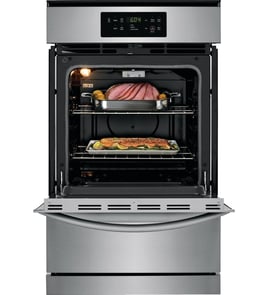



Does anyone make a 30 gas wall oven?
Yes. 30-inch gas wall ovens are made today, and your Kenmore gas wall oven model 79030553803 is an example of a built-in gas wall oven format that installs into a cabinet cutout using standard wall-oven installation practices. Use the installation guide to confirm cutout sizing, electrical grounding, and gas setup requirements.
What to check before buying any 30-inch gas wall oven
- Cutout width and height: the cabinet opening must match the oven’s required cutout.
- Support capacity: the cabinet base must support 150 lb.
- Electrical: a properly grounded receptacle is required (do not remove the grounding prong).
- Gas type: confirm natural gas vs LP and whether conversion steps are needed.
- Flame quality after install: the burner flame should be steady with a blue cone (about 1 inch).
Quick fit and hookup checklist (typical)
| Item | What to verify | Why it matters |
|---|---|---|
| Width class | “30-inch” is a nominal size; cutouts vary by model | Prevents gaps or binding in the cabinet |
| Cabinet strength | 150 lb support minimum | Prevents sagging and alignment issues |
| Grounding | 3-prong grounded outlet | Reduces shock risk and nuisance failures |
| Gas conversion | Regulator and orifice settings match fuel | Prevents poor ignition and unsafe combustion |
If you are comparing brands and models
We recommend narrowing choices by installation requirements first, then features. Many 30-inch gas wall ovens share similar needs (cabinet cutout, grounded power, and correct gas pressure/regulator settings), but the exact cutout dimensions and trim overlap vary by model.
Why it matters
A “30-inch” label does not guarantee a drop-in fit. Confirming cutout dimensions, cabinet support, and gas type up front prevents costly returns and helps ensure safe, reliable ignition and baking performance.
Last updated: January 2026
What is the disadvantage of a wall oven?
A wall oven like the Kenmore 79030553803 typically costs more overall because it often requires built-in cabinetry work plus a dedicated cooktop, and service access can be harder once it’s installed. Installation also has stricter electrical grounding and gas-code requirements than many freestanding ranges.
Common disadvantages (what we see most often)
- Higher total cost: wall oven plus cooktop, plus cabinet modifications.
- More complex installation: gas hookup, electrical grounding, and code compliance are critical.
- Harder to service: built-in placement can make repairs and removal more time-consuming.
- Ergonomics vary: depending on mounting height, you may bend more or reach higher for heavy pans.
- Less flexibility later: changing sizes or layouts can mean reworking the cabinet cutout.
Wall oven vs. freestanding range (quick comparison)
| Feature | Wall oven setup | Freestanding range |
|---|---|---|
| Upfront cost | Usually higher | Usually lower |
| Installation complexity | Higher (built-in, grounding, gas) | Lower (often simpler hookup) |
| Cooktop included | No (separate cooktop needed) | Yes |
| Service access | Often harder | Often easier |
Why installation requirements matter
For the Kenmore 79030553803 gas wall oven, proper grounding and following local gas and electrical codes are part of a safe installation. We also recommend keeping the installation instructions handy for future service steps like shutting off gas and disconnecting power before maintenance.
Tips to reduce the downsides
- Confirm cabinet cutout and clearances using the 79030553803 installation guide.
- Keep model and serial information recorded; it helps match parts and fuel setup.
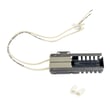
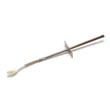
- If baking performance becomes inconsistent, common service items include the igniter and temperature sensor (a weak igniter can delay ignition and affect heat stability).
Last updated: January 2026
What was the size of the Kenmore 79030553803 oven?
The Kenmore 79030553803 gas wall oven is designed to fit a standard wall-oven cabinet cutout; the installation instructions call out key clearances such as at least 19-3/8 inches in front for full door opening. For the exact overall oven dimensions, use the 79030553803 installation guide.
Key fit and clearance measurements (from installation guidance)
These are the measurements that matter most when you are confirming the oven will physically fit your cabinet opening:
- Allow at least 19-3/8 inches clearance in front for complete door opening.
- The oven vent should not be located under 36 inches from the floor.
- The floor cabinet must be able to support 150 pounds.
- Corners of the cabinet opening must be square and the cabinet must be flush at the bottom of the opening.
- A 1/4-inch diameter hole is referenced for the gas hook-up.
Common “size” terms (so you measure the right thing)
People often mean different things by “size.” Here is what to check.
| What you’re measuring | What it tells you | Where to use it |
|---|---|---|
| Cabinet cutout (height, width, depth) | Whether the oven fits the opening | Remodels, replacements |
| Overall oven dimensions | Whether the oven clears trim, doors, and adjacent cabinets | Tight installs |
| Door swing clearance | Whether the door can open fully | Walkways, islands |
If you are replacing an older wall oven
Many wall ovens in this class are built around a nominal 24-inch cabinet depth and a 30-inch class width, but the exact cutout and trim overlap vary by model and year. Use the 79030553803 installation guide to match your cutout dimensions and required clearances before ordering parts or scheduling installation.
Why it matters
Wall ovens are “fit-critical.” A small mismatch in cutout width, height, or required front clearance can prevent the oven from seating correctly, can cause door interference, and can make servicing parts like the igniter, gas valve, or control board much harder later.
Last updated: January 2026