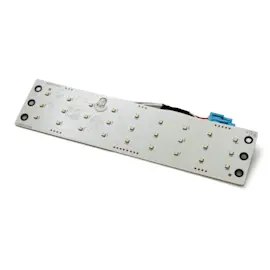
Owner’s manual
 Error Codes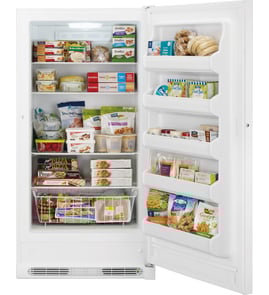



How many years should an upright freezer last?
Most upright freezers last 10 to 15 years. For a Frigidaire LFFH20F3QM2 upright freezer, consistent cleaning, good airflow around the cabinet, and keeping the door sealing tightly are the biggest factors that help you reach (and sometimes exceed) that typical lifespan; see the LFFH20F3QM2 owner's manual for model-specific care guidance.
- 10 to 15 years is the normal service life for an upright freezer.
- 16 to 20 years is common when the freezer is kept clean, level, and in a mild environment.
- Early failure is most often tied to heat exposure, poor airflow, or door seal leaks.
| What you do | What it helps prevent | Why it matters |
|---|---|---|
| Keep the door sealing well | Warm air leaks, frost buildup | Reduces compressor run time |
| Maintain airflow around the freezer | Overheating | Protects the compressor and electronics |
| Keep coils and vents clean | Inefficient cooling | Lowers energy use and wear |
- Placing the freezer in a hot garage or unconditioned space
- Overpacking so air cannot circulate inside
- Frequent, long door openings (humidity drives frost)
- Ignoring heavy frost buildup (forces longer run times)
- Running with a loose or damaged door gasket
If cooling performance drops, addressing the underlying cause quickly can extend the freezer’s life.
- Freezer compressor start relay 297259515 (hard starting, clicking, no start)
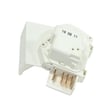
- Defrost timer 5304518034 (excess frost, warm temps after icing)
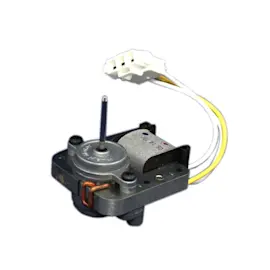
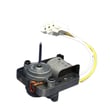
- Frigidaire freezer evaporator fan motor 297309000 (poor airflow, warm spots)
A freezer that runs longer than necessary (from heat, restricted airflow, or air leaks) puts extra stress on the sealed system and compressor. Keeping temperatures stable and airflow clear is the simplest way to maximize lifespan.
Last updated: February 2026
How big is a 6.5 cu ft upright freezer?
A 6.5 cu ft upright freezer is typically a compact, apartment-size unit that measures about 21 to 24 inches wide, 22 to 26 inches deep, and 55 to 60 inches tall. For exact dimensions of your Frigidaire freezer model, check the LFFH20F3QM2 owner's manual.
Most 6.5 cu ft uprights are designed to fit through standard doorways and into tight spaces while still offering full-height shelving.
- Width: 21 to 24 in.
- Depth: 22 to 26 in. (add 1 to 2 in. for handle clearance)
- Height: 55 to 60 in.
- Footprint: roughly 3.5 to 4.5 sq. ft.
- Weight (typical): about 90 to 120 lb.
Use a tape measure and capture the “installed” size, not just the cabinet box.
- Measure width at the widest point (often the hinge side)
- Measure depth from the back to the front edge of the door (include handle if it sticks out)
- Measure height from floor to the top (include hinge cover if present)
- Leave space for door swing and airflow behind the cabinet
| Capacity class | Typical width | Typical height | Best for |
|---|---|---|---|
| 5.0 to 7.0 cu ft | 21 to 24 in. | 55 to 60 in. | Small kitchens, garages, overflow storage |
| 13 to 16 cu ft | 27 to 30 in. | 60 to 66 in. | Family bulk storage |
| 18 to 21 cu ft | 30 to 33 in. | 66 to 73 in. | Large households, hunting, long-term storage |
Getting the right dimensions helps prevent delivery issues, ensures proper ventilation for the compressor, and avoids door-clearance problems that can lead to warm spots and frost buildup.
Last updated: February 2026
What are the three types of freezers?
The three main types of home freezers are upright freezers, chest freezers, and refrigerator-freezer combinations. Since the Frigidaire LFFH20F3QM2 is an upright freezer, it is built for easy access and organization through a front-opening door; chest models prioritize bulk storage and efficiency.
| Freezer type | How it opens | Best for | Typical tradeoffs |
|---|---|---|---|
| Upright freezer (like LFFH20F3QM2) | Front door | Organization, frequent access, smaller footprint | More air loss when opened; more parts involved in airflow/defrost on many models |
| Chest freezer | Top lid | Bulk storage, long holds, power-outage performance | Harder to organize; items can get buried |
| Refrigerator-freezer combo | Fridge door(s) plus freezer compartment | Everyday kitchen use, one appliance for both | Less freezer capacity than a dedicated freezer |
- Choose an upright freezer if you want shelves/bins and quick visibility of food.
- Choose a chest freezer if you want maximum capacity per dollar and strong cold retention.
- Choose a refrigerator-freezer combo if you need balanced fridge and freezer space in one unit.
- Measure your space and door swing clearance before buying or relocating.
- Match the freezer type to how you shop: weekly bulk buys favor chest; daily access favors upright.
Freezer type affects usable capacity, organization, and temperature stability. For example, uprights are convenient for sorting foods, while chests tend to hold cold air better because cold air stays low when the lid is opened.
For operating basics (temperature setting guidance, loading recommendations, and care/cleaning), use the LFFH20F3QM2 owner's manual.
Last updated: February 2026