Owner’s manual
 Error Codes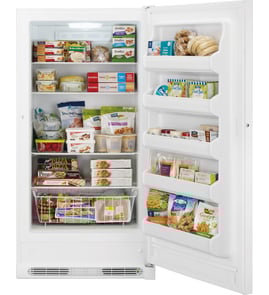


How long do Kenmore upright freezers last?
Most Kenmore upright freezers, including model 25328459808, last 10 to 15 years with normal household use and basic maintenance. Keeping the door sealing properly, cleaning, and avoiding heavy frost buildup helps you reach the upper end of that range.
Typical lifespan and what affects it
A freezer’s life depends mostly on compressor run time, airflow, and how well it stays sealed.
- Door seal condition (air leaks force longer run times)
- Room temperature and ventilation around the cabinet
- Frost buildup and how often the door is opened
- Condenser cleanliness (dust makes the system work harder)
- Power quality (frequent outages and surges add wear)
Maintenance that extends freezer life
Use these habits to reduce strain on the sealed system and keep temperatures stable.
- Allow a full cool-down before loading; the guide notes about 4 hours to cool completely
- Keep shelves unlined so cold air can circulate (no foil, wax paper, or paper towels)
- Organize food to reduce door-open time
- Clean the exterior with mild detergent and dry thoroughly
- For long storage or moving, follow the cleaning and door-propping steps in the owner's manual
Quick reference: what “normal” looks like
| Item | Good target | Why it matters |
|---|---|---|
| Expected service life | 10 to 15 years | Typical lifespan for upright freezers |
| Cool-down time after start | About 4 hours | Prevents loading warm food too soon |
| Door-open habits | Short and infrequent | Reduces frost and compressor run time |
Why it matters
A freezer that runs longer than necessary wears the compressor, control board, and fan system faster. Simple airflow and sealing checks often prevent temperature swings, frost problems, and early component failure.
Last updated: February 2026
Where is the model number on a Kenmore upright freezer?
On Kenmore upright freezer model 25328459808, the model and serial number plate is typically located on the upper left wall inside the freezer compartment. This label is the fastest way to confirm the exact model number for ordering parts and using the correct instructions in the owner's manual.
Common places to check on an upright freezer
We recommend checking these spots in order:
- Upper left interior wall (most common on upright models)
- Side wall inside the cabinet (near the front opening)
- Ceiling area inside the freezer (some upright designs)
- Behind the kick plate or lower front grille (if your unit has one)
- Back exterior panel (less common, but possible)
What the label looks like and what to write down
The plate usually lists both identifiers you need:
| Item on label | What it’s used for |
|---|---|
| Model number (example format: 253.XXXXXXX) | Matching the correct parts list and diagrams |
| Serial number | Identifying production details for service and documentation |
Why it matters
Kenmore model numbers often share similar prefixes, and small differences change the correct parts (like a door gasket, electronic control board, or defrost heater). Using the exact model number helps ensure you get the right replacement part the first time.
Quick tip for reading the model number
- Write the number exactly as printed, including any dots or leading digits
- If the label is frosted over, wipe it dry and let it warm for a minute so the print is readable
- Take a clear photo before the label fades or gets damaged
Last updated: February 2026
What size is a Kenmore freezer by model number 25328459808?
The Kenmore upright freezer model 25328459808 is a full-size upright freezer; its exact exterior dimensions and cubic-foot capacity depend on the specific build for this model series. For the most accurate size details (capacity, shelving configuration, and features), use the specifications section in the 25328459808 owner's manual.
What “size” usually means for an upright freezer
When customers ask for freezer “size,” they typically mean one or more of these:
- Capacity (cubic feet) for food storage planning
- Exterior dimensions (height, width, depth) for fit in a space
- Interior layout (shelves, baskets, door bins) for organization
- Door swing clearance for placement next to walls or cabinets
The manual for this Kenmore freezer describes common upright features like adjustable interior shelves, door bins, and tilt-out storage, which helps you judge usable space even when you are comparing similar upright models.
Quick way to confirm the right size for your exact unit
Use this checklist so you match the freezer you own (not a similar-looking model):
- Confirm the model number is 25328459808 on the rating plate inside the cabinet
- Check the specifications section in the 25328459808 owner's manual
- Measure your installation space and compare to the freezer’s listed dimensions
- Allow clearance for door opening and airflow around the cabinet
Typical upright freezer size ranges (helpful for planning)
If you are planning space before you locate the spec page, most full-size upright freezers fall into these common ranges:
| What you’re checking | Typical range for upright freezers |
|---|---|
| Capacity | 14 to 20 cu. ft. |
| Width | 28 to 33 in. |
| Height | 60 to 72 in. |
| Depth | 28 to 33 in. |
Why it matters
Getting the correct “size” prevents two common problems: buying an upright freezer that will not physically fit your space (door swing and depth are the usual surprises), or choosing a capacity that does not match your storage needs.
Last updated: February 2026
How do I know if my compressor is bad in my Kenmore freezer?
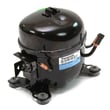
If your Kenmore freezer model 25328459808 is not holding temperature and you notice long run times, repeated clicking as it tries to start, or the cabinet is warm while the compressor runs, the compressor system is failing. Use the checks below to separate normal compressor noise from a real cooling problem (see the owner's manual).
Quick signs the compressor system is failing
- Freezer is warm (food softening) even though the unit runs for long periods
- Repeated clicking every few minutes (start attempt, then shutoff)
- Compressor is very hot and the freezer still does not cool
- Circuit breaker trips when the compressor tries to start
- You do not hear the evaporator fan moving air inside the freezer
What is normal for this model
The manual notes that modern freezers can sound louder when running, and you may hear popping, cracking, or gurgling as refrigerant circulates. Those sounds alone do not mean the compressor is bad.
Normal vs. problem symptoms
| What you notice | Usually normal | More likely a problem |
|---|---|---|
| Low hum while running | Yes | No |
| Occasional gurgle/bubble sound | Yes | No |
| Runs a lot after loading food or warm room | Yes | No |
| Runs constantly and still warm | No | Yes |
| Repeated clicking and no cooling | No | Yes |
Checks to do before blaming the compressor
- Confirm power is correct. Use a dedicated 3-prong outlet; do not use an extension cord or adapter. Low voltage can prevent the compressor from starting.
- Verify the temperature control setting. Turning the control to OFF stops the compressor but does not disconnect power to other components.
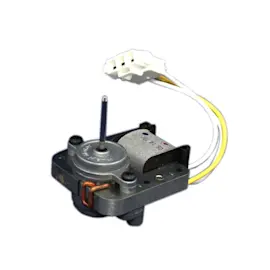
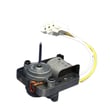
- Listen for the evaporator fan. If the freezer is warm and the fan is not running, the issue may be airflow, not the sealed system. For this model, common fan parts include the freezer evaporator fan motor 297309000 and blade 5308000010.
- Look for heavy frost on the back interior panel. A solid frost blanket often points to a defrost problem (not a bad compressor). Defrost parts on this model include the defrost heater 5304496687 and refrigeration appliance defrost bi-metal thermostat 297216600.
Why it matters
A true compressor or sealed-system failure is a major repair, but many “bad compressor” symptoms are actually caused by airflow issues, defrost failures, or power problems. Doing these checks first prevents unnecessary parts replacement.
Last updated: February 2026
What causes an upright freezer to stop freezing?
For Kenmore model 25328459808, an upright freezer usually stops freezing because cold air is not circulating, the temperature control is set incorrectly, the door is not sealing, or the defrost system is iced up. Use the troubleshooting and operating details in the owner's manual to narrow it down quickly.
Quick checks first (no tools)
- Confirm the freezer is plugged in and the outlet has power.
- Make sure the temperature control is not set too warm; allow several hours for temperatures to stabilize after changes.
- Check that the door closes and seals fully; a misaligned door can cause cooling and frost problems.
- Reduce door openings; warm, moist air entering the cabinet drives frost buildup and warming.
- Look for heavy frost (about 1/4 to 1/2 inch); that level means it is time to defrost on non-frost-free operation.
Common causes and what they look like
| What you notice | Likely cause | What to do next |
|---|---|---|
| Freezer runs a lot but temps are warm | Door gasket leaking or door not seating | Inspect/clean gasket; replace if torn (see freezer door gasket 5304507207) |
| Frost/ice buildup and weak airflow | Defrost problem or restricted airflow | Defrost and clear ice; if it returns quickly, check defrost parts |
| Warm cabinet and no fan sound | Evaporator fan issue | Inspect fan area; consider freezer evaporator fan motor 297309000 and blade 5308000010 |
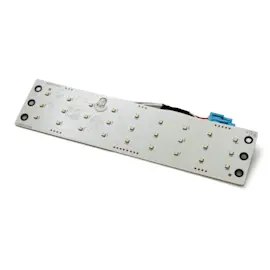
| Temps drift, odd behavior | Control issue | Review diagnostics and consider freezer electronic control board 297366201 |
Defrost and airflow steps that fix many “not freezing” complaints
- Unplug the freezer.
- Remove food and leave the door open.
- If your unit has a defrost drain, remove the internal drain plug and route water to a shallow pan (the manual explains access).
- After all ice melts, dry the interior and restart.
Why it matters: Ice buildup blocks airflow across the evaporator, so the freezer can run but not move enough cold air to keep food frozen.
When a part is commonly involved
These parts often solve the underlying cause when symptoms match:
- Defrost heater 5304496687 (heavy frost returning quickly)
- Refrigeration appliance defrost bi-metal thermostat 297216600 (defrost not cycling correctly)
- Freezer door gasket 5304507207 (air leaks, sweating, frost)
Last updated: February 2026