


How much is a combined heating and cooling system?
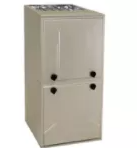
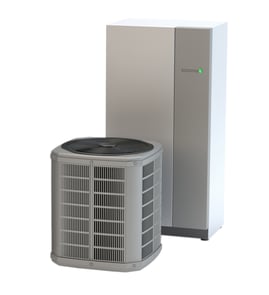
A combined heating and cooling system typically costs $10,000 to $20,000 installed, with many homeowners landing around $14,000 for a central air conditioner paired with a gas furnace. For your York D3CG120N20025 packaged heating and cooling unit, total cost depends most on capacity, efficiency, and installation complexity.
What drives the total price?
These factors usually move the price up or down the most:
- System type: packaged unit vs. split system (outdoor condenser plus indoor furnace/air handler)
- Capacity sizing (tonnage/BTU) based on your home’s load calculation
- Efficiency ratings (higher efficiency typically costs more upfront)
- Ductwork condition: repairs, sealing, or replacement
- Electrical and gas work: disconnects, breakers, gas line changes, venting
- Permits and labor: local requirements and install time
Typical cost ranges (installed)
Use these as practical planning numbers for most U.S. homes.
| Scenario | Typical installed range | What it usually includes |
|---|---|---|
| Basic replacement (existing ductwork in good shape) | $10,000 to $14,000 | Equipment swap, standard startup, minor materials |
| Mid-range install (some duct/electrical updates) | $14,000 to $18,000 | Duct sealing/repairs, electrical or gas adjustments |
| Complex install (duct replacement or major upgrades) | $18,000 to $20,000+ | Significant ductwork, controls upgrades, longer labor |
Why it matters
Correct sizing and a clean install often matter more than brand alone. An oversized or undersized unit can cause comfort issues, higher energy use, and more wear on key components like the blower motor and run capacitor.
If you are budgeting for repairs instead of replacement
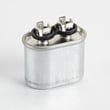
If your York D3CG120N20025 is not cooling or the outdoor fan struggles to start, a failed run capacitor is a common, lower-cost repair compared to full system replacement. You can match and replace the correct part using the model-based parts list, including the capacitor 12907.
Last updated: February 2026
What size house for 120000 btu furnace?
A 120,000 BTU furnace (or heating section in a York heating and cooling combined unit like model D3CG120N20025) typically fits a 2,800 to 3,500 sq. ft. home in colder climates; in milder climates or with excellent insulation, it can cover more. Correct sizing depends on heat loss, not just square footage.
Quick sizing guide (what changes the answer)
Use these factors to narrow the range for your home:
- Climate zone: colder regions need more BTUs per sq. ft.
- Insulation and air sealing: attic insulation, wall insulation, and drafts matter most
- Ceiling height: tall ceilings increase heated volume
- Window quality and amount: older single-pane windows raise heat loss
- Duct condition: leaky or undersized ducts reduce delivered heat
- Home layout: open plans and basements can change load
Typical square footage ranges by climate
These are common planning ranges for a 120,000 BTU furnace (assuming average construction and a properly set up system):
| Climate / home efficiency | Typical coverage for 120,000 BTU |
|---|---|
| Cold climate, average insulation | 2,800 to 3,500 sq. ft. |
| Cold climate, high efficiency envelope | 3,300 to 4,200 sq. ft. |
| Mild climate, average insulation | 3,500 to 4,500 sq. ft. |
How to size it the right way
For the most accurate answer, we size by heat loss (Manual J style), then match equipment output:
- Start with your conditioned square footage (exclude garages and unfinished spaces)
- Note insulation levels (attic R-value, wall type) and window type
- Consider your design temperature (coldest typical outdoor temp)
- Compare the result to the furnace’s delivered heat (output), not just input BTUs
Why it matters
Oversizing a furnace can cause short cycling, uneven temperatures, and higher wear on controls and blowers. Undersizing can leave you cold on the coldest days and run the system nonstop.
Parts note for York D3CG120N20025
If your system struggles to start or the blower motor hums, a weak run capacitor is a common cause on many HVAC units. The model D3CG120N20025 parts list includes the capacitor 12907, which is one of the electrical parts often involved in motor starting and running.
Last updated: February 2026
How do I troubleshoot my D3CG120N20025?
For your York D3CG120N20025 heating and cooling combined unit, start troubleshooting by confirming thermostat settings, verifying power to the unit, and checking airflow restrictions. If the system hums but the fan or compressor will not start, a weak run capacitor is a common cause; see capacitor 12907.
Quick checks we recommend first
- Set the thermostat to the correct mode (HEAT or COOL) and lower or raise the setpoint 3 to 5 degrees.
- Check the indoor breaker and the outdoor disconnect; reset a tripped breaker once.
- Replace or clean the air filter; restricted airflow can cause icing, overheating, and shutdowns.
- Make sure supply registers and return grilles are open and not blocked.
- Inspect the outdoor coil for debris; gently clear leaves and dirt from the fins.
- Look for ice on the refrigerant lines or coil; if iced, turn COOL off and run FAN only to thaw.
Symptom-based troubleshooting
| What you notice | Most likely causes | What to do next |
|---|---|---|
| Unit will not run at all | No power, thermostat issue, blown fuse | Verify power, then test fuses and low-voltage wiring |
| Outdoor unit hums but will not start | Weak capacitor, stuck fan motor, seized compressor | Shut power off; inspect and test the capacitor |
| Runs but poor cooling/heating | Dirty filter/coil, low airflow, duct issues | Restore airflow; clean coil; confirm registers open |
| Short cycling (on and off) | Dirty coil, overheating, control issue | Clean coil, confirm airflow; check wiring connections |
Testing electrical parts safely (high value step)
If you are comfortable using a meter, we use these steps:
- Shut off power at the breaker and disconnect.
- Discharge the capacitor properly before handling.
- Photograph wire positions before removing any terminals.
- Use a multimeter to test capacitor microfarads against the rating on the label.
- Inspect spade terminals for heat damage and tighten loose connections.
For help with meter basics, use how to use a multimeter to test electrical parts video.
Why it matters
A heating and cooling combined unit relies on correct airflow and healthy start components. Catching a weak capacitor early can prevent hard-starting, nuisance trips, and damage to motors or the compressor.
Last updated: March 2026