Installation guide
 Owner’s manual
 Error Codes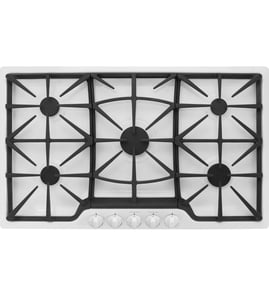



How do you measure for a gas cooktop replacement?
To measure for a replacement gas cooktop, we measure the countertop cutout (width and depth) and confirm the clearances to the back wall and front edge so the new unit fits and the gas and electrical connections line up. For Kenmore Elite model 79032713410, use the cutout and clearance requirements in the installation guide.
What to measure (in order)
- Cutout width: left-to-right opening in the countertop
- Cutout depth: front-to-back opening in the countertop
- Back clearance: distance from the back edge of the cutout to the backsplash or wall
- Front clearance: distance from the front edge of the cutout to the front of the countertop
- Cabinet depth and obstructions: drawers, braces, and anything below the cutout
- Utility locations: where the gas shutoff valve, pressure regulator, and outlet are located
Fit checklist before you buy
We recommend confirming these items so the replacement installs cleanly and safely:
- The new cooktop’s required cutout size matches your measurements
- The new cooktop’s minimum clearances match your countertop and backsplash setup
- There is room below for the gas pressure regulator and flexible connector
- The cooktop can be connected without kinking the flexible gas connector
- You have access to the manual shutoff valve after installation
Quick measurement record (copy this)
| Measurement | What you’re measuring | Your number |
|---|---|---|
| Cutout width | Left-to-right opening | ____ |
| Cutout depth | Front-to-back opening | ____ |
| Back clearance | Cutout back edge to wall | ____ |
| Front clearance | Cutout front edge to counter front | ____ |
Why it matters
Correct cutout and clearance measurements prevent countertop rework and help keep the gas connection safe. During installation, connections must be wrench-tightened and leak-checked with a liquid leak detector (not a flame), and the shutoff valve must remain accessible for service (see the installation guide).
Last updated: January 2026
How do I unlock my Kenmore Elite stove top?
On the Kenmore Elite gas cooktop model 79032713410, the cooktop itself typically does not have a “stovetop lock” like some ovens do; most lockouts are either a control lock on the cooktop controls or an oven door lock on a separate range. Use the steps below to identify which lock is active and clear it using the 79032713410 use and care guide.
Identify what is actually locked
Use these quick checks before pressing buttons at random:
- Burners will not light but knobs turn: often a control lock or no power to the igniters.
- Igniters will not click at any burner: often a power issue, a harness/switch issue, or a lockout.
- Oven door is stuck/latched (if your unit is a range, not a standalone cooktop): that is an oven door lock, not a cooktop lock.
- A “LOC” indicator or lock icon (if present): points to a control lock feature.
Common unlock steps that work on many Kenmore cooktops
If your cooktop has a control lock, one of these usually clears it:
- Press and hold Control Lock for 3 to 5 seconds.
- Press and hold Stop/Clear for 3 to 5 seconds (more common on ranges/ovens).
- Press and hold Timer or Clock for 3 to 5 seconds (varies by control style).
If nothing changes after 5 seconds, stop and follow the exact key sequence shown in the 79032713410 use and care guide.
If the burners will not ignite (not a lock)
A “locked” symptom is often an ignition problem. Check these items first:
- Confirm the cooktop has power (igniters need electricity even on gas models).
- Make sure burner caps are seated flat; a crooked cap can prevent ignition.
- Clean and dry the burner head and igniter area.
- If clicking is inconsistent across burners, inspect the ignition circuit (switches and harness).
Parts that commonly affect ignition
If troubleshooting points to ignition components, these are common matches for this model:
| Symptom | Likely area | Example part for 79032713410 |
|---|---|---|
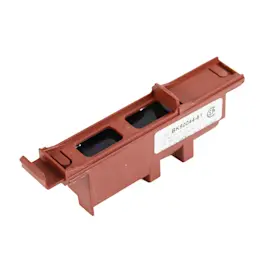
| No clicking at any burner | Switches/harness | Cooktop igniter switch and harness assembly 305595107 |
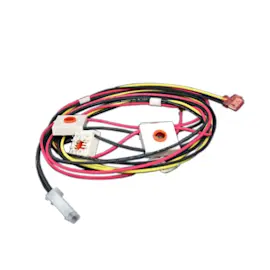
| Clicking but weak/erratic | Wiring to igniters | Cooktop igniter wire harness 318199780 |
Why it matters
Using the wrong “unlock” sequence can waste time and can mask the real issue (like a misaligned burner cap, moisture after cleaning, or an igniter circuit problem). Following the model-specific steps helps you restore safe, reliable burner ignition.
Last updated: January 2026
What are the components of a gas cooktop?
On the Kenmore Elite 79032713410 gas cooktop, the main components are the burner system (burner heads, caps, and igniters), the gas delivery system (manifold and regulator), and the user controls (valves and knobs), plus the cooking surface and grates. For diagrams and locations, use the 79032713410 owner's manual.
Core components you will see on this model
- Burner heads and burner caps: shape and stabilize the flame pattern at each burner.
- Ignition system: igniters and wiring that create the spark to light gas.
- Gas manifold and valves: route gas to each burner and control flame level.
- Pressure regulator: keeps gas pressure consistent for proper burner performance.
- Cooktop surface and grates: support cookware and protect the burner area.
Common parts customers replace (examples)
If a burner won’t light, clicks constantly, or has an uneven flame, these model-matched parts are often involved:
- Cooktop burner igniter and orifice holder, 9,500-btu 5304498787 (spark and gas metering at the burner)
- Cooktop igniter wire harness 318199780 (connects igniters to the ignition circuit)
- Cooktop gas pressure regulator 5304519943 (helps maintain correct gas pressure)
- Cooktop burner grate, left 5304500339 (supports cookware; can chip, warp, or break)
Quick “component to symptom” guide
| Component | What it does | Common symptom when it fails or is misaligned |
|---|---|---|
| Burner cap/head | Shapes flame | Uneven flame, delayed ignition |
| Igniter/wiring | Sparks to light gas | Clicking but no flame, intermittent lighting |
| Valve/manifold | Controls gas flow | Burner won’t adjust, weak flame |
| Regulator | Stabilizes pressure | Multiple burners weak, flames too high/low |
Why it matters
Knowing the component group helps you troubleshoot faster. For example, “clicking but no flame” usually points to the ignition or burner cap alignment, while “all burners weak” more often points to gas supply or regulation.
Last updated: January 2026