Owner’s manual
 Error Codes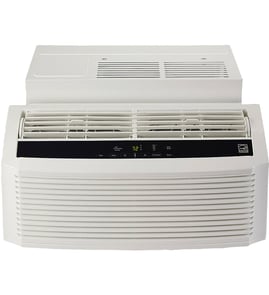


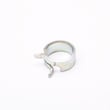
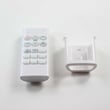


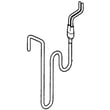
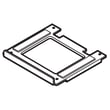
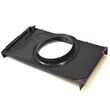
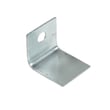
What are the parts of the air conditioner?
For Kenmore room air conditioner model 58075101500, the main parts include the cabinet and grilles, air filter, evaporator coil (indoor cooling coil), condenser (outdoor coil), compressor, fan system, control board, and power cord. These parts work together to cool, dehumidify, and circulate room air.
Main components you will see on this model
These are the key assemblies called out for this Kenmore window unit:
- Cabinet and front grille (the outer housing and air intake cover)
- Inlet grille and air filter (captures dust and debris before air hits the coil)
- Evaporator coil (cools the room air and removes moisture)
- Condenser and condenser fan (moves heat to the outside)
- Compressor (pumps refrigerant through the sealed system)
- Control board (runs modes, fan speeds, and temperature control)
- Power cord (supplies power to the unit)
- Louvers (vertical and horizontal air direction)
For diagrams and the exact feature callouts for model 58075101500, use the owner's manual.
Common replaceable parts customers order
If your unit is noisy, vibrating, leaking, or not moving air well, these are common service parts we see replaced on this model family:
- Room air conditioner condenser fan blade 5900A10009E (damaged blade can cause vibration and poor airflow)
- Friedrich room air conditioner evaporator fan blade 5900A20019G (worn or broken blower can reduce cooling)
- Power cord EAD63469503 (damaged cord or plug can prevent safe operation)
- Room air conditioner drain pipe 3H02773A (helps route condensate; useful for some leak situations)
- Remote control AKB73795706 (if the unit will not respond to remote commands)
Quick “what it does” table
| Part or system | What it does | Common symptom when it fails |
|---|---|---|
| Air filter | Traps dust and improves airflow | Weak airflow, reduced cooling |
| Evaporator coil | Cools air and removes humidity | Icing, poor cooling |
| Condenser and fan | Rejects heat outdoors | Hot air recirculation, poor cooling |
| Compressor | Drives refrigerant through system | Humming, no cooling |
| Control board | Controls operation and settings | Erratic operation, won’t start |
Why it matters
Knowing the major parts helps you troubleshoot faster. For example, a dirty filter restricts airflow and makes the room stay warm, while a fan blade issue can cause vibration and clicking noises during cooling.
If you’re seeing a code on the display, use Kenmore error codes to match the code to the most likely part or condition.
Last updated: February 2026
What do you call the outside part of a split type aircon?
In a split-type air conditioner, the outside part is commonly called the outdoor unit or condenser unit. It houses the condenser coil and a fan that releases heat outdoors, which is what allows the indoor unit to cool your room effectively.
What the outdoor (condenser) unit does
The outdoor unit is the heat-rejection side of the system. When it is working correctly, it moves heat from inside your home to the outside air.
- Pulls outdoor air across the condenser coil
- Releases heat absorbed from indoors
- Uses a fan to keep airflow moving for efficient cooling
- Works with the indoor evaporator coil to complete the refrigeration cycle
How this relates to your Kenmore 58075101500 room air conditioner
Your Kenmore 58075101500 is a room (window) air conditioner, not a split system. On a window unit, the “outside part” is the rear section of the same appliance, and it must sit outdoors with clear airflow for proper heat removal (as described in the owner's manual).
Quick comparison
| System type | “Outside part” name | Where it is located |
|---|---|---|
| Split-type air conditioner | Outdoor unit, condenser unit | Separate cabinet outside |
| Window (room) air conditioner | Rear (outdoor) section of the unit | Back of the same unit, outside the window |
Why it matters
If the outdoor unit (or the outdoor section of a window unit) cannot breathe, cooling performance drops and the system can run longer, cycle oddly, or struggle in hot weather. Keeping that area clear helps the condenser reject heat the way it is designed to.
Last updated: February 2026
What size AC unit do I need for a 10X10 room?
For a 10x10 room (about 100 sq ft), we typically recommend a small room air conditioner in the 5,000 to 6,000 BTU range. Proper sizing matters because an undersized unit runs constantly and still feels warm, while an oversized unit can cool too fast and leave humidity behind (see capacity guidance in the owner's manual).
Quick sizing guide (BTU)
Use this as a practical starting point for most average-height rooms with standard insulation.
- 100 sq ft (10x10): 5,000 to 6,000 BTU
- 150 sq ft: 6,000 to 7,000 BTU
- 200 sq ft: 7,000 to 8,000 BTU
- 250 sq ft: 8,000 to 10,000 BTU
- 300 sq ft: 10,000 to 12,000 BTU
Adjust the size for real-world conditions
Bump capacity up when the room has extra heat load.
- Add 10% for a very sunny room (south or west facing)
- Add 10% to 20% for poor insulation or lots of air leaks
- Add 600 BTU if 2 people regularly use the room (beyond the first)
- Add 1,000 to 4,000 BTU for a kitchen or heat-producing equipment
- If the unit is installed where airflow is restricted, correct the airflow issue first (blocked grille, curtains, furniture)
Why it matters for Kenmore 58075101500
Your Kenmore 58075101500 is designed to run longer under heavy heat or humidity loads, and that is normal. The right BTU size reduces run time, improves comfort, and helps control humidity more consistently.
Fast reference table
| Room size | Typical BTU range | Best for |
|---|---|---|
| 100 sq ft | 5,000 to 6,000 | Bedrooms, small offices |
| 150 to 200 sq ft | 6,000 to 8,000 | Larger bedrooms |
| 250 to 300 sq ft | 8,000 to 12,000 | Living areas |
Last updated: February 2026
Why is my Kenmore air conditioner not blowing cold air?
If your Kenmore room air conditioner model 58075101500 is running but not blowing cold air, the most common causes are incorrect settings, low airflow from a dirty filter, or conditions that prevent cooling (like room temperature below 70°F). Use the troubleshooting steps in the owner's manual to restore normal cooling.
Quick checks (most common fixes)
- Set FAN SPEED to HI (LOW can feel weak and less cool).
- Lower the TEMP setting (a warm setting makes air feel not cold enough).
- Confirm the room is above 70°F (21°C); cooling may not start below that.
- Check the air filter and clean it if dirty (restricted airflow reduces cooling).
- If you see ice on the evaporator coil behind the front grille, switch MODE to FAN to defrost.
- Make sure the temperature sensing tube is not touching the evaporator coil behind the front grille.
What the symptoms usually mean
| What you notice | Likely cause | What to do next |
|---|---|---|
| Air is cool sometimes, then gets warm | Coil icing from low airflow or low outdoor temp | Defrost in FAN mode; clean filter |
| Airflow is weak | Dirty filter or blocked grille | Clean filter; clear obstructions |
| Unit runs but air never feels cold | Settings too warm or room below 70°F | Set FAN to HI, TEMP lower; warm room above 70°F |
| Cooling is poor and unit seems noisy outside | Condenser fan issue | Inspect fan blade for damage; replace if needed |
When a part is likely involved
If the unit has normal power and settings but cooling performance is still poor, a failing condenser fan can reduce heat removal and make the air feel warmer.
- If the outdoor fan is not moving air properly, consider replacing the room air conditioner condenser fan blade 5900A10009E.
Why it matters
A window air conditioner cools by moving air across the evaporator coil and dumping heat outside through the condenser coil. Anything that reduces airflow (dirty filter, icing, fan problems) quickly makes the air feel less cold and can lead to ice buildup.
Last updated: February 2026