View engine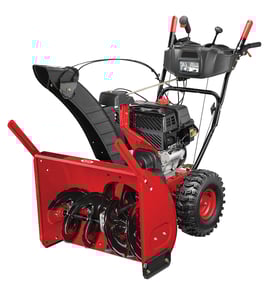




How to read Craftsman snowblower serial number?
On Craftsman snowblower model 536884570, the identification label is typically on the rear of the machine near the axle area between the rear wheels. Use that label to record the model and show the serial number exactly as printed so you can match the correct parts and diagrams.
Where to look on model 536884570
Check these common label locations on Craftsman snow blowers:
- Backside of the metal base between the left and right rear wheels
- Rear frame near the axle or wheel brackets
- Lower handle support area (near where the handle mounts to the frame)
- Side of the auger housing (less common, but worth a quick check)
How to read the numbers (what matters)
Once you find the label, copy the information exactly.
- Model number identifies the exact machine version (for example, 536884570)
- Serial number identifies your specific unit and production run
- Use the full model number when selecting parts like a ignition switch 56992MA
Quick guide
| Item on label | What it’s used for | Tip |
|---|---|---|
| Model number | Matching parts diagrams and part fit | Write it down exactly, including all digits |
| Serial number | Production tracking and service reference | Record it exactly as printed |
| Product ID label info | Confirms you are looking at the correct tag | Take a clear photo for reference |
Why it matters
Using the correct model and serial information prevents ordering the wrong chute, belt, or control parts. Even small production changes can affect fit, especially on drive and ignition components.
If the label is hard to read
- Wipe the tag with a damp cloth and mild soap; avoid harsh solvents
- Use a flashlight at an angle to make faint printing easier to see
- Take a close-up photo and zoom in
- If the tag is missing, compare your machine’s assemblies (chute style, handle setup, belt cover) to parts diagrams and consider using a DIY reference like how to assemble a snowblower video
Last updated: January 2026
What is the most common problem with snow blowers?
The most common snow blower problem is a no-start condition, and on the Craftsman 536884570 it is usually caused by fuel issues (stale gas or water in the fuel), ignition problems (spark plug or switch), or restricted airflow. A quick fuel and spark check solves many first-start complaints.
Quick checks we recommend first
- Use fresh fuel; drain old fuel if it is more than 30 days old.
- Confirm the ignition is ON and the key is fully seated.
- Check for spark and replace the spark plug if it is fouled.
- Inspect the air intake and clean or replace the air filter if equipped.
- Verify the choke is set for cold starting, then open it gradually as the engine warms.
- If it starts then dies, suspect a dirty carburetor or fuel flow restriction.
Parts that commonly affect starting
If you are troubleshooting a no-start or intermittent start, these model-matched parts are often involved:
| Symptom | What it often points to | Example part for this model |
|---|---|---|
| No crank or no response to key | Ignition switch or wiring issue | Switch 56992MA |
| Starts, runs rough, then stalls | Restricted airflow or fuel delivery issue | Filter 394358S |
Why it matters
A snow blower that will not start is usually a simple maintenance issue, but repeated hard-starting can lead to plug fouling, fuel varnish in the carburetor, and extra wear on the recoil or electric starter. Fixing the root cause early keeps your Craftsman snow blower reliable in cold weather.
Helpful DIY guidance
For step-by-step visuals that match common no-start causes, use these resources:
Last updated: January 2026
Is it cheaper to repair or replace a snowblower?
For a Craftsman snow blower model 536884570, repairing is usually cheaper when the fix is a common wear item (belt, switch, chute parts) and the total repair cost stays under about half the price of a comparable new snowblower. Replace when major drivetrain or engine repairs push costs higher.
A practical way to decide (cost and condition)
Use this quick checklist before you buy parts:
- Add up parts plus any labor (if you are not doing the repair yourself).
- Compare that total to the price of a similar new snowblower.
- Repair when the machine starts easily, drives well, and the auger housing is solid.
- Replace when the engine has low compression, the frame is bent, or multiple systems are failing.
- Factor in downtime; a fast repair can be worth it during heavy snow.
Common repairs that are usually worth doing
These are typical, lower-cost fixes that often restore performance:
- Replace a worn drive/auger belt (loss of drive or weak throwing)
- Replace a failed ignition switch (no crank or intermittent shutoff) using the switch 56992MA
- Replace damaged chute components (poor aiming or snow blowback) using the chute 762222MA
- Replace a clogged fuel filter (surging, stalling) using the filter 394358S
Repair vs replace: quick comparison
| Situation | Usually best choice | Why |
|---|---|---|
| One clear failure (belt, switch, chute) | Repair | Low parts cost, high impact |
| Multiple wear items but engine is strong | Repair | Restores reliability for less |
| Engine or major drivetrain needs work | Replace | Cost climbs fast |
| Rusted auger housing or bent frame | Replace | Structural issues keep returning |
Why it matters
A snowblower like the Craftsman 536884570 can run for many seasons when you keep up with basic maintenance and replace wear parts early. Waiting until several components fail at once is what usually makes replacement the cheaper option.
Helpful DIY guidance
- How to replace a snowblower belt video
- How to check a snowblower spark plug video
- How to change snowblower oil video
Last updated: January 2026