Owner’s manual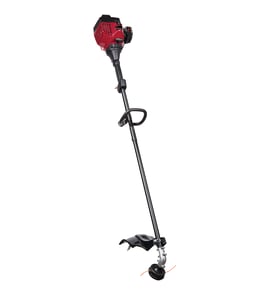




Which is better, .080 or .095 trimmer line?
For the Craftsman 154740940 gas line trimmer, .095 trimmer line is usually the better all-around choice because it’s tougher and cuts heavier weeds with fewer breaks; .080 line is better for light grass and clean edging where you want maximum control. Always confirm the maximum line size your cutting head supports in the Craftsman 154740940 owner’s manual.
Quick pick guide
- Choose .080 for light-duty trimming, tight edging, and less engine load.
- Choose .095 for thicker grass, weeds, and longer line life.
- If your line keeps snapping, step up to .095 (if your head allows it).
- If the trimmer bogs down or vibrates more, step down to .080.
- Match the line to the cutting head design; some heads feed thick line poorly.
.080 vs .095: what changes
| Feature | .080 line | .095 line |
|---|---|---|
| Best for | Light grass, detail work | Mixed use, heavier weeds |
| Durability | Lower | Higher |
| Cutting aggressiveness | Moderate | Higher |
| Engine load | Lower | Higher |
| Ease of loading | Usually easier | Can be tighter in some heads |
Model-specific notes for Craftsman 154740940
We can’t identify the correct line diameter for the Craftsman 154740940 based on the model documentation details available here, because the allowable line size is typically specified by the installed cutting head version and spool capacity rather than the model number alone. If you’re replacing the head, match the new head to the line size you want to run, such as the Craftsman line trimmer cutting head 199023000066 or the Craftsman line trimmer cutting head 199023000065.
Why it matters
Using line that’s too thick can cause poor feeding, extra vibration, and reduced RPM; using line that’s too thin can waste time due to frequent breakage. The right diameter helps your cutting head feed smoothly and keeps your gas trimmer performing consistently.
Last updated: January 2026
Who makes the best .095 trimmer line?
For the Craftsman 154740940 gas line trimmer, the “best” .095 trimmer line is the one that matches your cutting head’s line size range and feeds smoothly without excessive breakage. Many owners prefer premium twisted or serrated .095 line for durability; confirm compatibility in the Craftsman 154740940 owner’s manual.
What to look for in a good .095 trimmer line
A quality .095 line should balance durability with easy feeding through the bump head.
- Correct diameter: .095 in (2.4 mm) is tougher than lighter line, but can overload small heads
- Line shape: twisted or serrated often cuts cleaner and can be quieter than round
- Material quality: premium copolymer lines usually resist fraying and snapping better
- Spool memory: lower memory reduces tangles and improves feed
- Your cutting conditions: thick weeds and fence lines need tougher line than light trimming
Model-specific fit: why the cutting head matters
On the Craftsman 154740940, the cutting head design determines what line feeds reliably. If your head is worn, cracked, or constantly jams, replacing it can make any line perform better.
Consider checking these compatible parts:
Quick comparison: common .095 line styles
| Line style | Best for | Tradeoffs |
|---|---|---|
| Round | General trimming | Can wear faster on heavy weeds |
| Twisted | Cleaner cut, less noise | Can be slightly pricier |
| Serrated/star | Thick weeds, aggressive cutting | Can increase vibration and fuel use |
Why it matters
Using the right .095 line helps your Craftsman trimmer cut efficiently, reduces bump-feed frustration, and can lower strain on the gearbox and drive shaft during heavy trimming.
Last updated: January 2026
Do trimmer plus attachments work with Craftsman?
We can’t confirm that Craftsman gas line trimmer model 154740940 is TrimmerPlus attachment-capable based on the model-specific information available here. Compatibility depends on the coupler and drive interface on your exact trimmer; use the 154740940 owner’s manual to verify what attachment system it supports.
How to verify TrimmerPlus-style compatibility
Check the connection point where an attachment would mount (typically mid-shaft on attachment-capable units):
- Look for a split-shaft coupler with a clamp/knob that loosens to separate the shaft.
- Confirm there is a locking pin/button that snaps into a hole to retain the attachment.
- Check the inner drive shaft shape (often square on many systems) and that it matches the attachment.
- Verify the trimmer is described as attachment-capable (some straight-shaft trimmers are not).
- Make sure the attachment’s shaft diameter and coupler style match your power head.
What “works with Craftsman” usually means
“Craftsman” covers multiple trimmer designs made by different manufacturers over time, so brand name alone is not a reliable fit test. TrimmerPlus attachments generally fit power heads that share the same coupler standard.
| Item to match | What you’re checking | Why it matters |
|---|---|---|
| Coupler style | Split-shaft, clamp/knob, retention hole | Determines whether it can mount |
| Drive interface | Inner shaft end shape and length | Determines whether it will spin |
| Retention method | Pin/button alignment | Prevents loosening and vibration |
If an attachment mounts but won’t spin
That symptom often points to a drive connection issue rather than the engine.
- Re-seat the attachment fully into the coupler
- Inspect the drive ends for rounding or stripping
- Check for binding in the attachment head
If you find worn drive components on this model, a common related part is the line trimmer drive shaft, lower 199999001284.
Why it matters
Using an attachment that doesn’t match the coupler or drive can cause vibration, poor cutting performance, and premature wear to the drive shaft or gearbox.
Last updated: January 2026