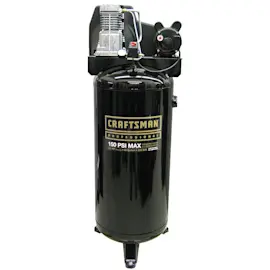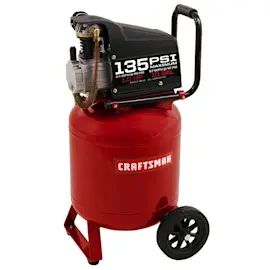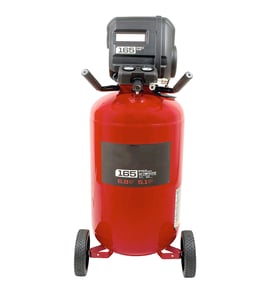

How do I find the compressor capacity by model number?
For the Craftsman 919156780 air compressor, the model number by itself does not reliably tell you the compressor’s capacity (tank size, CFM, or PSI). Capacity is identified on the unit’s data label and in the product specifications; use the model number to pull the correct specs and parts list on Sears PartsDirect.
What “capacity” means on an air compressor
When people say capacity, they usually mean one of these specs:
- Tank capacity (gallons)
- Air delivery (SCFM/CFM at 40 PSI and 90 PSI)
- Maximum pressure (PSI)
- Motor rating (HP or running amps)
How to get the capacity for model 919156780
Use these quick checks to find the real numbers for your exact unit:
- Check the data plate/label on the tank or shroud; it typically lists max PSI and may list tank gallons.
- Look for a spec decal near the regulator or pump area; many units list SCFM at 40/90 PSI.
- Match the full model number exactly (919156780) when searching; small differences in model numbers can change tank size and pump output.
- If the label is worn, search by model number and compare the listed specifications and diagrams to your unit.
Why “divisible by 12” does not apply here
That “divisible by 12” rule is commonly associated with HVAC compressor tonnage (12,000 BTU per ton), not shop air compressors. Air compressor capacity is rated by gallons, SCFM/CFM, and PSI, not tons.
Quick reference: where each spec is usually found
| Spec you need | Where to look on the compressor | Why it matters |
|---|---|---|
| Tank gallons | Tank label or product listing | Run time before the pump cycles |
| SCFM/CFM @ 90 PSI | Spec decal or product listing | Tool performance (impact, nailer, spray) |
| Max PSI | Tank label | Safety and regulator settings |
| Amps/volts | Motor label | Breaker size and extension cord choice |
Why it matters
Choosing parts, diagnosing low pressure, or matching tools to your Craftsman compressor depends on the actual SCFM/CFM and max PSI. Using the model number alone can lead to the wrong assumptions, especially across similar Craftsman 919-series units.
Last updated: February 2026
Is a 150 psi air compressor good for car detailing?
Yes. A 150 PSI air compressor is a strong choice for car detailing because most detailing air tools run around 90 PSI, and the extra headroom lets you regulate pressure steadily while you blow out crevices, dry panels, and clean interiors using your Craftsman model 919156780.
What matters most for detailing (PSI vs CFM)
PSI is only part of the story; CFM (airflow) determines whether the tool keeps working without the compressor constantly falling behind.
- Blow guns and air nozzles: low-to-moderate CFM; 150 PSI is more than enough
- Tornador-style cleaning tools: moderate-to-higher CFM; tank size and recovery time matter
- Inflators: low CFM; pressure headroom helps
- Paint or continuous air tools: higher CFM; you need sustained airflow more than high PSI
Quick sizing guide for common detailing tasks
| Task | Typical regulated pressure | What to prioritize | What you’ll notice if undersized |
|---|---|---|---|
| Blowing out cracks/vents | 60 to 90 PSI | Any steady airflow | Weak blast, frequent cycling |
| Interior cleaning with air tool | 80 to 90 PSI | Higher CFM, larger tank | Tool sputters, pressure drops fast |
| Drying after wash | 60 to 90 PSI | CFM and hose size | Takes longer, inconsistent air |
| Light inflation | 30 to 50 PSI | Regulator control | Slow fill, but still workable |
Setup tips for better results
- Set the regulator to your tool’s working pressure (often about 90 PSI) instead of running full tank pressure.
- Use a water separator/filter to reduce moisture in the air line (important for interior work and paint).
- Choose a 3/8-inch hose for higher-air-demand tools to reduce pressure drop.
- Let the tank fully charge before long interior sessions so you start with maximum stored air.
- Drain the tank after use to limit rust and water carryover.
Why it matters
Detailing is about consistent, controllable air. A 150 PSI compressor gives you stable regulated pressure, but your real day-to-day satisfaction comes from having enough CFM and tank capacity for the tools you run the longest.
For general DIY safety practices while working around power tools and compressed air, follow the guidance in are diy appliance repairs safe.
Last updated: February 2026
How to find air compressor model number?
For a Craftsman air compressor like model 919156780, the model number is printed on the unit’s ID label (often a metal or foil placard) and is usually stamped or clearly printed near other specs such as voltage, tank size, and maximum PSI.
Where to look on a Craftsman air compressor
Check these common label locations first:
- On the tank near the compressor pump or handle
- On the rear of the tank near the wheels or base
- On the motor/pump shroud or frame rail
- Near the pressure switch area (where the power cord enters)
- On the underside of the tank (use a flashlight)
What the label typically shows (and what to write down)
When you find the placard, record the key identifiers exactly as shown:
- Model number (example: 919156780)
- Serial number (helps match production variations)
- Type or spec code (if listed)
- Voltage/amps and maximum PSI (useful for troubleshooting)
Quick ID checklist
| Item on label | Why it matters | Example |
|---|---|---|
| Model number | Ensures correct parts lookup | 919156780 |
| Serial number | Confirms exact build/version | Varies |
| Max PSI | Confirms performance target | Varies |
Why it matters
Air compressor parts and diagrams can change across similar-looking Craftsman units. Using the exact model number (and serial number when available) prevents ordering the wrong pressure switch, regulator, safety valve, or pump components.
If the label is missing or unreadable
Use these practical workarounds:
- Look for a second label on the opposite side of the tank
- Clean the area gently; grime can hide stamped numbers
- Take a clear photo and zoom in to read faint characters
- If you only have partial digits, search by the closest match on how to find your appliance model number (and what it means for parts)
Last updated: February 2026
What's the difference between a hot dog compressor and a pancake compressor?
A “hot dog” compressor and a “pancake” compressor mainly differ in tank shape and typical capacity: pancake units are usually shorter, wider, and more stable for carry-around jobs, while hot dog units are longer, often offering more tank volume for longer run time between cycles.
Quick comparison
| Feature | Pancake compressor | Hot dog compressor |
|---|---|---|
| Tank shape | Flat and wide | Long and cylindrical |
| Stability | Very stable on the floor | Stable, but can roll more easily |
| Typical use | Trim work, brad/finish nailers, inflating | Framing nailers, light spray, longer continuous use |
| Typical tank size | Smaller to mid-size | Mid-size to larger |
| Portability | Easy to carry, compact footprint | Easy to carry, but longer and more awkward in tight spaces |
How to choose for your Craftsman 919156780 setup
Use these decision points to match the compressor style to your air tools and work pace:
- If you prioritize portability and storage, a pancake compressor is usually the better fit.
- If you want longer run time between motor cycles, a hot dog compressor often wins because it commonly comes with more tank capacity.
- If you run nailers back-to-back, focus on SCFM at 90 PSI more than tank shape; higher SCFM keeps up with demand.
- If you do occasional spraying, either style can work, but you will get smoother results when the compressor can maintain pressure without frequent drops.
- If you work on finished floors, pancake compressors tend to sit flatter and feel less “tippy” when you tug the hose.
What “more power” really means (and what to check)
Tank shape does not automatically mean more power. What matters most is the compressor’s output and pressure control.
Check these specs on the unit label or product listing:
- SCFM @ 90 PSI (most important for air-hungry tools)
- Max PSI (common ranges are 125 to 175 PSI)
- Tank gallons (run time buffer)
- Duty cycle (how long it can run before needing a cool-down)
- Regulator and pressure switch behavior (steady cut-in and cut-out)
Why it matters
Choosing the right style helps you avoid constant pressure drops, long recovery times, and overheating. For light-duty, grab-and-go tasks, pancake compressors are typically the most convenient; for longer continuous work, hot dog compressors commonly provide a better run-time buffer.
For help identifying the exact model number on your unit before ordering parts or comparing specs, use how to find your appliance model number (and what it means for parts).
Last updated: February 2026
Is a 20 gallon air compressor big enough for air tools?
Yes; a 20-gallon air compressor is big enough for many common air tools used intermittently. For Craftsman model 919156780, treat “20-gallon” as a general sizing question and choose based on the tool’s SCFM requirement at the working PSI, not tank size alone.
What a 20-gallon compressor runs well
A 20-gallon tank provides a helpful air reserve for short-burst tools and light-duty tasks. It’s a solid fit for:
- Brad/finish nailers and staplers
- Blow gun, tire inflation, and air chuck work
- Small impact wrench use (short bursts)
- Ratchets and small air hammers (intermittent)
- Touch-up spraying (with recovery time)
Where 20 gallons usually falls short
High-demand tools need steady airflow; the pump’s SCFM output is the limiting factor. A 20-gallon unit is typically undersized for:
- Die grinders and cut-off tools
- DA (dual-action) sanders
- Media blasting
- Continuous HVLP spraying of large panels
Quick sizing guide (what to compare)
Compare your tool’s SCFM rating to the compressor’s SCFM at the same pressure (often 90 PSI).
| Tool use | Typical SCFM need | 20-gallon outcome |
|---|---|---|
| Nailers, inflators | Low | Good fit |
| Impact wrench (bursts) | Medium | Works with pauses |
| Sanders, grinders, blasting | High | Usually undersized |
Tips to get better results from a smaller compressor
These steps reduce pressure drop and moisture issues:
- Use a 3/8-inch ID hose for higher-flow tools
- Keep hose runs short; minimize restrictive fittings
- Set the regulator to the tool’s required PSI (not higher)
- Drain the tank regularly to control water carryover
- Add a filter/water separator for painting
Why it matters
If the compressor cannot meet SCFM demand, pressure drops, the motor runs constantly, and tool performance suffers. Sizing by SCFM and duty cycle prevents slow work, overheating, and inconsistent results.
For help confirming the exact model number on your Craftsman compressor before ordering parts, use how to find your appliance model number (and what it means for parts).
Last updated: February 2026