Installation guide
 Owner’s manual
 Error Codes

Can I replace fridge parts myself?
Yes. With Kenmore refrigerator model 25360022611, we can usually replace many non-electrical and basic electrical parts ourselves (bins, shelves, light bulb, door gasket) using simple tools and safe handling. For sealed-system work (refrigerant, compressor), we use a professional.
Good DIY repairs vs. pro-only repairs
DIY-friendly (most homeowners):
- Door bins, shelf rails, drawers, and covers (no wiring)
- Light bulb replacement (unplug first; use same wattage)
- Door gasket replacement (warming and reshaping the gasket is common)
- Basic cleaning and preventive maintenance (condenser area, door seals)
Pro-only (special tools and certification):
- Sealed system repairs (refrigerant leaks, filter drier, evaporator, compressor)
- Compressor start or run circuit diagnosis if you are not comfortable with electrical testing
Safety steps we follow before any repair
- Unplug the refrigerator before removing covers or touching wiring
- Wear gloves when handling glass shelves and when replacing bulbs
- Pull the refrigerator straight out to avoid floor damage (do not “walk” it)
- Wait 24 hours after changing temperature controls before making more adjustments
- If your model uses an anti-tip device, keep it installed and adjusted per the manual
Parts that are commonly replaced at home
| Symptom | Common DIY check | Example part for this model |
|---|---|---|
| Interior light out | Replace bulb (same wattage) | Refrigerator light bulb 316538904 |
| Door not sealing, moisture, warm spots | Inspect gasket for gaps/tears | Frigidaire Refrigerator Door Gasket (white) (model-specific fit matters) |
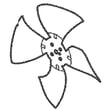
| Noisy airflow or weak cooling in fresh food section | Check for ice buildup, listen for fan | Refrigerator evaporator fan blade (model-specific) |
Why it matters
Choosing the right repair level protects the refrigerator and your safety. Simple part swaps can restore performance quickly, while sealed-system repairs require specialized equipment to prevent cooling damage.
For model-specific disassembly steps and safety notes, use the 25360022611 owner's manual.
Last updated: January 2026
How do I fix my refrigerator temperature control?
If your Kenmore refrigerator model 25360022611 is not holding temperature or the control is not responding, start by setting the refrigerator control to the recommended (center) position and give it a full 24 hours to stabilize. Setting the control to “0” stops cooling (compressor off) but does not shut off power, so unplug the cord for a true reset.
Quick checks that fix most temperature-control issues
- Keep doors closed for at least 8 hours after changes so temperatures can settle.
- Adjust the knob in small increments only; big swings cause long recovery times.
- Make sure food is not blocking the cold air vents in the upper rear of the fresh-food section.
- Confirm the refrigerator is level so doors close tightly (poor sealing causes warm temps).
- If you need to shut the unit down, unplug it; the “0” setting does not remove power.
For the model-specific control guidance and recommended starting point, use the 25360022611 owner's manual.
What each control change does
The manual notes that the refrigerator control affects temperatures in both compartments, and some models also have an auxiliary freezer control.
| What you do | What to expect | When to re-check |
|---|---|---|
| Turn toward coldest | Colder refrigerator and freezer temps | After 24 hours |
| Turn toward cold (warmer) | Warmer refrigerator and freezer temps | After 24 hours |
| Set to “0” | Compressor off, cooling stops (lights still powered) | Immediate |
If temperatures still drift after correct settings
These steps help separate a control-setting issue from an airflow or sealing problem:
- Verify door gaskets are sealing and the doors close without bouncing.
- Reduce overpacking; crowded shelves restrict airflow.
- Clean dust from the condenser area (a dirty condenser can cause warm temps).
- Listen for the evaporator fan; weak airflow can mimic a “bad control.”
If you suspect an airflow problem, the diagnosing refrigerator evaporator fan problems video is a good next step.
Why it matters
Correct temperature control protects food quality and prevents excessive run time. The fresh-food compartment should typically stay around 34°F to 40°F (with an optimum near 37°F) when the refrigerator is operating normally.
Last updated: January 2026
What is the code Sy Ef on a Kenmore refrigerator?
On a Kenmore refrigerator like model 25360022611, the SY EF (or 5Y EF) error code points to a problem in the evaporator fan circuit, which means the freezer evaporator fan is not running correctly or the control is not sensing it.
What to check first (quick troubleshooting)
- Unplug the refrigerator for 5 minutes, then restore power to see if the code clears.
- Listen for the evaporator fan in the freezer; it should run when the compressor is running and the door switch is closed.
- Check for ice buildup on the freezer back wall; heavy frost often indicates a defrost problem that can stop the fan.
- Make sure vents are not blocked by food packages (restricted airflow can trigger temperature and fan-related issues).
- If you hear grinding or rattling, inspect the fan blade for damage or rubbing.
Parts commonly involved
If the fan is noisy, broken, or not moving air, these parts are commonly inspected or replaced:
| Symptom | Most likely area | Example part for this model |
|---|---|---|
| Fan not spinning, no airflow | Evaporator fan blade or motor circuit | Refrigerator evaporator fan blade 242219302 |
| Heavy frost, fan hitting ice | Defrost system | Refrigerator defrost bi-metal thermostat 5303918634 |
| Frost pattern and cooling issues persist | Defrost control timing | Refrigerator defrost timer 241705102 |
Why it matters
The evaporator fan moves cold air from the evaporator through the freezer and into the fresh food section. When the fan circuit fails, temperatures rise, food can thaw or spoil, and the refrigerator may run longer than normal.
Best next step for model 25360022611
Use the troubleshooting and temperature control guidance in the 25360022611 owner's manual to confirm normal operating conditions, then inspect the evaporator fan area for ice buildup, obstructions, and fan noise.
Last updated: January 2026
What are the 5 electrical parts of a refrigerator non inverter?
In a non-inverter refrigerator like Kenmore model 25360022611, the five core electrical parts are the compressor, start device (relay/overload), run capacitor (if used), temperature control (thermostat/control), and the defrost system controls (timer/control plus safety thermostat). For model-specific electrical and power requirements, use the 25360022611 owner's manual.
The 5 core electrical parts (what they do)
- Compressor: pumps refrigerant; it is the main electrical load that creates cooling.
- Start device (relay/overload): helps the compressor start and protects it from overheating.
- Run capacitor: improves starting torque and running efficiency on many non-inverter designs.
- Temperature control (thermostat/control): cycles the compressor on and off to maintain set temperature.
- Defrost controls: prevent frost buildup; commonly a defrost timer/control plus a defrost thermostat (bi-metal) and heater circuit.
Common “electrical parts” people also include
These are electrical, but they are not usually counted in the “top 5” because they support operation rather than create cooling:
- Evaporator fan motor/blade (moves cold air through compartments)
- Condenser fan motor (moves air across condenser coils)
- Door switch (controls interior light and sometimes fan operation)
- Light bulb (interior lighting)
- Ice maker (if equipped)
Quick part examples for this model
| Function | Example part on this model | What you might notice when it fails |
|---|---|---|
| Compressor start support | Gibson refrigerator run capacitor 297286803 | Humming, hard starting, warm temps |
| Defrost control | Refrigerator defrost timer 241705102 | Frost buildup, warming, long run times |
| Defrost safety | Refrigerator defrost bi-metal thermostat 5303918634 | Defrost issues, icing, temp swings |
| Air movement | Refrigerator evaporator fan blade 242219302 | Warm fridge, weak airflow, noise |
Why it matters
Knowing the “big five” helps you troubleshoot faster: if the compressor is not running, you focus on power, controls, and start components; if cooling is weak with heavy frost, you focus on the defrost controls and airflow.
Last updated: January 2026