Error Codes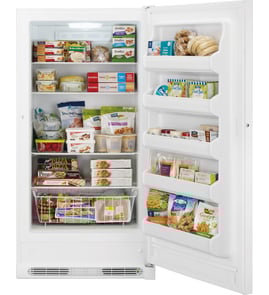

Does an upright freezer need a special outlet?
An upright freezer like the Wc F12WA does not need a “special” outlet, but it does need a properly grounded, dedicated outlet on the correct circuit. Most upright freezers are designed for a standard 115/120V AC, 60 Hz, 15- or 20-amp household circuit.
Recommended outlet and circuit setup
For reliable cooling and to prevent nuisance tripping, we recommend:
- Plug the freezer directly into a grounded 3-prong wall outlet
- Use a dedicated circuit (no other appliances on the same outlet/circuit)
- Avoid GFCI/AFCI nuisance trips if your freezer is in a location where those devices are optional (follow local electrical code)
- Do not use an extension cord or power strip
- Keep the cord fully extended and not pinched behind the cabinet
Quick checklist before you plug it in
Use this list to confirm the outlet is freezer-ready:
- Outlet is grounded and the plug fits firmly
- Circuit is 15A or 20A and matches the freezer’s rating label
- Voltage is stable (typical homes: 120V)
- Outlet is not controlled by a wall switch
- Breaker and wiring are in good condition (no heat marks, buzzing, or burning smell)
Common do’s and don’ts
| Item | Best practice | Why |
|---|---|---|
| Extension cords | Don’t use | Voltage drop can cause hard starts and overheating |
| Power strips | Don’t use | Not rated for compressor start load |
| Shared outlet | Avoid | Other loads can cause dimming and trips |
| Dedicated circuit | Use | Helps the compressor start and run consistently |
Why it matters
A freezer’s compressor draws extra current when it starts. A dedicated, grounded outlet helps prevent warm temperatures, breaker trips, and premature wear on electrical components like the start relay and overload.
For help confirming your model number before ordering electrical parts or accessories, use how to find your appliance model number (and what it means for parts).
Last updated: February 2026
Why is the upright freezer not freezing?
If your Wc F12WA upright freezer is running but not freezing, the most common causes are poor airflow (overpacked shelves or blocked vents), a door that is not sealing, or heavy frost/ice buildup that prevents the evaporator fan from moving cold air.
Quick checks that fix most “not freezing” problems
- Confirm the temperature control is set colder; wait 24 hours after any adjustment.
- Make sure air vents inside the cabinet are not blocked by food packages.
- Avoid overpacking; leave space around the back wall for airflow.
- Check the door gasket for gaps, rips, or areas that do not grip a paper strip.
- Look for heavy frost on the back interior panel (a defrost problem clue).
- Verify the freezer is in a normal room temperature area (very hot rooms reduce cooling).
What to look for (symptom-to-cause guide)
| What you notice | Most likely cause | What we recommend |
|---|---|---|
| Freezer runs constantly, temps stay warm | Door not sealing or warm air leaks | Clean gasket and sealing surface; level the cabinet so the door closes firmly |
| Thick frost on back wall, weak airflow | Defrost system issue or door left ajar | Manually defrost (unplug and leave door open) and recheck; if frost returns quickly, plan a repair |
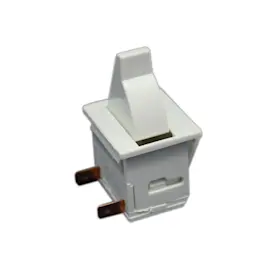
| You hear the compressor but little/no air movement | Evaporator fan not running or blocked by ice | Listen for fan with door switch held; clear ice after a full defrost |
| Freezer cools a little, then warms again | Dirty condenser area or poor ventilation around cabinet | Clean dust from condenser area; allow clearance around the unit |
Why it matters
An upright freezer like the Wc F12WA depends on steady airflow across the evaporator coil and a tight door seal. When airflow is restricted or warm air leaks in, the freezer cannot pull temperatures down to safe food-storage levels.
When to move from checks to repair
If the freezer still will not freeze after a full manual defrost and 24 hours of run time, the issue is typically in the defrost system, evaporator fan circuit, thermostat/control, or sealed system. At that point, we recommend contacting Sears PartsDirect support for next-step help and using how to find your appliance model number (and what it means for parts) to confirm you are ordering parts for model F12WA.
Last updated: February 2026
What number should I set my stand up freezer on?
Set your Wc F12WA upright freezer so the actual cabinet temperature stays at 0°F (-18°C) or colder for safe food storage. The exact dial “number” varies by freezer, so we recommend using a thermometer and adjusting the control until you consistently hit 0°F.
Recommended setting targets
- Goal temperature: 0°F (-18°C)
- Acceptable range for most homes: -5°F to 0°F
- If food is soft or ice cream is mushy: set colder
- If items are freezing too hard or packages frost heavily: set slightly warmer
- After any adjustment: wait 24 hours before changing again
How to dial it in (simple method)
- Put a freezer thermometer in the center of the cabinet (not against a wall).
- Leave the door closed as much as possible for 24 hours.
- If the reading is above 0°F, turn the control one step colder.
- If the reading is well below 0°F (for example, -10°F or colder) and you want to reduce dryness or frost, turn it one step warmer.
What “numbers” usually mean
Most upright freezer controls work like this (your knob may be labeled differently):
| Control label | What it typically does | When to use it |
|---|---|---|
| 1 to 2 (low) | Warmer | Cool rooms, lightly loaded freezer |
| 3 to 4 (mid) | Normal starting point | Most kitchens and garages (mild temps) |
| 5 to 7 (high) | Colder | Hot rooms, frequent door openings, heavy loads |
Why it matters
Keeping the freezer at 0°F or colder slows bacterial growth and helps prevent thaw-refreeze cycles that cause freezer burn, ice buildup, and poor texture in frozen foods.
Helpful related DIY reading
If you are troubleshooting temperature swings or electrical issues (thermostat, wiring, or a bad connection), use our guides: how to use a multimeter to test electrical parts video and must have tools for appliance repair.
Last updated: February 2026
How big is a 12 cu ft freezer?
A 12 cu ft upright freezer (like the Wc F12WA) is typically about 24 to 28 inches wide, 24 to 30 inches deep, and 55 to 67 inches tall. Exact exterior size varies by cabinet design, insulation thickness, and whether the door handle is included in the depth.
Typical 12 cu ft upright freezer dimensions
Most freestanding upright freezers in the 12 cubic foot range fall into these common ranges:
- Width: 24 to 28 in.
- Depth (cabinet): 24 to 30 in.
- Depth (with handle): often 1 to 3 in. more
- Height: 55 to 67 in.
- Door swing clearance: plan extra space on the hinge side
How to measure your freezer correctly
Use a tape measure and capture these three measurements so you can compare to your space:
- Width: left to right across the widest point
- Depth: front of cabinet to back (then measure again including the handle)
- Height: floor to top of cabinet (include hinges if they sit above the top)
Quick measurement checklist
| What you’re measuring | Where to measure | What to record |
|---|---|---|
| Width | Widest point of cabinet | Inches |
| Depth | Back panel to front edge | Cabinet depth |
| Depth with handle | Back panel to handle front | Total depth |
| Height | Floor to highest point | Total height |
Why it matters
A “12 cu ft” rating describes interior storage volume, not the outside footprint. Two 12 cu ft uprights can have different exterior dimensions because insulation thickness, shelf layout, and door design change how much interior space fits inside the cabinet.
If you’re shopping for parts or confirming the model
Before ordering parts for the Wc F12WA, match the model number from the freezer’s ID label to ensure the correct diagrams and components. Our guide, how to find your appliance model number (and what it means for parts), shows the most common label locations and what details to copy.
Last updated: February 2026
Is it worth repairing an upright freezer?
Yes, it’s worth repairing a Wc F12WA upright freezer when the problem is a “wear” item (door gasket, thermostat, fan, defrost issue) and the total repair cost stays well below the price of a comparable replacement. If the sealed system or compressor is failing, replacement is usually the better value.
Quick decision checklist
- Age: Under 10 years usually favors repair; over 10 to 15 years often favors replacement.
- Repair cost rule: Repair when the estimate is under 50% of the cost of a similar new upright freezer.
- Problem type: Air leaks, frost buildup, or a no-cool caused by airflow/defrost parts are commonly repairable.
- Food risk: If temps are unstable and food is thawing, prioritize a fast fix or replacement.
- Energy use: Older freezers can cost more to run; a newer unit may lower electric costs.
Common repairs that are usually “worth it”
These issues are typically straightforward and don’t involve sealed-system work:
- Door not sealing (warm air leaks, heavy frost)
- Excess frost from a defrost problem
- Fan not running (poor airflow, warm spots)
- Temperature control problems (too warm or too cold)
- Dirty condenser area causing poor cooling
Repairs that often point to replacement
Sealed-system problems are the most expensive and least predictable:
- Compressor not starting or running continuously with poor cooling
- Refrigerant leak symptoms (oil residue, weak cooling even after cleaning)
- Internal restriction in the sealed system
Cost and outcome comparison
| Situation | Typical outcome | Usually best choice |
|---|---|---|
| Door seal or airflow issue | Restores normal temps quickly | Repair |
| Defrost system issue | Stops frost buildup, improves cooling | Repair |
| Compressor or refrigerant issue | High labor cost, complex repair | Replace |
Why it matters
A freezer that’s only failing due to airflow, defrost, or sealing problems can often be restored to reliable performance. Sealed-system failures can cost enough that putting that money toward a newer, more efficient upright freezer is the smarter long-term move.
For help confirming your exact model before you order parts or compare repair estimates, use how to find your appliance model number (and what it means for parts).
Last updated: February 2026