Installation guide
 Owner’s manual
 Error Codes



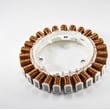
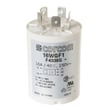
What are the common problems with direct drive washers?
Direct-drive washers like the GE GTWN8250D0WS most often run into no-spin/no-agitate symptoms from drive-system wear, draining problems, or safety-switch issues; excessive vibration is also common when the washer is not installed on a firm, level surface. Use the GTWN8250D0WS installation guide to confirm setup requirements that prevent shake and noise.
Most common direct-drive washer issues
- Won’t spin or agitate: drive components wear, or the machine cannot shift into the right mode.
- Won’t drain or drains slowly: drain path restriction or a weak drain pump can cause standing water.
- Lid or safety switch problems: the washer may stop mid-cycle or refuse to spin with the lid “open” electrically.
- Excessive vibration or walking: unbalanced loads, weak suspension, or installation on soft flooring.
- Intermittent operation: loose wiring connections or control-related faults.
Quick checks we recommend first
- Rebalance the load (bulky items can throw off spin quickly).
- Verify the washer is on firm flooring; concrete is best, and rugs are not recommended for installation.
- Confirm drain setup; the standpipe discharge height must be at least 30 inches (and not more than 8 feet above the washer base).
- Check water supply basics; household water pressure should be 10 to 125 psi.
- Review any displayed fault codes using GE top load washer error codes.
When a part is a likely fix
If the washer fills and drains but will not transition correctly between agitate and spin, a shift mechanism problem is common on many direct-drive designs.
| Symptom | What it often points to | Example part for this model |
|---|---|---|
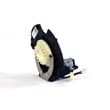
| Agitates but won’t spin (or vice versa) | Shifting/drive engagement issue | Washer shifter assembly WH49X24834 |
| Loud vibration during spin | Installation or load balance issue | Leveling and floor support (not a part) |
| No fill or weak fill | Water supply or inlet valve issue | Washer water inlet valve (model-specific part varies) |
Why it matters
Direct-drive washers rely on the motor and shifting/drive components to move directly from wash to spin. When the washer is out of level, installed on soft flooring, or forced to spin unbalanced loads, it increases vibration and accelerates wear on the drive system and related components.
Last updated: January 2026
What is the life expectancy of a GE washing machine?
A GE washing machine like model GTWN8250D0WS typically lasts 10 to 14 years with normal household use. Consistent maintenance (proper loading, periodic cleaning, and replacing wear items like hoses on schedule) is what most often pushes lifespan toward the high end.
Typical lifespan ranges
Most top-load washers fall into a predictable range based on use and care:
| Usage pattern | Typical life expectancy | What usually shortens life |
|---|---|---|
| Light (few loads/week) | 12 to 15 years | Long idle periods, corrosion |
| Average (4 to 7 loads/week) | 10 to 14 years | Overloading, poor leveling |
| Heavy (daily loads) | 7 to 10 years | Overuse, detergent buildup |
What we recommend to help GTWN8250D0WS last longer
These steps reduce strain on the motor, suspension, and controls:
- Keep loads balanced; avoid washing single heavy items by themselves.
- Use the correct amount of HE detergent; too much causes residue and odor.
- Leave the lid open after use so the tub can dry.
- Level the washer to reduce vibration and wear.
- Inspect fill hoses for bulges or cracking and replace them on schedule.
- Check for leaks after installation, again about a month later, and then every 3 to 6 months.
For model-specific operating and care guidance, follow the GTWN8250D0WS owner's manual.
Water hoses: a simple maintenance item that protects the washer
GE recommends using new water supply hoses and replacing them every 5 years to reduce the risk of hose failure and water damage. If you are installing or re-installing the washer, the GTWN8250D0WS installation guide covers proper hookup and leak-check timing.
Why it matters
A washer can keep running while slowly getting harder on its own parts. Good habits reduce vibration, prevent detergent buildup, and help avoid water leaks, which are some of the most common causes of early washer failure.
Last updated: January 2026
How do I find the model number on my GTWN8250D0WS?
Your GE washer’s model number is printed on the appliance’s rating label; on top-load washers like the GTWN8250D0WS, it’s typically found under the lid opening or on the back of the cabinet. Use the full model number exactly as shown when ordering parts or checking diagrams.
Where to look on a GE top-load washer
Check these common label locations first:
- Under the washer lid, around the tub opening (often on the rim or underside of the top panel)
- On the back panel of the washer cabinet
- Along the rear edge of the lid opening where the lid closes
- Inside the lid area near the hinge (less common)
If the label is hard to read, use a flashlight and take a close-up photo; the full model number and serial number are usually on the same sticker.
What the model number looks like (and why it matters)
For this washer, the model number format matches GTWN8250D0WS. Entering the exact model number ensures you get the correct GE washer parts list, diagrams, and fit-checked replacements.
Common fields on the label
| Label field | What it’s used for | Example for this washer |
|---|---|---|
| Model number | Parts lookup and diagrams | GTWN8250D0WS |
| Serial number | Production date tracking | Varies |
If you are ordering parts
Once you confirm the model number, match parts by the diagram and part ID. For example, if you’re working on a leak or fill problem, the washer water inlet valve WH13X10058 is one of the model-matched parts listed for GTWN8250D0WS.
Why it matters
GE often uses similar-looking washer designs across multiple model numbers; one character difference can change the correct control board, inlet valve, drain hose, or wiring harness. Using the exact model number prevents wrong-part returns and repeat repairs.
For additional identification and installation details, keep your documentation with the washer and refer to the installation guide.
Last updated: March 2026