
Can you still get parts for Tecumseh engines?
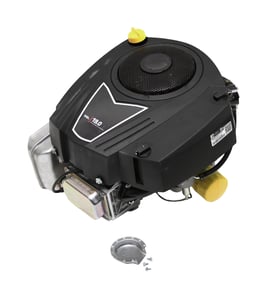
Yes. You can still get replacement parts for Tecumseh engines, including the Tecumseh H50-65417L 5-hp 4-cycle engine, by matching your exact model number and then ordering from the parts list for that model. Many common service items (like fuel system parts) remain available.
To avoid ordering the wrong item, we recommend matching parts by model number first (H50-65417L), then confirming the part name and reference number in the parts list.
- Use the full model number H50-65417L when searching
- Identify the system you are repairing (fuel, ignition, governor, recoil starter)
- Compare the part name to what is installed on your engine
- Replace worn rubber parts (fuel line, primer lines) as a set when practical
- If your engine has been modified, match by measurements and routing before ordering
Fuel delivery issues are one of the most frequent reasons older small engines run poorly. For this model, a common replacement is the fuel line 30962.
| Symptom | Often related to | What to check first |
|---|---|---|
| Starts then dies | Fuel restriction or air leak | Cracked fuel line, loose clamps, dirty tank outlet |
| Won’t start | No fuel reaching carburetor | Fuel line routing, fuel flow from tank |
| Surging at idle | Lean condition | Fuel line leaks, carburetor contamination |
Tecumseh engines are widely used on older lawn and garden equipment, so keeping the correct model number and using the right replacement parts helps restore reliable starting, smooth running, and safe operation without repeated teardown.
Last updated: February 2026
How do I tell what year my Tecumseh engine is?
To tell what year your Tecumseh engine was built, we use the engine’s identification numbers, not the equipment’s purchase date. On the Tecumseh H50-65417L, find the model and specification numbers and the serial or date code stamped on the engine shroud or blower housing; the date code format varies by production era.
Check these common locations for a stamped tag, decal, or metal plate:
- Blower housing (recoil starter shroud)
- Engine block near the carburetor mounting area
- Valve cover area
- Near the spark plug side of the block
- Under grime on flat machined surfaces (wipe clean and use a flashlight)
Tecumseh used several numbering styles over the years, so we match what you see to the most common patterns.
| What you find | What it usually means | What to do next |
|---|---|---|
| Model number (example: H50-65417L) | Engine family and configuration | Use it to ensure parts match your exact build |
| Spec number | Exact build variation (governor, carb, ignition, etc.) | Pair it with the model to narrow the production run |
| Serial number or date code | Often contains the manufacture date information | Decode the date portion based on its format |
- All-numeric codes: often include a year and day-of-year sequence.
- Mixed letters and numbers: letters may indicate the month/plant/line, with digits indicating the year.
- Two-digit year: if you see something like “03”, it typically indicates 2003 (not 1903) for modern small engines.
Use this workflow to get to the correct year without guessing:
- Clean the ID area and write down every character (including dashes).
- Record the model number, spec number, and serial/date code.
- Use the model and spec to confirm you are decoding the correct engine family.
- If you are ordering parts while you decode the year, match by model/spec first.
Tecumseh engines can look identical across multiple years, but carburetors, ignition parts, and fuel system routing can change by spec and production run. Matching the ID numbers helps you avoid wrong-fit parts and repeat repairs.
If you find cracked or hardened fuel tubing while inspecting the engine, replace it with the correct part for this model: fuel line 30962.
Last updated: February 2026
Why are Tecumseh engines so hard to start?
Tecumseh engines like the Tecumseh H50-65417L 5-hp 4-cycle engine usually get hard to start when fuel delivery or the fuel-air mix is off (stale gas, restricted fuel flow, dirty carburetor passages) or ignition is weak (fouled plug). Air leaks and low compression can also make starting take many pulls.
- Drain old fuel and refill with fresh gasoline (use the correct oil level for a 4-cycle engine).
- Open the fuel cap and try starting; a plugged cap vent can restrict fuel flow.
- Inspect the fuel line for cracks, soft spots, kinks, or leaks; replace if questionable.
- Verify the choke fully closes for cold starts and fully opens after it fires.
- Remove and inspect the spark plug; clean/replace if fouled and set the gap to spec for the plug.
- If it starts briefly on a small amount of fuel and dies, clean the carburetor bowl and jets.
Ethanol-blended fuel can leave varnish in the carburetor and can also degrade rubber fuel components over time. On the H50-65417L, any restriction between the tank and carburetor makes the primer/choke less effective.
Common symptoms and what they point to
| Symptom | Most likely cause | What to do first |
|---|---|---|
| Needs many pulls cold | Choke not closing, stale fuel | Check choke action; replace fuel |
| Starts then dies in 1 to 10 seconds | Carburetor jet/bowl restriction | Clean carburetor bowl and main jet |
| Runs only with choke partly on | Lean condition (clog or air leak) | Clean carb; check intake gasket area |
| Fuel smell or wet spots | Leaking fuel line | Replace fuel line |
If you see cracking or seepage, use the exact replacement fuel line 30962 to restore proper fuel flow and prevent air leaks.
Hard starting is usually a sign the engine is running lean or not getting consistent fuel. Fixing the root cause helps prevent backfiring, plug fouling, and repeated rope pulls that can wear the starter components.
Last updated: February 2026