



How does a downdraft ventilation system work?
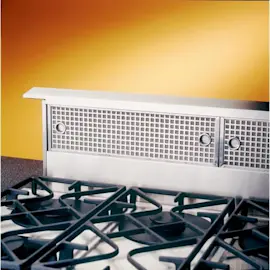
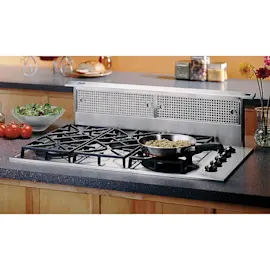
A downdraft ventilation system on your Thermador VTN600CV2C-01 pulls cooking smoke, steam, and odors downward across the cooktop surface into an intake, then moves that air through a blower and ducting to vent outside or through filters for recirculation.
What’s happening inside the system
Most downdraft vent systems work as a chain of airflow steps:
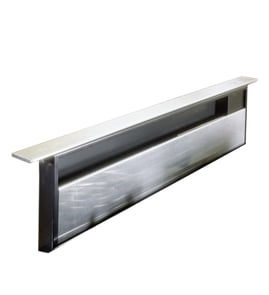
- The intake (often a pop-up or fixed inlet) captures air at the cooking surface.
- A blower pulls air down into the vent housing.
- A fan wheel moves the air through the duct path.
- The air is either exhausted outdoors (ducted) or returned to the kitchen after filtration (recirculating).
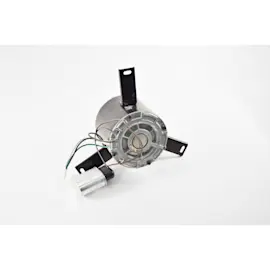
- Electrical components (switches, wiring, and a capacitor on many blower motors) support reliable motor starting and operation.
Ducted vs. recirculating: quick comparison
| Setup | Where the air goes | What you typically notice | Common maintenance |
|---|---|---|---|
| Ducted | Outside the home | Best odor and smoke removal | Keep duct path clear and sealed |
| Recirculating | Back into the kitchen | More dependent on filter condition | Clean/replace filters on schedule |
Why performance can vary (and what to check)
Downdraft systems are sensitive to airflow restrictions because they are pulling air sideways and down, not up.
- Use the correct fan speed for high-heat cooking and heavy smoke.
- Keep the intake area clear of tall pans that block airflow.
- Check for crushed ducting, tight bends, or loose connections.
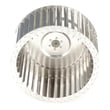
- If the blower runs but airflow is weak, inspect the fan wheel 00448873 for damage or buildup.
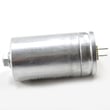
- If the motor hums, struggles to start, or starts slowly, the capacitor 00603980 is a common part to check in blower circuits.
Why it matters
When the downdraft airflow is strong, it helps reduce grease film, lingering odors, and excess moisture around the cooktop. When airflow is restricted, smoke and steam spread before the vent can capture them, even if the blower is running.
For model-specific replacement parts and diagrams for Thermador VTN600CV2C-01, use the parts list for this model or search by model number on Sears PartsDirect.
Last updated: February 2026
How much does downdraft ventilation cost?
For a Thermador downdraft ventilation system like model VTN600CV2C-01, total cost depends on whether you are buying a complete unit or repairing what you have. New downdraft systems commonly run about $900 to $2,000 for the unit; installation, ducting, and cabinetry work add additional cost.
What drives the total cost
- New install vs. replacement: swapping an existing downdraft is usually less labor than a first-time install.
- Duct run complexity: long runs, multiple elbows, or tight routing increases labor and materials.
- Cabinet and countertop modifications: cutouts and reinforcement can add significant time.
- Electrical work: adding or relocating power for the vent system increases cost.
- Repair scope: replacing a few parts is often far less than replacing the entire downdraft assembly.
Repair vs. replace: typical cost buckets
| Situation | What you usually pay for | Typical cost level |
|---|---|---|
| Replace complete downdraft system | Unit plus installation | Highest |
| Restore airflow or stop noise | One or more internal parts | Low to moderate |
| Fix intermittent operation | Electrical diagnosis plus parts | Moderate |
Parts that commonly affect performance on VTN600CV2C-01
If your downdraft is weak, noisy, or struggles to start, these parts are common repair items:
- Thermador fan wheel 00448873 (damage or imbalance can reduce airflow and increase vibration)
- Thermador capacitor 00603980 (a weak capacitor can cause hard starting or humming)
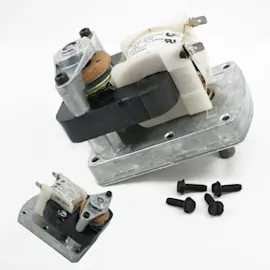
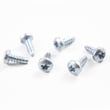
- Thermador mounting set 00499862 (loose mounting can cause rattling and vibration)
Why it matters
Downdraft ventilation costs are driven as much by your kitchen layout as by the vent system itself. Pricing out a targeted repair first can restore smoke and odor capture while avoiding the higher cost of a full replacement.
To shop parts for Thermador VTN600CV2C-01, use the parts list for this model; for broader model searches and ordering, use Sears PartsDirect.
Last updated: February 2026
Why is my downdraft vent not rising?
If your Thermador VTN600CV2C-01 downdraft vent will not rise, the usual causes are a lift motor that cannot start under load, a failed raise/lower switch, or a mechanical bind in the lift tracks. We troubleshoot power and controls first, then check for binding.
Quick checks we recommend
- Turn off power at the breaker before removing any covers.
- Remove grease and debris around the vent top; buildup can bind the lift.
- Press raise/lower and note what happens:
- No sound: switch, wiring, or power feed issue.
- Hums but does not move: weak capacitor or a jam.
- Starts then stops: binding, failing motor, or overload.
Electrical causes to check
A common reason a retractable vent will not lift is a motor start problem.
- If the motor hums but will not lift, test or replace the start capacitor; use Thermador capacitor 00603980.
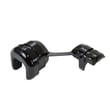
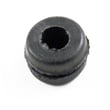
- Inspect the power entry and harness routing for pinched or loose wires; the cord/harness pass-through is supported by Thermador strss-relf 00603588.
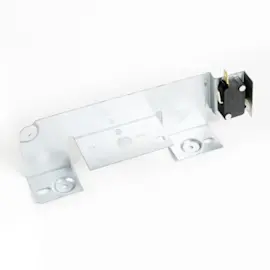
- Test the raise/lower switch for continuity when pressed; replace the switch if it fails (use the parts list for the correct control).
| Symptom | Most likely area | Typical fix |
|---|---|---|
| Silent when commanded | Switch or wiring | Restore connection or replace switch |
| Hums, no movement | Capacitor or bind | Replace capacitor, clear bind |
| Moves slightly then stops | Binding or motor overload | Clean/realign lift, inspect motor |
For safe testing steps, use how to use a multimeter to test electrical parts video.
Mechanical binding checks
- Clean and lightly lubricate lift tracks as appropriate for ventilation equipment.
- Verify the unit is securely mounted and not twisted; loose or shifted hardware can cause binding (see Thermador mounting set 00499862).
Why it matters
When the lift binds or the motor cannot start, the system strains and can damage electrical components. Correcting the root cause restores reliable lift operation.
You can order model-matched parts from the parts list for VTN600CV2C-01, or search by model number on Sears PartsDirect.
Last updated: February 2026