Owner’s manual
 View engine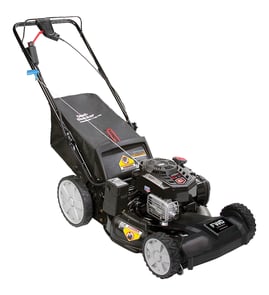





How to find Craftsman model number?
For Craftsman walk-behind mower model 247377001, we find the model number on the mower’s identification label; it’s typically on the back of the deck, between the lower handle mounts. Match that label to your parts list and 247377001 operator’s manual to ensure you order the correct parts.
Where to look on the mower
Check these common label locations first:
- Back of the mower deck, between the lower handle mounts (most common)
- Rear discharge area near the trail shield
- Side of the deck near a rear wheel or height adjuster
- Under the rear flap or near the bagging opening
What to write down (and why)
Record the full ID information exactly as shown on the label.
- Model number: identifies the exact mower configuration
- Serial number: helps confirm production run and correct part variations
- Engine model/type/code (on the engine itself): needed for engine-specific parts like spark plugs and air filters
Quick ID checklist
| Item | Where it’s found | Why it matters |
|---|---|---|
| Mower model number | Mower deck label | Matches the correct Craftsman parts diagrams |
| Mower serial number | Mower deck label | Helps confirm correct revisions |
| Engine model/type/code | Engine shroud label | Matches engine tune-up and fuel system parts |
Why it matters
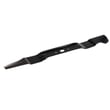
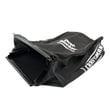
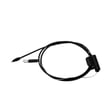
Craftsman walk-behind mowers can look similar across multiple model numbers, but parts like the drive belt, control cables, wheels, and bagging components can differ. Using the exact model number prevents ordering the wrong replacement.
Last updated: January 2026
What kind of gas do I put in my lawn mower?
For the Craftsman lawn mower model 247377001, use fresh regular unleaded gasoline; premium high-octane fuel is not needed. For storage, we recommend adding fuel stabilizer to a full tank and running the engine briefly to circulate it (see the 247377001 owner's manual).
Fuel type and what to avoid
- Use fresh, clean regular unleaded gas from a busy station.
- Avoid stale gas (older than about 30 days without stabilizer).
- Avoid mixing in oil unless your engine specifically calls for it (most walk-behind mowers are 4-cycle).
- Avoid overfilling; leave a little expansion space in the tank.
- For long storage, either run it dry or treat the fuel with stabilizer.
Storage guidance (from the manual)
If the mower will sit for more than 30 days, the manual recommends preventing gum/varnish in the fuel system by doing one of the following:
| Storage plan | What to do | Best for |
|---|---|---|
| Treat the fuel | Add gasoline additive (stabilizer) and run the engine a few minutes | Seasonal storage with fuel left in tank |
| Run it dry | Run the engine until it stops from lack of fuel | Short-term storage when you prefer an empty tank |
Also follow the manual safety step before any maintenance: stop the engine, let it cool, and disconnect the spark plug wire.
Why it matters
Correct fuel and storage habits reduce carburetor clogging, hard starting, and rough running. Fresh gas plus stabilizer during off-season storage helps keep the fuel system clean and the mower ready for the next cut.
Last updated: January 2026
What's the average lifespan of a lawn mower?
For the Craftsman 247377001 gas walk-behind mower, the published average useful life is 7 years or about 140 hours of operation. With consistent maintenance (oil service, blade care, and deck cleaning), many walk-behind mowers deliver reliable performance through that window and beyond.
What “lifespan” means for this mower
The manual defines an Average Useful Life as a time and hour benchmark, then recommends annual inspections after you reach it. See the 247377001 owner's manual.
Typical outcomes by usage pattern
- Light use (small yard, weekly mowing): often reaches the 7-year benchmark with fewer repairs
- Heavy use (large yard, long season, dusty conditions): reaches 140 hours sooner; maintenance matters more
- Poor maintenance (old fuel, dull blade, packed deck): shortened service life and more starting or cutting issues
Maintenance that most affects service life
We see these items make the biggest difference on walk-behind mowers like the Craftsman 247377001:
- Change engine oil on schedule (more often under heavy load or high heat)
- Keep the blade sharp and balanced; replace if bent or badly worn
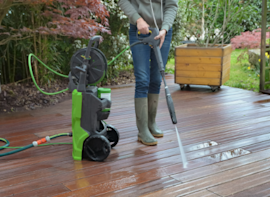
- Clean the underside of the deck by scraping (avoid spraying with a hose or pressure washer)
- Check and tighten fasteners at least once each season
- Use fresh fuel and add stabilizer before storage
Quick reference: time vs. hours
| Measure | What it tells you | For this mower |
|---|---|---|
| Years | Calendar age | 7 years average useful life |
| Hours | Actual run time | 140 hours average useful life |
| After that point | Safety and wear check | Inspect annually by a qualified service dealer |
Why it matters
A mower can still run past its average useful life, but wear in safety and mechanical systems (blade control, fasteners, shields, drive components) increases the risk of breakdowns and poor cut quality. Staying on top of maintenance protects the engine, the deck, and the operator.
Last updated: January 2026