Installation guide
 Owner’s manual
 Error Codes



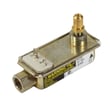
How to adjust the flame on a Kenmore gas stove?
On the Kenmore gas range model 79073439314, we adjust the LOW flame by removing the burner knob and turning the small adjustment screw inside the valve stem until the flame stays lit at the lowest setting and stays small without going out (per the 79073439314 installation guide).
- Turn the burner OFF and let the grate and burner parts cool.
- Work on one burner at a time so knobs do not get mixed up.
- Use a small flat-blade screwdriver for the valve adjustment screw.
- Keep flammables (towels, paper) away from the cooktop.
- If you smell gas at any point, turn all knobs OFF and stop.
- Push in and turn the burner knob to LITE until the burner ignites.
- Quickly turn the knob down to the lowest setting.
- If the flame goes out, turn the knob OFF.
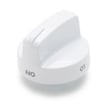
- Pull the surface burner control knob straight off.
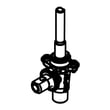
- Insert a thin-bladed screwdriver into the hollow valve stem and engage the slotted screw.
- Turn the screw slightly to decrease or increase the flame.
- Reinstall the knob and test: you should be able to turn from LITE to LOW without extinguishing the flame.
| Result | What it means | What to do |
|---|---|---|
| Flame goes out on LOW | Low setting too low | Increase slightly and retest |
| Tall flame on LOW | Low setting too high | Decrease slightly and retest |
| Small, steady flame | Correct adjustment | Leave as set |
A properly adjusted low flame helps prevent burners from going out (which can cause a gas odor) and improves simmer control so the flame does not extend beyond the pan edge. For normal use and lighting steps, follow the 79073439314 owner’s manual.
Last updated: February 2026
How to remove the top of a Kenmore gas range?
On the Kenmore gas range model 79073439314, the cooktop (top) typically lifts after you remove the grates and burner pieces, then release any front hold-down screws or clips. Use the steps in the 79073439314 owner's manual for the correct access points and safety checks.
- Turn all burner knobs to OFF and let the range cool completely.
- Shut off the gas supply at the manual shut-off valve.
- Unplug the power cord (spark ignition uses electricity).
- Remove anything on the cooktop: grates, pans, foil, and spill liners.
- Protect the finish with a towel or cardboard where the top may rest.
- Lift off the grates.
- Remove burner caps and burner heads (set them aside in order).
- Look for cooktop hold-down screws near the front edge or under the burner heads; remove them if present.
- If your model uses a hinged top, lift from the front corners and raise the top.
- If the top does not hinge, lift the front, then slide the top slightly to disengage rear tabs.
- Support the top so it does not strain wires or the gas tubing.
| Component | What it does | What to do while the top is off |
|---|---|---|
| Surface igniters | Create the spark at each burner | Keep them dry; do not bend electrodes |
| Orifice holders/manifold | Meters gas to each burner | Do not loosen fittings |
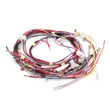
| Wiring harness | Powers ignition switches | Avoid pulling or pinching wires |
Removing the top the right way prevents cracked porcelain, damaged igniters, and gas leaks. It also gives you safe access for cleaning spills, checking burner alignment, and diagnosing weak ignition.
Last updated: February 2026
Where to find Kenmore gas range model number?
On the Kenmore gas range model 79073439314, the model and serial number are printed on the identification plate on the right-hand surface of the oven front frame. You access it by opening the storage drawer, warmer drawer, or broiler drawer (depending on your range configuration); see the installation guide.
The ID plate is not on the back of the range. It is inside the front frame area and becomes visible when you pull out the lower drawer.
- Open the storage drawer (if your range has one).
- If there is no storage drawer, open the warmer drawer (some models).
- If there is no warmer drawer, open the broiler drawer (some models).
- Look for a label/plate on the right-hand side of the oven front frame.
- Write down model number, serial number, and any lot number/letter shown.
The identification plate includes details that help us match the correct Kenmore range parts and settings.
| Item on the plate | Why it matters when ordering parts or service |
|---|---|
| Model number | Ensures parts fit your exact gas range configuration |
| Serial number | Helps confirm production run details |
| Lot number/letter (if shown) | Helps narrow down version changes within the same model |
| Fuel type and pressure rating | Confirms the range’s factory gas setup |
- Use the full model number exactly as printed (for example, 79073439314).
- If your model has a color code variant, the plate still provides the exact identifier needed.
- For operating details and additional label-location notes, check the 79073439314 use & care guide.
Kenmore ranges often share similar-looking panels and burner parts across multiple models. Using the identification plate information prevents ordering the wrong igniter, control panel, or LP conversion components.
Last updated: February 2026