Owner’s manual
 Error Codes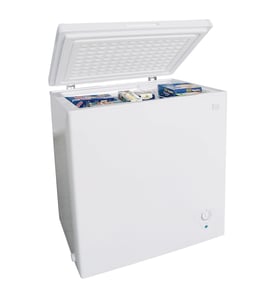

How big is a Kenmore chest freezer model 18313401300?
The Kenmore chest freezer model 18313401300 is an AccessPlus bottom-drawer chest freezer; its exact exterior dimensions are listed in the 18313401300 use and care guide. If you are planning a tight fit (alcove, garage corner, or under-shelf), measure your installation space and compare it to the manual’s dimension diagram.
Where to find the exact dimensions
Use the 18313401300 use and care guide to confirm the freezer’s:
- Overall width, height, and depth
- Lid clearance needed to open fully
- Recommended air space around the cabinet for ventilation
- Electrical outlet location guidance (so the cord reaches without an extension cord)
Quick measuring checklist (before you buy or move it)
We recommend measuring these points in inches:
- Doorways and hallways the freezer must pass through
- Final location width (side-to-side)
- Final location depth (front-to-back), including clearance behind the unit
- Final location height (floor to shelf or ceiling obstruction)
- Lid swing clearance (space above and behind the hinge side)
Typical chest freezer size ranges (helpful for planning)
If you need a planning estimate before checking the manual, most chest freezers fall into these general ranges:
| Chest freezer size class | Typical width | Typical height | Typical depth |
|---|---|---|---|
| Compact | 20 to 25 in. | 33 to 35 in. | 20 to 23 in. |
| Medium | 30 to 45 in. | 33 to 36 in. | 22 to 28 in. |
| Large | 50 to 75 in. | 33 to 36 in. | 28 to 33 in. |
Why it matters
Correct dimensions help prevent delivery problems, ensure the lid opens without hitting walls or shelving, and maintain airflow so the sealed system can cool efficiently.
Last updated: February 2026
Do chest freezers have coils to clean?
Yes, some chest freezers have condenser coils that benefit from cleaning, but many chest freezers (including some Kenmore designs) use a sealed or “skin condenser” setup with no exposed coil to brush or vacuum. For Kenmore model 18313401300, confirm the condenser style and cleaning directions in the 18313401300 owner’s manual.
How to tell if your freezer has coils to clean
Look for an exposed condenser coil and a fan area near the compressor compartment.
- Unplug the freezer before inspecting or cleaning.
- Check the back and lower rear area for a radiator-like coil.
- Check behind a lower rear access panel (if equipped).
- If you only see a compressor and tubing with no finned coil, it often does not have a cleanable coil.
- If the cabinet sides feel warm during operation, that commonly indicates a skin condenser (normal).
Cleaning guidance (when coils are exposed)
If you find an exposed condenser coil, cleaning helps airflow and can reduce run time.
- Vacuum dust with a soft brush attachment.
- Use a coil brush gently if debris is packed in fins.
- Keep the area around the compressor clear for ventilation.
- Reinstall any covers before plugging back in.
| What you see | What it usually means | What to do |
|---|---|---|
| Finned coil with dust buildup | Cleanable condenser coil | Vacuum/brush carefully |
| No finned coil; warm cabinet walls | Skin condenser | No coil cleaning needed; keep clearance |
| Heavy lint near compressor area | Restricted ventilation | Vacuum the compartment area |
Why it matters
Dust and restricted airflow make the compressor work harder, which can raise energy use and reduce cooling performance. Even when there is no exposed coil, keeping ventilation space around the freezer supports normal heat removal.
Last updated: February 2026
Is it worth repairing a chest freezer?
Yes, repairing a chest freezer is usually worth it when the fix is a common, lower-cost issue (control, light, wiring, minor hardware) and the cabinet is in good shape. For Kenmore model 18313401300, we use the 18313401300 owner's manual to compare symptoms to the troubleshooting guide and decide whether a repair is practical.
Quick decision checklist
- The freezer still cools but has a nuisance issue (light, knob, loose hardware): repair
- It will not run and basic power checks fail (breaker, loose plug, control set to OFF): diagnose first
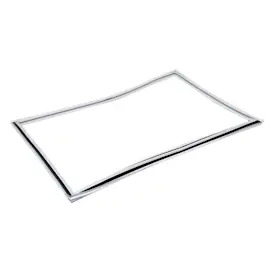
- The lid seal is damaged or dirty and you see frost buildup: repair/cleaning often pays off
- The freezer runs constantly after loading warm food or frequent openings: normal; adjust habits first
- The cabinet is rusted through, lid is warped, or insulation is waterlogged: replacement is usually smarter
What we check first on model 18313401300
The manual notes the temperature control has 6 settings and recommends starting around #4, then allowing time for temperatures to stabilize between adjustments. It also notes that setting the control to OFF stops the compressor but does not disconnect power to the light and other components.
| Symptom | Most likely cause | Best next step |
|---|---|---|
| Freezer does not run | Control set to OFF, loose plug, tripped breaker | Verify power and control setting; then troubleshoot |
| Runs too long | Door opened often, warm food load, control set too cold | Reduce openings, cool food first, adjust setting |
| Light out but freezer cools | Burned-out bulb or switch issue | Replace the bulb and recheck |
Repair cost rule of thumb
We recommend repairing when the total repair cost (parts plus labor) is well under half the cost of a comparable new chest freezer and the sealed system is not suspected.
Why it matters
A working chest freezer protects food quality and reduces waste. Many “not cooling” complaints are actually control-setting, door-seal, or power-supply issues that are inexpensive to correct.
Last updated: February 2026
How do you reset a Kenmore freezer?
To reset your Kenmore chest freezer model 18313401300, we recommend doing a simple power reset: unplug the freezer for 5 minutes, plug it back in, then set the temperature control again. Use the temperature control section in the 18313401300 owner's manual for the correct control positions.
Quick reset steps (works for most control styles)
- Turn the temperature control to OFF.
- Unplug the freezer from the wall outlet (grip the plug, do not pull the cord).
- Wait 5 minutes to let the control and compressor fully reset.
- Plug the freezer back in directly to a grounded outlet (no extension cord or adapter).
- Set the temperature control to your normal setting and keep the lid closed.
- Allow about 4 hours for the freezer to cool down after restoring power.
If the freezer still will not run after the reset
These checks address the most common “no power” and “not cooling” causes listed in the troubleshooting guidance:
- Make sure the plug is fully seated in the outlet.
- Check the house fuse or reset the circuit breaker (a 15-amp time-delay fuse is typically recommended).
- Avoid outlets protected by GFCI (not recommended for this type of freezer).
- Confirm the outlet is not controlled by a wall switch.
- Verify the temperature control is not left in OFF (OFF stops the compressor but does not fully disconnect power).
What to expect after a reset
| Situation | What you’ll notice | What to do |
|---|---|---|
| Just plugged back in | Compressor may not start instantly | Wait a few minutes, then listen for the compressor |
| Recently unplugged | Cabinet warms slightly | Keep lid closed; allow about 4 hours to pull down temp |
| Hot room or warm food load | Longer run times | Reduce lid openings; let temps stabilize |
Why it matters
A reset clears many temporary control interruptions and helps protect the compressor from repeated rapid restarts. Using a proper grounded outlet (no extension cord, no adapter) also prevents low-voltage issues that can damage the motor.
Last updated: February 2026
Why is my Kenmore Elite chest freezer display not working?
If the display on your Kenmore chest freezer model 18313401300 is blank or unresponsive, the most common causes are a power problem (outlet, breaker, loose plug, GFCI trip) or a control issue such as a failed user interface or electronic control board. Start with power and control settings first.
Quick checks we recommend first
- Confirm the freezer is plugged in firmly and the cord is not damaged.
- Check the home breaker or fuse; reset if tripped.
- If the freezer is on a GFCI outlet, press Reset (GFCIs can trip and cut power).
- Verify the temperature control is not set to OFF; on this model the control is on the right exterior wall.
- After changing a setting, wait several hours for temperatures to stabilize.
What to do next (in order)
- Power reset: Unplug the freezer for 5 minutes, then plug it back in.
- Confirm cooling: Even if the display is out, listen for the compressor and check for cooling after a few hours.
- Look for related symptoms: Clicking at the compressor, no cooling, or intermittent power points to a start or control problem.
- If the freezer does not run at all: Follow the “Freezer does not run” troubleshooting steps in the 18313401300 owner's manual.
Common causes and what they usually look like
| Likely cause | What you notice | Best first action |
|---|---|---|
| Tripped breaker/GFCI, loose plug | Display dead, freezer not running | Restore power, reseat plug |
| Control set to OFF | Display may appear off, no cooling | Turn control to a numbered setting |
| User interface/control board issue | Display dead but freezer may still cool | Power reset; then service diagnosis |
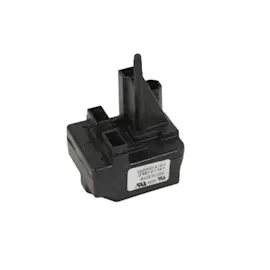
| Start device issue | Clicking, no start, warming temps | Use a start-relay diagnostic approach |
Helpful DIY references
- Use Kenmore electronic control module freezer error codes if your freezer shows codes or beeps.
Why it matters
A dead display can be a simple power interruption, but it can also hide a no-cool condition. Catching a power or control failure early helps protect food and prevents extended warm-up time.
Last updated: February 2026
Where is the model number on a Kenmore chest freezer?
On a Kenmore chest freezer like model 18313401300, the model number is printed on the rating label, which is typically located on an inside wall of the cabinet, on a side panel, or on the back of the unit. Use the 18313401300 owner's manual to match the label information to the correct parts list.
Common places to check
Look for a paper or foil label with the model and serial number. On chest freezers, we most often see it in these spots:
- Inside the freezer cabinet on a side wall (near the top edge)
- Inside the cabinet near the lid opening (upper rim area)
- On an exterior side panel
- On the back of the freezer near the compressor area
- Near the temperature control area (if the label is placed close to controls)
What the label looks like
The model tag is usually a rectangular sticker or metal plate. It commonly includes:
- Model number (for example, 18313401300)
- Serial number
- Electrical rating information (volts/amps)
- Refrigerant and safety markings
Quick ID tips (so you get the right parts)
If you find more than one number, use these rules:
- Use the full model number exactly as printed (include all digits)
- Record the serial number too; it helps confirm production details
- If the label is worn, take a clear photo and zoom in to read it
- Compare the model number to the front page of the 18313401300 owner's manual
Why it matters
Kenmore chest freezers can look similar across multiple model series, but parts like the thermostat knob, hinge cover, and rollers can vary by model. Using the exact model number from the rating label helps us match you to the correct diagrams and replacement parts the first time.
| If you find this | Use it for |
|---|---|
| Model number | Parts lookup and diagrams |
| Serial number | Confirming the exact unit version |
| Electrical ratings | Verifying power requirements |
Last updated: February 2026