Installation guide
 Owner’s manual
 Error Codes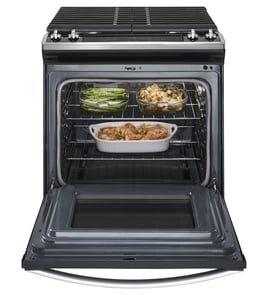





How do I tell what model my Frigidaire stove is?
Your Frigidaire gas range model number is printed on the serial plate; on model LFGF3054TFG, you’ll typically find it by opening the lower oven drawer or the storage drawer and looking for the rating label. Use that exact model number when ordering parts or checking instructions in the LFGF3054TFG owner’s manual.
Where to look for the model number
Check these common locations on Frigidaire ranges:
- Open the lower oven drawer (on some models) and look along the frame area
- Open the storage drawer (on some models) and look for the serial plate/label
- Use a flashlight and look for a label with MODEL and SERIAL fields
- Write the number exactly as shown (letters and numbers)
What the model number looks like (and why it matters)
The model number is usually a short string of letters and numbers (for example, LFGF3054TFG). We use it to match the correct Frigidaire parts list, diagrams, and compatible replacements.
Model number vs. serial number
| Item | What it tells you | Used for |
|---|---|---|
| Model number | The exact product design | Correct parts and manuals |
| Serial number | Your unit’s production identifier | Service history and manufacturing info |
Tips to avoid ordering the wrong part
- Match every character exactly (watch for similar-looking characters like 0 and O)
- Use the model number when selecting ignition and oven parts such as the bake igniter 316489403
- If the label is dirty, wipe gently with a damp cloth and dry it before reading
Why it matters
Frigidaire ranges can look similar across model families, but burner, igniter, control board, and oven components can vary by model. Using the correct model number helps ensure the part fits and the repair steps match your appliance.
Last updated: February 2026
Why does my Frigidaire gas range smell like gas?
If your Frigidaire LFGF3054TFG gas range smells like gas, treat it as a safety issue first: follow the “what to do if you smell gas” steps in the LFGF3054TFG installation guide, then address common causes like a burner that is not lighting cleanly or an oven igniter that is not opening the gas valve fully.
What to do right now (safety first)
- Turn all burner and oven controls to OFF.
- Do not try to light any appliance.
- Do not touch electrical switches or use a phone inside the home.
- Call your gas supplier from a neighbor’s phone and follow their instructions.
- If you cannot reach your gas supplier, call the fire department.
Common causes when the smell happens only during use
A brief, faint odor at initial ignition can happen, but a persistent smell usually points to incomplete ignition or a component problem.
- Surface burner not igniting fully: clogged burner ports, wet/dirty burner head, or a weak igniter spark.
- Oven bake burner ignition issue: a weak bake igniter can delay ignition so gas flows longer before lighting.
- Broil ignition issue: similar delayed ignition symptoms on broil.
- Incorrect flame: flames lifting off ports or very yellow flames can indicate an air-to-gas mix problem.
Parts to check on this model
These are common repair parts for ignition-related gas odors on LFGF3054TFG:
| Symptom | What to inspect | Model-matched part example |
|---|---|---|
| Oven smells like gas, slow to light | Bake ignition | Bake igniter 316489403 |
| Smell during broil, slow to light | Broil ignition | Frigidaire range broil igniter 5304506545 |
| Burner clicks but won’t light reliably | Burner head/igniter area | Frigidaire range surface burner igniter and orifice holder 316536602 |
Why it matters
A gas odor can signal unburned gas or improper combustion. Fixing ignition and flame issues helps your range heat correctly, reduces nuisance odors, and keeps operation safe.
Last updated: February 2026
What is the average lifespan of LFGF3054TFG?
A Frigidaire gas range like model LFGF3054TFG typically lasts 15 years with normal household use and basic maintenance. Keeping burners clean, ensuring proper gas flow, and addressing ignition or temperature issues early helps you reach that expected service life.
What affects lifespan most
- Heat and grease buildup on burners and in the oven cavity
- Ignition wear (surface igniters, bake igniter, broil igniter)
- Temperature control accuracy (sensor and control board performance)
- Door seal condition (heat loss makes components work harder)
- Installation quality (correct gas pressure and regulator setup)
Quick maintenance checklist (monthly or as needed)
- Clean burner caps and ports; make sure flames are steady and mostly blue.
- Wipe spills promptly to prevent baked-on residue and corrosion.
- Check the oven door closes tightly; replace a worn seal if heat leaks.
- If the oven struggles to heat, inspect common wear parts like the bake igniter 316489403.
- Follow cleaning and care steps in the owner's manual.
Common “end-of-life” symptoms vs. fixable issues
| Symptom | Often caused by | Typical fix path |
|---|---|---|
| Oven won’t heat or heats very slowly | Weak igniter | Replace igniter, verify gas supply |
| Oven temperature swings | Sensor drift | Test/replace sensor, calibrate if applicable |
| Burners click but won’t light | Dirty burner ports or igniter issue | Clean, dry, then troubleshoot ignition |
| Heat escaping around door | Worn door seal | Replace door seal |
Why it matters
A range that is struggling to ignite or hold temperature uses more time and fuel, and it puts extra stress on the gas valve, igniters, and electronic controls. Routine cleaning and timely part replacement usually cost far less than replacing the entire range.
Last updated: March 2026