 Installation guide
 Owner’s manual


How to identify a Kenmore washer model?
For Kenmore washer model 11028222700, the model number and serial number are printed on the model and serial label located under the washer lid. Using the exact model number is the fastest way to match the correct parts, diagrams, and troubleshooting steps.
Where to look on Kenmore model 11028222700
On this top-load Kenmore washer, check these common label locations:
- Under the lid on the cabinet rim (most common for this style)
- Around the lid opening near the hinge area
- On the rear panel of the cabinet (less common)
- Inside the control console area (occasionally)
For the exact label location and how Sears recommends recording it, use the 11028222700 owner's manual.
What the model number looks like (and what to write down)
Kenmore washer model numbers often start with 110. For this unit, record:
- Model number: 11028222700
- Serial number: from the same label
- Purchase date: helpful for service history
Quick checklist
- Copy the model number exactly as printed (all digits, no spaces)
- Take a clear photo of the label for reference
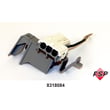
- Use the model number when ordering common wear parts like a lid switch, drain pump, or motor coupling
Why it matters
Kenmore washers can look similar across many versions, but parts can differ by model. The correct model number helps us match the right diagrams and parts the first time, especially for fit-critical items like the lid switch and drive system.
| If you have this | Use it for |
|---|---|
| Model number (11028222700) | Correct part fit and diagrams |
| Serial number | Production info and service reference |
| Purchase date | Maintenance tracking (example: hose replacement intervals) |
Last updated: February 2026
Is it worth repairing a Kenmore washing machine?
Yes; for a Kenmore washer like model 11028222700, repairing is worth it when the fix restores safe, reliable washing and costs less than replacing the machine. Many common failures are wear parts (lid switch, drain pump, motor coupling) that are straightforward to replace and can extend service life.
Quick decision checklist
- Repair when the washer still fills, drains, and spins normally after the fix
- Repair when the problem is a common wear item (switch, pump, coupling, clutch)
- Replace when the tub is rusted through, the cabinet is severely corroded, or multiple major systems are failing
- Repair when you can do the work yourself and the part cost is reasonable
- Replace when repeated breakdowns are happening every few months
Common repairs that are usually worth it on this model
These are frequent, high-impact fixes for Kenmore top-load designs like 11028222700:
| Symptom | Likely area | Example part for this model | Typical difficulty |
|---|---|---|---|
| Won’t spin or won’t start | Lid safety circuit | Washer lid switch assembly WP8318084 | Easy to moderate |
| Won’t drain or leaves water | Drain system | Washer drain pump WP3363394 | Moderate |
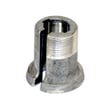
| Agitates poorly or not at all | Agitator drive | Agitator dog 80040 | Easy |
| Motor runs but won’t agitate/spin | Drive connection | Coupling 285753A | Moderate |
Why it matters
A targeted repair prevents secondary damage. For example, continuing to run a washer that will not drain can strain the drain pump and increase the chance of leaks; a failed lid switch can stop spinning entirely as a safety feature.
Safety and documentation notes
- We follow the safety guidance in the 11028222700 owner's manual, including not reaching into the tub or agitator while moving and avoiding extension cords.
- If the washer has been unused for an extended period, run hot water at a faucet for several minutes before washing to clear any accumulated gas in the hot water system (per manual safety guidance).
Last updated: February 2026
What does sud mean on my Kenmore washer?
On Kenmore washer model 11028222700, SUD (sometimes shown as Sud) means the washer is detecting excessive suds, which can slow draining and spinning. The most common causes are too much detergent, very soft water, or a drain problem that keeps suds from clearing.
What to do right now
- Run a Rinse/Spin cycle with no detergent.
- If suds return, run a Normal cycle with no detergent to flush the tub.
- Reduce detergent on the next load (HE detergent only if your detergent calls for it).
- Avoid extra-sudsing additives (too much soap, too much booster).
- Check that the lid is fully closed; the washer will not spin with the lid open.
Check for a drain setup problem (common with SUD)
Excess sudsing often shows up when the washer cannot drain efficiently.
- Make sure the drain hose is not kinked or clogged.
- Do not tape or seal the drain hose into the standpipe; it needs an air gap.
- Confirm the standpipe height is not too high (the manual notes a maximum of 96 in. above the floor).
For the exact drain hose routing and standpipe requirements, follow the 11028222700 installation guide.
When a part is likely involved
If you are using the correct detergent amount and the washer still shows SUD, focus on the drain system and lid safety switch.
| Symptom | Most likely area | Example part for this model |
|---|---|---|
| Water remains in tub, slow drain | Drain pump or drain path restriction | Washer drain pump WP3363394 |
| Won’t spin with lid closed | Lid switch circuit | Washer lid switch assembly WP8318084 |
Why it matters
Too many suds can trap air and water in the load, extend cycle time, and prevent a full-speed spin. Fixing the detergent amount and drain performance helps protect the drive system and improves cleaning results.
For detergent and operating guidance specific to your washer, use the 11028222700 owner's manual.
Last updated: February 2026
What is the capacity of the Kenmore 11028222700 washer?
The Kenmore washer model 11028222700 is a full-size top-load washer; most washers in this class are about 3.2 to 3.9 cu. ft. The exact rated capacity for your specific unit is listed in the specifications section of the 11028222700 owner's manual.
How to find the exact capacity for model 11028222700
Use the manual first, then confirm with the model/serial tag on the cabinet.
- Open the 11028222700 owner's manual and look for Specifications or Product dimensions and capacity
- Search the PDF for “capacity”, “cu. ft.”, or “basket”
- Match the full model number 11028222700 on your washer’s model/serial tag
- If your washer has a water-level selector, note that it changes fill level, not the rated tub volume
- Avoid overfilling; loads should move freely for proper agitation
Practical load-size guidance (works even if you do not know cu. ft.)
These loading rules prevent poor cleaning and out-of-balance spin.
- Fill the basket loosely; do not pack items down
- Keep the load at or below the top row of holes (or a hand’s width below the rim)
- Wash bulky items (comforters, blankets) one at a time
- Mix large and small items to help balance
- If the washer bangs or “walks,” reduce the load and redistribute
Capacity vs. what you can wash
| What you are checking | What it tells you | Where to find it |
|---|---|---|
| Rated capacity (cu. ft.) | Tub volume rating | 11028222700 owner's manual |
| Maximum practical load | What cleans and spins well | Loading guidance above |
| Installation limits | Space, drain, water pressure | 11028222700 installation guide |
Why it matters
Correct loading protects the drive system and spin performance; overloading commonly leads to poor turnover, longer cycle times, and extra wear on mechanical parts such as the clutch.
Last updated: February 2026
What is the life expectancy of a Kenmore washer?
A Kenmore washer like model 11028222700 typically lasts 10 to 15 years with normal household use and basic maintenance. Consistent care (proper loading, good water supply, and timely replacement of wear items) is what most often separates a 10-year washer from a 15-year washer.
What affects washer lifespan the most
- Load size and balance: Overloading and unbalanced loads increase stress on the drive system and suspension.
- Water supply and hoses: Old hoses are a common failure point; replacing them on schedule helps prevent damage.
- Drain performance: Slow draining makes the pump work harder and can shorten pump life.
- Lid switch and controls: Frequent lid slamming and heavy use can wear switches and timers.
- Environment: Freezing temperatures can damage components if water remains in the washer.
Maintenance that extends the life of model 11028222700
We recommend these habits for this Kenmore top-load washer:
- Replace inlet hoses every 5 years.
- Keep loads evenly distributed and avoid packing the basket tight.
- Use the right amount of detergent to reduce residue and odors.
- Confirm the washer sits on a level, sturdy floor to reduce vibration.
- If the washer is in a cold area, winterize it before temperatures reach freezing.
| Item | Typical replacement timing | Why it matters |
|---|---|---|
| Inlet hoses | Every 5 years | Reduces risk of hose failure and water damage |
| Drain pump | As needed (symptoms-based) | Prevents no-drain/slow-drain strain |
| Lid switch | As needed (symptoms-based) | Allows safe spin and cycle completion |
Common “end-of-life” symptoms and likely parts
If the washer is otherwise in good shape, these repairs often restore performance:
- Won’t drain or drains slowly: check the washer drain pump WP3363394.
- Won’t spin or stops when lid is closed: check the washer lid switch assembly WP8318084.
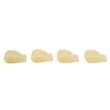
- Agitator slips or won’t move clothes well: inspect the agitator dog 80040.
Why it matters
Knowing the typical lifespan helps you decide whether to repair or replace. If your 11028222700 is under about 15 years old and the tub and cabinet are solid (no major rust or leaks), replacing a common wear part is often the most cost-effective next step. For model-specific care and operating tips, follow the 11028222700 owner's manual.
Last updated: February 2026
What parts fail in a washing machine?
On the Kenmore 11028222700 washer, the parts that fail most often are the ones tied to draining, spinning, agitation, and lid safety. When they wear out, you typically see no drain, no spin, weak agitation, leaks, or the washer stopping mid-cycle; use the 11028222700 owner's manual to match symptoms to checks.
Most common failures on this style of Kenmore top-load washer
- Lid safety circuit: a bad switch can prevent spin or agitation
- Drain system: pump wear or a clog in the drain path causes slow or no draining
- Drive coupling: can strip and stop agitation and spin even though the motor runs
- Agitator drive parts: worn dogs or cam cause weak or one-direction agitation
- Clutch or gear case: slipping, grinding, or poor spin leaves clothes wet
- Fill hoses and inlet screens: restricted screens cause slow fill; aging hoses can leak (replace inlet hoses every 5 years)
Symptom-to-part quick guide
| Symptom | Parts to check first | What you’ll notice |
|---|---|---|
| Won’t spin or agitate | Lid switch, coupling, clutch | Stops like lid is open; motor runs but tub doesn’t move |
| Won’t drain | Drain pump, drain hose | Humming pump, slow drain, water left in tub |
| Weak agitation | Agitator dogs, agitator cam | Agitator “ratchets,” clothes don’t roll over |
| Keeps filling or seems stuck | Drain hose setup, inlet screens | Drain hose too low or sealed; poor water flow |
| Leaks | Inlet hoses, tub gasket, pump | Drips at hoses, water under pump area |
Model-matched parts that commonly solve these symptoms
- Washer lid switch assembly WP8318084
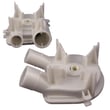
- Washer drain pump WP3363394
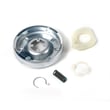
- Coupling 285753A
- Agitator dog 80040
Why it matters
Fixing the root cause early prevents secondary damage; for example, a drain problem leaves heavy loads that strain the clutch and gear case.
Last updated: February 2026





