Owner’s manual
 View engine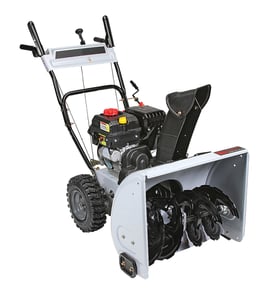



What's better, a 2 stage or 3 stage snow blower?
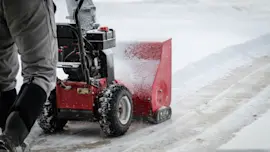
A 2-stage snowblower is the better choice for most homeowners who need strong performance in moderate to heavy snow; a 3-stage is better when you regularly face deep, wet, packed, or plowed snowbanks and want faster intake and throwing. Your Craftsman 536885201 is a 21-inch single-stage unit, so it is best for lighter to moderate snow and tighter areas (driveways, sidewalks). See the 536885201 owner's manual for operating tips and control details.
Quick comparison: 2-stage vs 3-stage
| Feature | 2-stage snowblower | 3-stage snowblower |
|---|---|---|
| Best for | Most driveways; mixed snow | Deep, wet, heavy, plow berms |
| Snow intake | Auger feeds impeller | Accelerator helps pull snow in faster |
| Clearing speed | Strong | Fastest in tough conditions |
| Cost and complexity | Lower; fewer moving parts | Higher; more moving parts |
How to choose what is “better” for your driveway
- Snow type: wet, packed, and icy snow favors a 3-stage.
- Snow depth: frequent deep drifts and end-of-driveway piles favor a 3-stage.
- Space and maneuvering: smaller areas and tighter turns favor simpler machines.
- Surface: gravel drives often need extra care and height adjustment to avoid picking up stones.
- Storage and maintenance: more stages usually means more components to maintain.
Where the Craftsman 536885201 fits
This model is a single-stage, 21-inch snow thrower. It works best when you clear snow promptly and use good technique:
- Overlap passes slightly for cleaner results.
- Discharge downwind when possible.
- Use the chute deflector to control throwing distance.
- In wet packed snow, use short back-and-forth “jabs” to help clear the chute.
Why it matters
Choosing the right stage affects clearing time, clogging risk in wet snow, and how well you can handle plow berms. Matching the machine to your typical snowfall saves wear on belts, cables, and the auger system.
Last updated: January 2026
How many years should a snowblower last?
A gas snowblower like the Craftsman 536885201 typically lasts 10 to 20 years with normal residential use and consistent maintenance; many reach the high end of that range when they are lubricated, tuned up, and stored correctly per the 536885201 owner's manual.
What affects snowblower lifespan most
- Maintenance consistency: regular lubrication, tune-ups, and fastener checks.
- Wear items replaced on time: spark plug, drive belts, and shear pins wear during normal use.
- Storage habits: avoiding fuel storage indoors and prepping the machine for off-season storage.
- Operating conditions: heavy, wet snow and frequent use increase wear on the auger/impeller and drive system.
- How it is used: residential use generally lasts longer than commercial or rental use.
Maintenance habits that extend life
The manual emphasizes keeping the machine maintained, lubricated, and tuned up, plus safe storage practices.
- Check bolts frequently for tightness.
- Run the snowblower a few minutes after clearing snow to help prevent auger/impeller freeze-up.
- Clean the unit and touch up chipped paint to reduce rust.
- Lubricate all lubrication points before storage.
- Store safely: never store with fuel in the tank indoors near ignition sources; let the engine cool before storing.
Typical lifespan expectations (quick guide)
| Snowblower type | Typical lifespan | Notes |
|---|---|---|
| Gas (residential) | 10 to 20 years | Longest life with routine maintenance and proper storage |
| Gas (heavy use) | 8 to 15 years | More frequent belt, cable, and friction-drive wear |
| Electric (corded/battery) | 5 to 10 years | Often limited by motor/electronics and battery life |
Why it matters
A snowblower’s lifespan is mostly a maintenance story: replacing normal wear items and preventing rust and fuel-related problems costs far less than replacing major assemblies like the auger housing or drive system.
Last updated: January 2026
How to find snowblower model number?
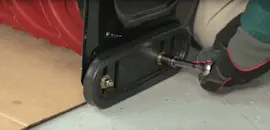
For a Craftsman snow thrower, the model number is printed on the product identification label; on model 536.885201, it’s commonly found on the rear of the unit near the wheel area. Use that full number to match the correct parts list and operator information in the 536885201 operator's manual.
Where to look on the snowblower
Check these common label locations first (wipe off snow, salt, and grime so the numbers are readable):
- Rear of the snowblower between or just above the wheels
- Back of the engine or on the engine shroud
- Near the handle mounting area or lower handle frame
- On the auger housing or motor box area
What the model number looks like (and why it matters)
On this Craftsman unit, the operator’s manual shows the model formatted as 536.885201. You may see it printed with or without the dot (for example, 536885201); both point to the same model family for parts matching.
Why it matters
Using the exact model number helps us pull the correct diagrams and ensure parts like the chute, scraper blade, belts, and cables fit your specific snowblower.
Quick checklist before you order parts
- Copy the model number exactly as printed on the label
- If the label is damaged, take a clear photo and zoom in to read it
- Match the model number to the parts diagram before selecting a part
- If you’re replacing discharge components, confirm the style matches your unit (chute ring, deflector, and hardware)
Common parts that depend on the correct model match
| Part area | Example part for model 536885201 | What it affects |
|---|---|---|
| Discharge chute | Chute 762222MA | Directs where snow is thrown |
| Auger housing edge | Scraper 55323MA | Scraping performance and pavement protection |
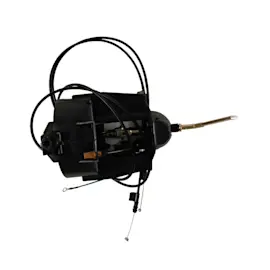
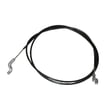
| Drive/engagement | Snowblower drive cable 762259MA | Auger/drive engagement feel and function |
Helpful DIY video
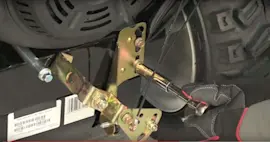
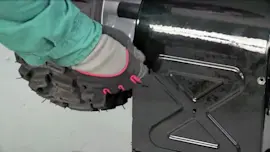
If you’re working on the chute controls after identifying the model, use how to adjust a snowblower chute control rod video to help confirm the linkage is set correctly.
Last updated: January 2026
Is sae 30 the same as 5W30 for snowblower?
No. On the Craftsman snow thrower model 536885201, SAE 30 and SAE 5W-30 are different oils; the manual specifies SAE 5W-30 for normal use because it flows better during cold starts while still protecting like a 30-weight oil when warm. See the 536885201 owner's manual.
What the manual recommends for 536885201
Our guidance for this model follows the oil notes in the manual:
- Use SAE 5W-30 motor oil for typical snowblower conditions.
- For 0°F and below, use partial synthetic 0W-30 for easier starting.
- In areas where temperatures are consistently 20°F or lower, SAE 5W-30 helps starting.
- Check oil level before starting and about every 5 hours of use.
- Change oil about every 25 hours or at least once a year.
Why SAE 30 is not the same as 5W-30
SAE 30 is a single-viscosity oil; 5W-30 is a multi-viscosity oil designed to flow much easier when cold.
| Oil type | Cold-start flow | Warm protection | Best use case for a snowblower |
|---|---|---|---|
| SAE 30 | Poor in cold | Good | Warm-weather engines, not ideal for winter starts |
| 5W-30 | Good | Good | Most winter conditions and easier starting |
| 0W-30 (partial synthetic) | Best | Good | Extreme cold (around 0°F and below) |
Practical tips to avoid hard starting and engine wear
- Use fresh, season-appropriate oil before the first snowfall.
- Do not overfill; keep the level between the FULL and ADD marks.
- If starting is sluggish in cold weather, switch from SAE 30 to 5W-30 (or 0W-30 in extreme cold).
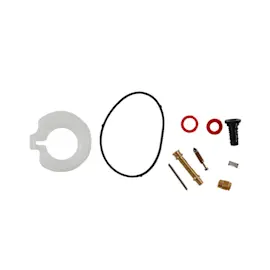
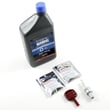
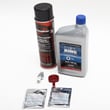
- Keep up with tune-up items (spark plug, oil changes); a kit like the snowblower engine tune-up kit 730280 can help with seasonal maintenance.
Why it matters
Snowblower engines start and run in cold air; oil that is too thick at startup can slow cranking, reduce lubrication to internal parts, and increase wear. Using the correct viscosity improves starting and protects the engine under load.
Last updated: January 2026