Error Codes




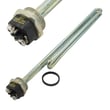
What is the average lifespan of an electric hot water tank?
Most electric hot water tanks last 10 to 15 years. For a Kenmore 153314170 electric water heater, lifespan depends most on water quality, temperature setting, and maintenance; replacing wear items like the anode rod and thermostats on time helps you reach the upper end of that range.
Typical lifespan and what changes it
Electric tank-style water heaters usually fail from tank corrosion, heavy sediment buildup, or electrical component wear.
- Hard water speeds up sediment buildup and can shorten life
- High temperature settings increase wear and energy use
- No anode rod maintenance allows the tank to corrode faster
- Leaking fittings or valve issues can cause ongoing damage
- Worn heating elements or thermostats can reduce hot water output and efficiency
Maintenance that helps you get the full 10 to 15 years
These are the most practical steps we recommend for a Kenmore Power Miser style electric water heater:
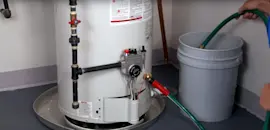
- Flush a few gallons from the drain valve periodically to reduce sediment
- Test and reset temperature to a safe, consistent setting (many homes use about 120°F)
- Inspect for rust-colored water or metallic odor (often points to anode rod wear)
- Check for popping or rumbling sounds (sediment on the element)
- Replace common wear parts when symptoms show up
Common wear parts for model 153314170
| Symptom | Likely part to check | Example part for this model |
|---|---|---|
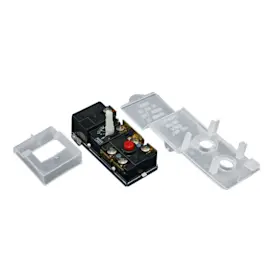
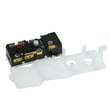
| Water not hot enough or too hot | Thermostat | Thermostat 100108424 |
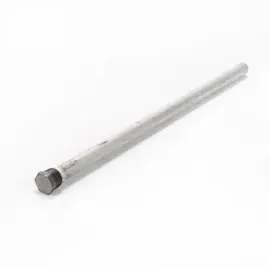
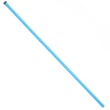
| Hot water runs out fast, rusty odor | Anode rod | Anode rod 100108260 |
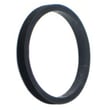
| Leaking at element area after service | Heating element gasket | Water heater heating element gasket 100108379 |
Why it matters
A water heater near end-of-life can still “work,” but it often costs more to run and is more likely to develop leaks. Staying ahead of sediment and corrosion helps protect the tank and keeps recovery time and hot water capacity more consistent.
Last updated: January 2026
Do I need a 20 or 30 amp breaker for a water heater?
Most Kenmore electric tank water heaters like model 153314170 use a 30-amp, 240-volt dedicated circuit, but the correct breaker size is determined by the heater’s wattage and voltage on the rating label. Many smaller point-of-use heaters can use 20 amps, while common 4,500-watt tanks typically require 30 amps.
How to choose the right breaker size
Use the nameplate wattage and voltage to calculate current, then size the circuit for a continuous load.
- Find the heater’s volts (V) and watts (W) on the rating label.
- Calculate amps: A = W ÷ V.
- Size the circuit at 125% (water heaters are treated as continuous loads in many installations).
- Match the breaker and wire gauge to the calculated load.
- If your breaker trips, do not upsize the breaker without confirming wire size and heater specs.
Quick sizing examples (typical)
| Heater wattage | Voltage | Running amps (W ÷ V) | Typical breaker |
|---|---|---|---|
| 3,000 W | 240 V | 12.5 A | 20 A |
| 3,800 W | 240 V | 15.8 A | 25 A (or 30 A if specified) |
| 4,500 W | 240 V | 18.8 A | 30 A |
| 5,500 W | 240 V | 22.9 A | 30 A (sometimes 40 A if specified) |
Why it matters
An undersized breaker can nuisance-trip and leave you without hot water; an oversized breaker can fail to protect the wiring and heater, which is a safety risk. Correct sizing protects the circuit, the heating elements, and the thermostats.
Parts that often get replaced when diagnosing heating issues
If you are troubleshooting “no hot water” or inconsistent temperature on Kenmore model 153314170, these parts are commonly involved:
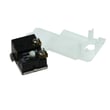
- Thermostat 100108424 (temperature control and safety cutoff function)
- Thermostat 100108683 (upper temperature control on many dual-element designs)
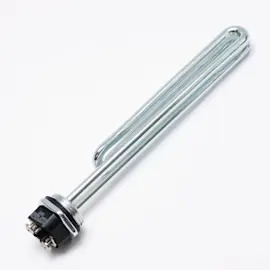
- Water heater element 100108330 (heats the water; failure can mimic a power issue)
- Element 3800 100108327 (alternate element option listed for this model)
Last updated: January 2026
What is the average cost of a 40 gallon electric water heater?
A 40-gallon electric water heater typically costs about $400 to $900 for the unit, with installed replacement commonly landing around $900 to $2,500 depending on labor rates, permit requirements, and any plumbing or electrical updates. For Kenmore model 153314170, your total cost depends heavily on whether you are repairing (parts) or replacing the tank.
Typical price ranges (unit vs. installed)
| What you’re paying for | Typical range | What changes the price most |
|---|---|---|
| Water heater unit only (40-gallon electric) | $400 to $900 | Brand, warranty length, efficiency tier |
| Installed replacement (remove old, install new) | $900 to $2,500 | Labor, permits, code upgrades, access |
| Repair instead of replace (common parts) | $30 to $200+ per part | Which component failed, service call |
When repair is the better value
If your Kenmore 153314170 is otherwise in good shape, replacing a failed component can restore hot water for far less than a full replacement.
Common repair parts for this model include:
- Thermostat 100108424 (temperature control and overheat protection)
- Water heater element 100108330 (heats the water)
- Anode rod 100108260 (helps protect the tank from corrosion)
- Water heater heating element gasket 100108379 (seals the element to prevent leaks)
Quick cost decision guide
- Choose repair when the tank is not leaking and the issue is no hot water, slow recovery, or temperature swings.
- Choose replacement when the tank is leaking, heavily rusted, or you are facing repeated major repairs.
- Compare quotes if installation requires electrical changes (breaker, wiring, disconnect) or plumbing rework.
Why it matters
A “cheap” heater can cost more long-term if it has a short warranty or higher operating costs. On the other hand, a targeted repair (like a thermostat or heating element) can extend service life and restore performance quickly.
Last updated: January 2026
How to tell if an electric hot water heater element is bad?
A bad heating element in your Kenmore water heater model 153314170 usually shows up as little to no hot water, slow recovery, or a breaker that trips when the heater tries to run. The most reliable way to confirm is testing the element for continuity and for a short to ground.
Common signs the element is failing
- Water is lukewarm or runs out fast (one element not heating)
- No hot water at all (possible power issue or both elements not heating)
- Circuit breaker trips when the heater calls for heat (element may be shorted)
- Hot water takes much longer than normal to recover
- You hear sizzling or popping (often heavy sediment, which can overheat an element)
Quick test checklist (electric safety first)
- Turn OFF the water heater breaker and verify power is off.
- Remove the access panel(s) and insulation to reach the element terminals.
- With wires removed from the element screws, use a multimeter:
- Continuity test across the two element screws
- Ground test from each screw to the metal tank
Use our how to use a multimeter to test electrical parts video to follow the meter steps and settings.
What the meter results mean
| Test | What you should see | What “bad” looks like |
|---|---|---|
| Continuity across element screws | Continuity (a resistance reading) | No continuity (open circuit) |
| Screw to tank (ground test) | No continuity | Continuity (short to ground) |
Parts that commonly get replaced with an element
If testing points to a failed element, these model-matched parts are common fixes:
- Water heater element 100108330 (heating element)
- Water heater heating element gasket 100108379 (seal used when reinstalling an element)
- Thermostat 100108424 or thermostat 100108683 (if the element tests good but heating is still inconsistent)
Why it matters
A weak or shorted element can cause poor hot water performance and can repeatedly trip the circuit breaker. Catching it early helps restore normal recovery time and prevents overheating damage to wiring and terminals.
Last updated: January 2026