Owner’s manual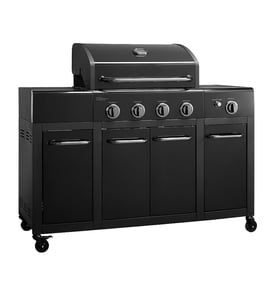



Are Kenmore gas grills any good?
Kenmore gas grills like model 41516941010 are built for dependable everyday grilling: they heat up fast, offer solid cooking performance, and are designed to be serviceable over time with replaceable parts. Like most grills, long-term satisfaction depends on routine cleaning and keeping ignition and burner components in good shape.
What “good” looks like on this Kenmore grill
A good gas grill is one that lights reliably, heats evenly, and stays safe and stable during use. For the 41516941010, we recommend focusing on these practical checkpoints:
- Consistent ignition (spark at the electrode, burners light within a few seconds)
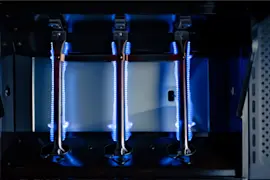
- Even flame pattern across burners (no weak zones or yellow, lazy flames)
- Grease management (tray in place and cleaned to reduce flare-ups)
- Heat control (lid thermometer responds and tracks temperature changes)
- Safe placement and ventilation (outdoors only, clearances maintained)
For model-specific operating and safety guidance, use the 41516941010 owner's manual.
Common “pain points” and the parts that usually fix them
If your grill performance is slipping, it is usually a wear item, not the whole grill.
| Symptom | Most common cause | What to check/replace |
|---|---|---|
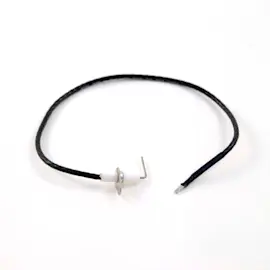
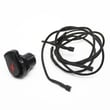
| Won’t ignite | Weak spark or failed ignition component | Gas grill igniter G515-0014-W1, wiring, battery (if equipped) |
| Uneven heating | Blocked burner ports or heat distribution issue | Clean burners, check flame tamers |
| Flare-ups | Grease buildup | Clean and reinstall grease tray |
| Temp seems “off” | Lid gauge drift or failure | Gas grill temperature gauge G518-0075-W1 |
If you want step-by-step ignition troubleshooting, use gas grill wont ignite or light video.
Why it matters
A grill can feel “bad” when it is simply dirty or has a worn igniter. Keeping burners clean, maintaining proper clearances (at least 3 ft from walls and 10 ft from ignition sources), and replacing small parts as needed helps your Kenmore grill cook better and operate safer.
Last updated: February 2026
How do I find my Kenmore Grill model number?
On the Kenmore gas grill model 41516941010, the model and serial information is on the grill’s rating label. We use that label to match the correct parts list, troubleshooting steps, and diagrams in the 41516941010 owner’s manual.
Where to look on the grill
Check these common label locations first (they are the most typical spots for this style of grill cabinet and firebox):
- Back panel of the grill base (rear of the cabinet)
- Inside the cabinet (open the doors and look on the inner side walls)
- Side panel near the control panel area
- Under the side shelf area (less common)
- On the firebox exterior (less common)
What to write down (and why)
Record both numbers exactly as shown; they are used for different things.
| Item on label | What we use it for | Example format |
|---|---|---|
| Model number | Matching the correct Kenmore parts diagram and part numbers | 41516941010 |
| Serial number | Identifying production run details when ordering or troubleshooting | Letters and numbers |
| Date purchased | Warranty and service reference | Month/day/year |
Why it matters
Kenmore grills often share similar frames and burners across multiple versions, so the model number is what keeps you from ordering the wrong igniter, temperature gauge, or regulator/manifold assembly.
Quick tips to avoid mix-ups
- Copy the model number character-for-character (no spaces added)
- Take a clear photo of the label before it fades
- If the label is greasy, wipe it gently so the digits stay readable
- Use the model number when checking diagrams in the manual and when selecting parts
Last updated: February 2026
How to tell if a regulator is bad on a gas grill?
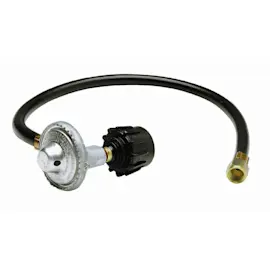
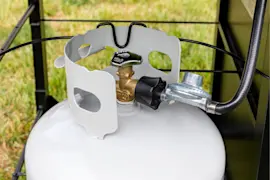
On the Kenmore 41516941010 gas grill, a failing regulator usually shows up as weak heat (grill will not get hot enough), uneven flames, or gas-flow symptoms at the tank connection. We confirm it by doing the LP tank leak test and inspecting the hose and regulator for damage, frosting, or contamination.
Quick signs the regulator is the problem
- Flames stay low even with burners on HIGH (especially after a full propane tank swap).
- Flames look lazy and yellow/orange instead of mostly blue.
- Grill heats unevenly across burners (one side hot, the other cool).
- You hear a loud rushing sound at the tank connection when opening the tank valve (shut the tank off immediately).
- The regulator frosts up during use (turn off the grill and tank valve immediately).
- You see cracking, heavy rust, or obvious damage on the regulator or hose.
How we check it safely (LP tank leak test)
Follow the steps in the 41516941010 owner's manual and use a 50/50 mild soap and water solution:
- Turn all control knobs to OFF.
- Make sure the regulator is connected straight and hand-tight (do not use tools).
- Open the LP tank valve slowly.
- Brush the soapy solution on the tank valve, coupling nut, hose, and regulator connections.
- Growing bubbles mean a leak; shut off the tank and do not use the grill until the leak is corrected.
What the results mean
| What you see | What it points to | What to do next |
|---|---|---|
| Growing bubbles at the coupling/valve | Leak at connection or damaged seal | Reconnect carefully; re-test; replace regulator/hose if it will not seal |
| No bubbles, but flames still weak | Regulator restriction, tank valve issue, or burner blockage | Reset gas flow, then check burners and carryover |
| Regulator frosting | LP cylinder problem | Stop using that cylinder and replace it |
Why it matters
A bad regulator or leaking connection can restrict propane flow (poor heating) or allow gas to escape (unsafe operation). The manual also notes that grease dripping onto the valve, hose, or regulator means you should shut off gas, clean, inspect, and leak test before using the grill again.
Parts that commonly get replaced with regulator issues
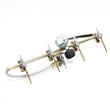
If testing and inspection point to the gas train, the regulator is typically replaced as part of the manifold assembly on this model: gas grill regulator and valve manifold assembly G518-5000-W1.
Last updated: February 2026
Is it worth fixing a gas grill?
Yes, it’s worth fixing a Kenmore 41516941010 gas grill when the firebox and lid are solid (not rusted through or warped) and the problem is a normal wear item like ignition or grease handling; those repairs usually cost far less than replacing the entire grill. Use the 41516941010 owner's manual to confirm safe operation steps after any repair.
Quick decision checklist
- Fix it if the grill lights safely, the frame is stable, and you’re dealing with common parts like an igniter, ignition module, or grease tray.
- Replace it if the firebox is rusted through, the lid or base is badly warped, or you cannot stop a gas leak.
- Fix it if parts are available and the repair is straightforward (for example, ignition or flame control issues).
- Replace it if multiple major systems are failing at once (burners, manifold, and structure).
- Fix it if you can restore even heating and reliable ignition with cleaning and a few parts.
Cost and effort: what usually makes sense
| Issue | Typical fix | DIY difficulty | Usually worth it? |
|---|---|---|---|
| Won’t spark/ignite | Replace igniter or module | Easy to moderate | Yes |
| Flare-ups, hot spots | Clean, replace flame tamer | Easy | Yes |
| Grease mess | Replace/clean grease tray | Easy | Yes |
| Gas leak you can’t stop | Replace gas train parts | Moderate | No (safety first) |
| Firebox rusted through | Structural failure | Not practical | No |
Parts that commonly make a repair worthwhile
These are typical “high-impact” fixes for ignition and heat management:
- Gas grill igniter G515-0014-W1 (restores spark at the burner)
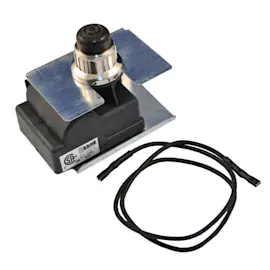
- Gas grill ignition module G515-0030-W2 (restores multi-burner spark output)
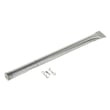
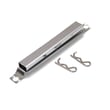
- Char-broil gas grill flame tamer G518-0010-W1 (reduces flare-ups and improves heat distribution)
- Grease tray G515-4500-W1 (helps prevent grease buildup and flare-ups)
Why it matters (safety and performance)
A grill that doesn’t ignite reliably or has grease buildup can lead to unsafe lighting attempts and flare-ups. Our manual guidance is to use the grill only after leak testing, keep clearances from combustibles, and keep the grease tray installed and emptied after each use.
Last updated: February 2026
What is the average lifespan of a gas grill?
A gas grill typically lasts 5 to 15 years. For a Kenmore 41516941010 gas grill, lifespan depends most on how well you prevent corrosion, keep burners and burner tubes clean, and store the grill correctly; replacing wear parts can extend useful life.
Typical lifespan by build and care
| Grill situation | Typical lifespan | What usually ends it |
|---|---|---|
| Basic grill, minimal maintenance | 5 to 7 years | Burner corrosion, firebox rust |
| Mid-grade grill, regular cleaning and cover | 8 to 12 years | Heat plate and burner wear |
| Heavier materials, consistent maintenance | 12 to 15 years | Structural rust, manifold issues |
What to do to reach the high end of the range
We recommend these habits because they directly reduce flare-ups, rust, and burner damage:
- Clean cooking grates and empty grease after cooks; keep grease from building up.
- Keep the grill covered when stored outdoors and store in a dry location.
- If the grill has been idle for an extended period, remove and clean the burner and burner tube assembly before using it again (helps prevent “spider” and insect blockage and flashback).
- Use the grill only in a well-ventilated space and keep clearances (at least 3 ft from walls and 10 ft from ignition sources) to avoid unsafe operation that can damage components.
- Turn off all control knobs and close the LP tank valve when not in use.
Parts that commonly extend grill life
These are normal wear items; replacing them is often cheaper than replacing the whole grill:
- Heat distribution parts such as a flame tamer (example: char-broil gas grill flame tamer G518-0010-W1).
- Ignition parts when lighting becomes unreliable.
- Grease handling parts when flare-ups increase.
Why it matters
A grill usually gets replaced because it becomes unsafe or inconsistent: rusted burners cause uneven heating, clogged burner tubes can trigger flashback, and grease buildup increases flare-ups. Following the storage and burner-cleaning guidance in the 41516941010 owner's manual helps you keep performance steady and avoid premature part failure.
Last updated: February 2026
Who manufactures Kenmore grills?
Kenmore grills are made by third-party manufacturers under the Kenmore brand; for the Kenmore 41516941010 gas grill, the manufacturer is commonly identified as Permasteel. For model-specific details like parts diagrams and service information, use the 41516941010 owner's manual.
How to confirm the manufacturer for your exact grill
We recommend verifying by checking the rating label and the manual parts list so you match the correct parts (burners, igniter, regulator) to your grill.
- Check the data plate (often on the cart frame, inside the cabinet, or near the control panel)
- Match the model number exactly: 41516941010
- Compare the parts list and diagram to what you see on your grill
- Use the manual troubleshooting section if you are diagnosing ignition or heating issues
- When ordering, match by model number first, then by part name/number
Why the manufacturer name matters when buying parts
Kenmore is a brand label; the actual builder can vary by model and production run. Confirming the correct model and parts diagram helps you avoid ordering the wrong ignition parts, heat shields, or grease management components.
Common parts you may need (examples for this model)
These are frequently replaced items on gas grills due to heat, grease, and outdoor exposure:
| Symptom | Likely area to check | Example part for this model |
|---|---|---|
| Won’t ignite (no spark) | Ignition system | Gas grill igniter G515-0014-W1 |
| Weak/uneven heat | Burner carryover and flame coverage | Flame tamer (heat plate) |
| Flare-ups or grease fires | Grease management | Grease tray |
Quick safety reminders before servicing
- Turn all control knobs to OFF
- Shut off the LP tank valve (or gas supply) and disconnect the tank
- Let the grill cool completely before removing grates, flame tamers, or burners
Last updated: February 2026