Owner’s manual
 Error Codes


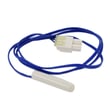
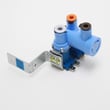
Why is my LG refrigerator leaking from the bottom?
On LG model LFXS26973D, a leak from the bottom is most often caused by a defrost drain problem (meltwater can’t reach the drain pan and spills), or by a water-supply leak related to the ice maker or inlet valve. Use the LFXS26973D owner’s manual to locate access points and safety steps.
Quick checks we recommend first
- Unplug the refrigerator before removing panels or reaching near wiring.
- Look for a sheet of ice or water under the freezer drawer; this often points to a clogged/iced defrost drain.
- Check if the leak happens only when the ice maker fills or when you dispense water; that points to the water line or valve.
- Inspect the door gaskets for gaps that can cause excess frost and drain icing.
- Confirm the unit is level; poor leveling can make water miss the drain path.
Most common causes (and what to do)
1) Clogged or frozen defrost drain
Defrost water should flow through the drain and into the pan underneath. If the drain is blocked, water can overflow and appear as a bottom leak.
- Thaw any ice you can see with warm (not boiling) water.
- Flush the drain opening with warm water and a turkey baster.
- If the drain tube is damaged or won’t clear, inspect/replace the refrigerator drain tube 5251JA3003D.
2) Ice maker or water supply leak
If the puddle appears after ice production or water dispensing, check the supply line connections and valve area.
- Look for drips at the rear lower area where the water line enters.
- Check for cracked tubing, loose fittings, or a valve that seeps.
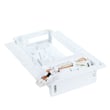
- If the ice maker itself is leaking or overfilling, inspect the ice maker assembly AEQ72909602.
Symptom-to-cause guide
| What you notice | Most likely area | What to check |
|---|---|---|
| Water under freezer drawer, ice sheet in bottom | Defrost drain | Drain opening, drain tube, drain pan |
| Leak after making ice | Ice maker fill system | Ice maker, fill tube, inlet valve |
| Leak after dispensing water | Dispenser water circuit | Reservoir/tubing connections, valve |
Why it matters
Bottom leaks can lead to floor damage and can also indicate a drain issue that may cause ice buildup and reduced airflow, which can affect cooling performance over time.
Last updated: January 2026
How long should an LG water filter last?
For the LG LFXS26973D refrigerator, the water filter should last about 6 months under normal household use, or until the Replace Filter indicator turns on. We recommend replacing it on schedule to keep water taste and flow consistent (see the LFXS26973D manual).
What “6 months” means in real use
Most LG French door, bottom-freezer models like LFXS26973D are designed around a 6-month replacement interval. Replace sooner if you notice any of these signs:
- Water dispenses slower than normal
- Ice cubes get smaller or hollow
- Water tastes or smells different
- The filter light comes on before 6 months
- You recently had plumbing work or sediment in the water line
Compatible filter and related parts for this model
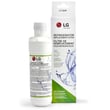
If you are replacing the filter, use a model-compatible part. One common compatible option listed for this model is the LG lt1000p refrigerator water filter ADQ74793501.
| Item | What it does | Typical replacement timing |
|---|---|---|
| Refrigerator water filter | Reduces contaminants for drinking water and ice | About every 6 months |
| Fresh air filter | Helps reduce odors inside the refrigerator | About every 6 months |
Why it matters
A clogged or overdue refrigerator water filter can reduce dispenser flow and affect ice maker performance. Staying on a 6-month schedule helps protect the water inlet valve, filter head, and dispenser system from restriction-related issues.
Helpful how-to guidance
For step-by-step replacement tips specific to LG refrigerators, follow our how to change the water filter in an LG refrigerator guide.
Last updated: January 2026
What is the problem with the LG bottom freezer refrigerator?
On the LG LFXS26973D, the most common “problem” customers describe is a cooling imbalance: the refrigerator section warms up while the freezer stays very cold. This typically points to an airflow, defrost, or temperature-sensing/control issue, not a cabinet-size or depth issue.
What to check first (no parts required)
- Confirm the set temperatures on the control panel (default targets are 37°F refrigerator and 0°F freezer).
- Make sure food packages are not blocking air vents in the refrigerator section.
- Check that both doors close fully and the gaskets seal all the way around.
- Look for heavy frost on the freezer back wall (often indicates a defrost or airflow problem).
- Verify the refrigerator is level so the doors self-close and seal properly.
For model-specific control settings and troubleshooting steps, use the LFXS26973D manual.
Likely causes on this model (and related parts)
If the freezer is cold but the refrigerator is warm, these are common culprits:
- Evaporator fan not moving air from the freezer to the fresh food section
- Frosted-over evaporator area from a defrost problem
- Temperature sensor (thermistor) reading incorrectly
- Condenser area clogged with dust, reducing heat removal
If diagnosis points to a failed component, these model-matched parts are commonly involved:
- Refrigerator evaporator fan motor EAU63923603
- Refrigerator temperature sensor 6500JB2002E
- Refrigerator electronic control board EBR86093702
Quick symptom-to-cause guide
| Symptom | Most likely area | What you’ll usually notice |
|---|---|---|
| Freezer OK, fridge warm | Airflow/evaporator fan | Little or no air coming from fridge vents |
| Frost on freezer back wall | Defrost system | Ice buildup behind rear panel |
| Temps swing up and down | Sensor/control | Unpredictable warming, then overcooling |
| Runs a lot, weak cooling | Condenser airflow | Dusty condenser area, warm cabinet sides |
Clarifying the “depth without door” issue
The LFXS26973D owner’s manual includes a dimensions table for the LFXS26973* family, but published depth measurements can vary by how they’re taken (for example, whether trim, hinges, or leveling feet are included). For installation planning, we recommend measuring your specific refrigerator and your opening rather than relying on a single published depth number.
Why it matters
When the refrigerator section warms up, food safety and freshness are affected first. Catching airflow or defrost problems early can prevent heavier frost buildup and reduce strain on the compressor.
Last updated: January 2026