Owner’s manual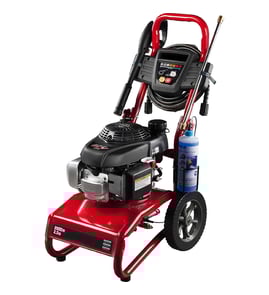

Are pressure washers 2 stroke or 4?
The Craftsman pressure washer model 580752540 uses a 4-stroke gas engine, so you add gasoline to the fuel tank and engine oil to the crankcase separately (no fuel and oil mixing like a 2-stroke).
- 4-stroke: separate oil fill cap/dipstick and gas tank
- 2-stroke: typically calls for a gas and oil mixture in the fuel can
- 4-stroke: oil changes are part of routine maintenance
- 2-stroke: no crankcase oil changes (oil is burned with fuel)
In the 580752540 owner’s manual, the startup prep includes adding engine oil first, then adding fuel. Fuel guidance also allows unleaded gasoline (87 octane/AKI minimum) and notes ethanol limits (up to 10% ethanol is acceptable).
| Engine type | Fuel in tank | Oil handling | What you do |
|---|---|---|---|
| 4-stroke (this model) | Straight gasoline | Separate crankcase oil | Fill oil, then fill gas |
| 2-stroke | Gas and oil mix | Mixed into fuel | Mix at the specified ratio |
Using the wrong fuel type is one of the fastest ways to damage a pressure washer engine. A 4-stroke like the Craftsman 580752540 needs oil in the crankcase before you start it; running without oil can cause immediate engine failure.
- Turn on the water supply before starting; purge air at the gun
- Keep the spray gun pointed in a safe direction when releasing pressure
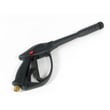
- Never repair a leaking high-pressure hose; replace it
- Do not operate above the rated pressure
Last updated: February 2026
Can you put 87 gas in a pressure washer?
Yes. For the Craftsman pressure washer model 580752540, we recommend clean, fresh unleaded gasoline with a minimum of 87 octane (87 AKI); that means regular 87 gas is correct for normal use. Use fuel that meets the requirements listed in the 580752540 owner's manual.
Use gasoline that matches these guidelines:
- Clean, fresh, unleaded gasoline
- Minimum 87 octane / 87 AKI (91 RON)
- Up to 10% ethanol (E10 gasohol) is acceptable
- Up to 15% MTBE is acceptable
- Fill the tank outdoors, with the engine OFF and cooled down
- E85 or other unapproved fuels
- Gas mixed with oil (this is not a 2-cycle engine fuel system)
- Old or contaminated gas (can cause hard starting and surging)
| Fuel type | OK to use? | Notes |
|---|---|---|
| 87 octane unleaded | Yes | Best everyday choice for this model |
| 88 to 93 octane unleaded | Yes | Fine if it is fresh and ethanol content is within limits |
| E10 (up to 10% ethanol) | Yes | Acceptable per manual |
| E15 | No | Not listed as acceptable for this model |
| E85 | No | Specifically not approved |
Using the correct gasoline helps the engine start easier, run smoothly under load, and reduces fuel-system issues that can shorten the life of your Craftsman gas pressure washer.
Last updated: February 2026
How many PSI is a Craftsman 190cc pressure washer?
For the Craftsman pressure washer model 580752540, the maximum outlet pressure is 3,100 PSI (per the product specifications). PSI can vary slightly at the spray tip based on nozzle selection, hose condition, and water supply flow.
The most reliable number to use is the model’s rated maximum outlet pressure listed in the 580752540 owner's manual. For this model, the specs also list a max flow rate of 2.8 GPM, which helps explain cleaning power along with PSI.
| Spec | Rating |
|---|---|
| Max outlet pressure | 3,100 PSI |
| Max flow rate | 2.8 GPM |
| Water supply requirement (minimum) | 20 PSI at 3.8 GPM |
Even with a 3,100 PSI rating, real-world pressure at the spray gun depends on setup and wear. Check these common factors first:
- Spray tip size/color: a wider fan tip lowers impact; a narrow tip increases impact
- Clogged spray tip: debris reduces pressure and can cause pulsing
- Low water supply: insufficient GPM starves the pump and drops pressure
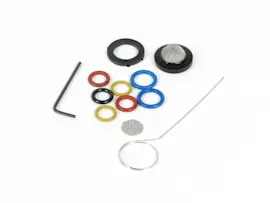
- Air leaks at fittings: worn O-rings or loose connections reduce performance
- Hose and gun condition: internal restrictions or leaks lower pressure
If you suspect the tips are worn or missing, the pressure washer spray nozzle set 311185GS matches this model’s quick-connect nozzle kit.
Using the correct PSI rating helps you choose the right spray tip and cleaning approach. Too much pressure can damage wood, paint, and seals; too little pressure usually points to a clogged nozzle, weak water supply, or a pump/unloader issue.
If pressure is consistently low or surges with multiple tips, follow a structured troubleshooting path such as solving pressure washer problems to narrow it down to water supply, nozzle, unloader valve, or pump.
Last updated: February 2026
Is it worth repairing a pressure washer?
Yes, repairing a Craftsman pressure washer model 580752540 is worth it when the problem is a wear item or maintenance issue (spray tip, inlet screen, hose leaks, O-rings, tune-up). It is less cost-effective when the engine or pump has major internal damage, especially if the unit has been poorly maintained.
We use these checkpoints to make a clear call:
- Repair it if the engine runs and you mainly have low pressure, pulsing, leaks, or a clogged inlet screen or nozzle
- Repair it if the fix is routine maintenance (oil change, air filter, spark plug) and the frame and pump mount are solid
- Replace it if the engine has persistent power loss, heavy smoke, or won’t start after basic fuel and ignition checks
- Replace it if the pump is cracked, seized, or the unit was run without water (common cause of pump failure)
- Replace it if multiple systems are failing at once (engine + pump + hose/gun)
For model-specific maintenance intervals and safety rules, follow the 580752540 owner’s manual.
Typical pressure washer repairs fall into two buckets:
| Repair type | What it usually involves | Typical value outcome |
|---|---|---|
| Minor repair/maintenance | Cleaning inlet screen, replacing O-rings, swapping spray tips, fixing hose leaks | High value; low cost and fast turnaround |
| Major repair | Pump replacement, internal engine repair, repeated no-start diagnosis | Lower value; cost can approach replacement |
These are the most common, most cost-effective fixes we see on gas pressure washers:
- Clean the water inlet screen and purge air from the pump before troubleshooting pressure
- Inspect the high-pressure hose for cuts, bulges, or leaking couplings; replace immediately if damaged
- Address leaks correctly: replace the O-ring or seal, not sealant
- Use the correct spray tip for the job; avoid the red 0° tip on fragile surfaces
- Keep debris cleared from cooling openings to prevent overheating
If spray performance is inconsistent, a nozzle set replacement can be a practical first step; see pressure washer spray nozzle set 311185GS.
A pressure washer that is maintained on schedule runs stronger, lasts longer, and is safer to use. The manual also notes the pump is factory sealed and pre-lubricated, so most “pump maintenance” is really about water supply, inlet filtration, and leak control.
Last updated: February 2026