- Kenmore refrigerator water filters
- Whirlpool refrigerator water filters
- Samsung refrigerator water filters
- GE refrigerator water filters
- LG refrigerator water filters
- Frigidaire refrigerator water filters
- KitchenAid refrigerator water filters
- Maytag refrigerator water filters
- Kenmore Elite refrigerator water filters
- Estate refrigerator water filters
- GE Profile refrigerator water filters
- Amana refrigerator water filters
- Bosch refrigerator water filters
- Dacor refrigerator water filters
- Electrolux refrigerator water filters
Top DIY repair help
View All Repair Categories
Appliances
Lawn & Garden
Power Tools
Home Improvement
Sports & Leisure
Heating & Cooling
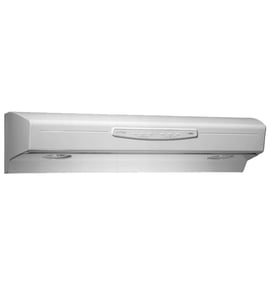
Thermador Range hood Parts — Browse All Models
Finding the right Thermador range hood parts is simple when you start with your model number. Enter it in the search bar or browse the list of Thermador hoods to access detailed diagrams and OEM components tailored to your model. You can quickly locate the parts needed to fix mechanical failures, airflow issues or lighting problems. If you want help diagnosing a symptom before ordering, our DIY range hood repair help library breaks down common troubleshooting steps so you can move forward confidently.

 Installation guide
 Owner’s manual
Frequently bought Thermador parts
Ice Maker Assembly - Refrigerator Ice Maker By Whirlpool
In Stock
$118.89
9% OFF Phone Price : $130.89

Qty

Dishwasher Circulation Pump With Heater
In Stock
$151.02
7% OFF Phone Price : $163.02
Qty
Dishwasher Diverter Assembly
In Stock
$57.88
9% OFF Phone Price : $63.88
Qty
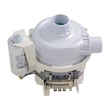
Dishwasher Circulation Pump
In Stock
$303.32
$12.00 OFF Phone Price : $315.32
Qty
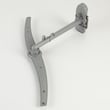
Dishwasher Spray Arm, Upper
In Stock
$36.64
14% OFF Phone Price : $42.64
Qty
Thermador Dishwasher Spray Arm Manifold
In Stock
$42.42
19% OFF Was : $52.62
Qty
Popular maintenance items for Range Hoods
Whirlpool Range Surface Element Receptacle
In Stock
$9.71
9% OFF Phone Price : $10.71
Qty
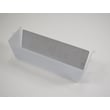
Broan Range Hood Light Lens
$49.04
11% OFF Phone Price : $55.04
Qty
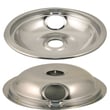
Range Drip Pan, 8-in (chrome)
Part #WPW10196405
This item is not returnable
In Stock
$6.86
13% OFF Phone Price : $7.86
Qty
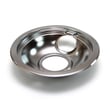
Range Drip Pan, 6-in (chrome)
Part #WPW10196406
This item is not returnable
In Stock
$6.31
14% OFF Phone Price : $7.31
Qty
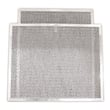
Broan Range Hood Grease Filter, 2-pack
In Stock
$64.94
8% OFF Phone Price : $70.94
Qty
Range Hood 30-in Hood Grease Filter, 2-pack
In Stock
$89.34
6% OFF Phone Price : $95.34
Qty
Troubleshooting common Thermador range hood problems
Fan failing to start or slowing down during use
A slowing or unresponsive blower is a common sign of motor wear. When the fan doesn’t work, either the bearings may be worn or the blower wheel may be stuck. Motors that heat up quickly can also cause the fan to stall mid-use.
Lights flickering or turning off randomly
If the lights aren’t working, flickering is often the first sign of loose bulb contact, worn sockets or strained wiring. Electronic control panels on premium Thermador hoods may also contribute to inconsistent lighting.
Reduced suction or uneven ventilation
When the fan isn’t pulling much air, grease buildup in the filters or duct restrictions can weaken airflow. Thermador wall-mount and island hoods especially depend on clear ducting to maintain strong ventilation.
Noisy or vibrating operation
An exhaust fan that is noisy may be caused by a misaligned blower wheel, loose internal brackets or heavy grease deposits on the blades. High-end hoods often amplify vibration when blower wheels lose balance.
Complete loss of power
When the hood suddenly loses all functionality, the symptom fan and lights don’t work may point to a wiring failure, blown fuse or control board issue. Power interruptions can cause the hood to appear completely dead.
Commonly replaced Thermador range hood parts
Thermador range hoods operate under heavy airflow demands and heat, so some components naturally wear with use.
- Grease filters: Capture grease and protect the blower. Saturated filters reduce performance and should be cleaned or replaced regularly.
- Charcoal filters: Essential in recirculating installations. These filters lose odor-absorbing ability over time and need periodic replacement.
- Blower motor: Weak motors can stall, slow down or produce uneven ventilation. Installing a new motor restores consistent airflow.
- Blower wheel: Bent or debris-covered wheels create vibration and loud operation. Replacing the wheel improves balance and airflow.
- Switch or control board: Thermador hoods rely heavily on electronic controls. Worn switches or control modules can lead to erratic fan or light behavior.
Why use OEM Thermador range hood parts
OEM Thermador parts ensure the correct fit, performance and long-term reliability your hood was designed for. Sears PartsDirect provides accurate model diagrams and compatibility filters to help you choose the right components before ordering. Using genuine parts keeps airflow strong, lighting steady and overall hood performance dependable.
Thermador range hood FAQs
Why does my Thermador hood smell hot or produce a warm odor during use?
A warm or hot smell often indicates grease buildup on internal components. Filters clogged with grease or a stressed motor can generate heat and odors during operation.
Why do the blower speeds change on their own?
If the blower changes speed without input, the electronic control board or speed controller may be failing. Electrical noise or moisture inside the panel can also cause unstable performance.
Why is air blowing back into the kitchen instead of venting properly?
Backward airflow often means the damper flap is stuck or the roof or wall vent is partially blocked. A damaged damper can also keep air from flowing outside as intended.
Why do the lights dim when the fan is on high?
Heavy fan loads can strain wiring connections or worn light sockets. If the hood shares a circuit with other appliances, voltage drop can also cause dimming.
Why does my Thermador hood make a buzzing or humming noise even when the fan is off?
A humming sound with the fan off may indicate a failing transformer or electrical component still receiving standby power. This often happens in electronically controlled hoods with aging parts.
Parts & More
Air Compressor
Audio Equipment
Bottom-Mount Refrigerator
Central Air Conditioner
Electric Water Heater
Gas Pressure Washer
Gas Walk-Behind Mower
Microwave
Miter Saw
Parts
Speaker
Wall Oven/Microwave Combo
Welder