Error Codes




Is a top mount freezer better than a bottom mount freezer?
A top-mount freezer is not “better” than a bottom-mount freezer; it is a tradeoff. For your GE CYE22TP2MNS1 bottom-mount refrigerator, the main advantage is keeping fresh foods at eye level, while a top-mount design typically makes frozen items easier to reach.
- Fresh food access: Bottom-mount keeps everyday items at a more comfortable height.
- Freezer access: Top-mount puts frozen foods at eye level; bottom-mount usually means bending.
- Organization: Bottom freezers often use pull-out drawers; top freezers often use shelves/bins.
- Energy use: Both styles can be efficient; real-world usage depends more on features, seals, and habits.
- Cost and repairs: Top-mount models are often simpler; bottom-mount models can have more components and features.
| Feature | Top-mount freezer | Bottom-mount freezer (like CYE22TP2MNS1) |
|---|---|---|
| Most-used compartment height | Freezer | Fresh food |
| Typical freezer layout | Shelves/bins | Pull-out drawers |
| Best for | Frequent freezer use | Frequent fresh food use |
| Ergonomics | Less bending for freezer | Less bending for fridge |
Use these practical questions to pick the style that fits your household:
- Do you use the freezer daily (meal prep, frozen foods)?
- Do you want fresh foods at eye level (produce, drinks, leftovers)?
- Do you prefer drawers (bottom-mount) or open shelves (top-mount) for frozen storage?
- Is bending/kneeling a concern for anyone in the home?
- Do you need more reliable door sealing and temperature stability (a worn gasket can hurt either style)?
“Better” usually comes down to how often you open each compartment and how you like to organize food. If your refrigerator is not holding temperature consistently, that can outweigh any layout preference; a failed sensor or airflow issue can make either style perform poorly.
If you are troubleshooting temperature swings in the fresh food section, a common part to check is the refrigerator temperature sensor WR55X10025.
Last updated: February 2026
Are all refrigerators 70 inches tall?
No. Refrigerator height is not standardized at 70 inches; it varies by style, capacity, and installation type. Many popular French door and bottom-mount models land near the 68 to 71 inch range, but you can also find shorter top-freezer units and much taller built-in refrigerators.
Most refrigerators fall into a few common height bands. Use these as a planning guide, then measure your opening (including hinges and leveling feet).
- Compact and apartment-size: about 32 to 67 inches
- Top-freezer: about 61 to 67 inches
- Side-by-side: about 65 to 71 inches
- French door and bottom-mount: about 68 to 71 inches
- Built-in: often 80 inches or taller
Measure before you shop or order parts for your GE CYE22TP2MNS1.
- Height: floor to the lowest cabinet or soffit above the refrigerator
- Add clearance: plan for airflow above and behind the cabinet
- Include “tall points”: hinges and door tops can sit higher than the case
- Check leveling feet: raising the front for door swing can increase overall height
- Confirm door swing: make sure doors clear adjacent walls and counters
| Measurement | What to measure | Why it matters |
|---|---|---|
| Opening height | Floor to cabinet | Prevents a too-tall install |
| Opening width | Side wall to side wall | Ensures doors and case fit |
| Opening depth | Back wall to front edge | Avoids sticking out too far |
| Clearance | Above/behind | Helps cooling and efficiency |
A refrigerator that is even 1 inch too tall can force you to remove cabinets, skip proper ventilation, or run the unit unlevel. Getting the height right also helps prevent door seal issues and temperature swings.
If you are troubleshooting temperature consistency after an install or move, a failed sensor can also cause uneven cooling; the refrigerator temperature sensor WR55X10025 is one model-matched part we list for CYE22TP2MNS1.
Last updated: February 2026
What are the disadvantages of a bottom freezer refrigerator?
Bottom-freezer refrigerators like the GE CYE22TP2MNS1 keep fresh food at eye level, but the tradeoffs are more bending to reach frozen items, heavier freezer drawers that can wear faster, and typically higher purchase and repair costs than simpler top-freezer designs.
- You bend more often for frozen foods, ice, and freezer bins.
- Freezer drawers get heavy when fully loaded; that extra weight can stress slides, rails, and door alignment.
- Freezer organization can be less convenient if you stack items in deep bins.
- They often cost more up front than top-freezer models with similar capacity.
- Repairs can be more involved because many models use additional fans, sensors, and controls.
If the freezer drawer is hard to open, doesn’t seal well, or temperatures swing, these model-relevant parts are common checkpoints:
| Symptom | What it often points to | Example part for CYE22TP2MNS1 |
|---|---|---|
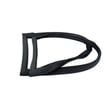
| Frost buildup, warm freezer, or moisture | Door not sealing consistently | GE refrigerator freezer door gasket WR14X36194 |
| Fresh food section warm but freezer OK | Airflow or fan issue | Refrigerator fresh food fan motor assembly WR60X35205 |
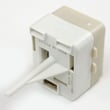
| Temps fluctuate or seem inaccurate | Sensor feedback issue | Refrigerator temperature sensor WR55X10025 |
Bottom-freezer designs are great when you use the refrigerator section most, but if you access frozen food frequently or load the freezer heavily, the drawer system and door seal become more important for day-to-day convenience and long-term performance.
For practical tips that apply to many GE refrigerators, we recommend:
Last updated: February 2026
What is the most common problem with a GE refrigerator?
The most common GE refrigerator issue we see is a cooling problem: the fresh food section or freezer is too warm, temperatures swing, or food spoils faster than normal. On your GE CYE22TP2MNS1 bottom-mount refrigerator, cooling complaints often trace back to airflow, a fan problem, or a temperature-sensing/control issue such as the refrigerator temperature sensor WR55X10025.
- Refrigerator not cooling or not cold enough
- Freezer cold but refrigerator warm (or the reverse)
- Loud humming, rattling, or clicking noises
- Ice maker not making ice or slow ice production
- Water dispenser slow or not dispensing
- Water leaking or puddles under the unit
- Door not sealing, causing frost or warm temps
- Confirm settings: Set refrigerator to about 37°F and freezer to about 0°F.
- Check airflow: Do not block vents with food packages; leave space around the air tower and rear wall.
- Clean condenser area: Dust buildup reduces heat removal and can raise temps.
- Listen for the fan: If the fresh food fan is not running, cooling becomes uneven.
- Inspect door seal: A torn or warped gasket leaks warm air and creates frost.
| Symptom | Common cause | Parts that often relate |
|---|---|---|
| Warm temps, temp swings | Bad sensor or control input | Refrigerator temperature sensor WR55X10025 |
| Warm refrigerator, weak airflow | Fresh food fan not running | Refrigerator fresh food fan motor assembly WR60X35205 |
| Frost, moisture, warm spots | Door not sealing | GE refrigerator freezer door gasket WR14X36194 |
| No ice | Ice maker failure or water supply issue | Refrigerator ice maker assembly WR30X28731 |
| No water, slow water | Inlet valve issue or restriction | Refrigerator water inlet valve WR57X27487 |
A refrigerator that runs warm usually runs longer, wastes energy, and can put food safety at risk. Catching airflow, gasket, and sensor issues early helps your GE CYE22TP2MNS1 recover temperature faster and prevents repeat icing and leaking problems.
For model-specific troubleshooting steps, we recommend starting with GE refrigerator error codes.
Last updated: February 2026
What is the life expectancy of a GE CYE22TP2MNS1 Monogram refrigerator?
A GE bottom-mount refrigerator like model CYE22TP2MNS1 typically lasts 15 to 20 years with normal household use and basic maintenance. Keeping airflow clear, cleaning, and fixing small cooling or water issues early are the biggest factors in reaching the high end of that range.
Most premium refrigerators reach their full service life when the sealed system stays healthy and the airflow components keep temperatures stable.
- Condenser cleanliness (dust buildup makes the compressor work harder)
- Door seal condition (warm air leaks increase run time)
- Fan performance (fresh food and freezer airflow prevents warm spots)
- Ice maker and water system health (leaks and clogs create secondary damage)
- Stable temperatures (avoids excessive cycling and frost issues)
Use this as a simple routine for a GE French door or bottom-mount platform.
- Vacuum and brush the condenser area every 6 to 12 months
- Keep food from blocking interior vents and the air tower
- Replace the water filter on schedule; use the correct filter for this model
- Check and clean door gaskets; correct any gaps or curling
- Address unusual noises quickly (often a fan motor, ice maker, or loose panel)
If you are troubleshooting temperature swings, warm sections, or water and ice issues, these model-matched parts are common wear items.
| Symptom | Common cause | Example part for CYE22TP2MNS1 |
|---|---|---|
| Temps fluctuate or display seems off | Sensor drifting | Refrigerator temperature sensor WR55X10025 |
| Ice maker stops or makes hollow cubes | Ice maker wear or water supply issue | Refrigerator ice maker assembly WR30X28731 |
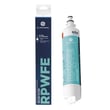
| Water tastes slow or dispenser flow drops | Filter restriction | GE refrigerator water filter RPWFE |
| Doors not sealing, frost, moisture | Gasket leak | GE refrigerator freezer door gasket WR14X36194 |
A refrigerator that runs longer to maintain temperature uses more energy and puts extra load on the compressor and control boards. Simple airflow and sealing maintenance helps protect the most expensive components.
Last updated: February 2026