 Owner’s manual


What is the capacity of GTW460ASJWW?
The GE GTW460ASJ7WW washer has a 4.2 cu. ft. capacity. This is the tub capacity used to describe how much laundry the washer can handle per load; actual usable space can vary slightly based on cycle, water level, and load type. See the GTW460ASJ7WW owner’s manual for loading guidance and cycle recommendations.
To get the best cleaning and reduce out-of-balance issues, we recommend:
- Load items loosely around the agitator; do not pack clothes down.
- Keep the load below the top row of basket holes when possible.
- Use Bulky Items for bulky or water-resistant items (blankets, coats, bath mats).
- Choose Deep Fill only when extra water is truly needed (special-case loads).
- If the load finishes too wet, redistribute and run Drain & Spin.
Capacity is the tub size (4.2 cu. ft.). Load size settings control how the washer fills and senses the load.
| Term | What it means | What you control |
|---|---|---|
| Capacity | Physical tub volume | You cannot change it |
| Load size / Precise Fill | Water level and sensing behavior | You select it (if your model has it) |
| Deep Fill | Adds extra water beyond normal fill | Optional setting |
Knowing the 4.2 cu. ft. capacity helps you avoid overloading, which can cause poor wash performance, excess vibration during spin, and longer cycle times. Proper loading also helps protect key components like the drive system and suspension.
Last updated: January 2026
What is the life expectancy of a GE washing machine?
A GE washing machine typically lasts 10 to 14 years. For your GE GTW460ASJ7WW top-load washer, lifespan is most affected by load size habits, detergent use (HE), and routine care like keeping the tub clean and replacing water hoses on schedule; see the GTW460ASJ7WW owner’s manual.
Most GE washers fall into this range when used for normal household laundry:
| Washer type | Typical life expectancy |
|---|---|
| Top-load washer (like GTW460ASJ7WW) | 10 to 14 years |
| Front-load washer | 10 to 14 years |
We see these issues reduce washer life more than anything else:
- Overloading the basket (extra strain on the drive system and suspension)
- Too much detergent (oversudsing can cause poor draining and residue buildup)
- Skipping cleaning (odor, residue, and grime can affect performance over time)
- Unbalanced loads during spin (extra vibration stresses suspension components)
- Old fill hoses (risk of leaks and water damage; replace about every 5 years)
These habits are simple and make a real difference:
- Load items loosely and evenly around the basket (not packed tight)
- Use HE detergent and measure carefully for your water hardness
- Leave the lid open after loads so moisture can evaporate
- Run periodic cleaning and follow the care steps in the GTW460ASJ7WW owner’s manual
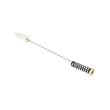
- If the washer starts banging or shaking, inspect the suspension; worn rods can cause out-of-balance spinning (see washer suspension rod and spring assembly WH16X26911)
A washer that is overloaded or constantly out of balance tends to wear out the suspension and drive components sooner. Good loading and routine care help your GE washer clean better now and reach its full expected lifespan.
Last updated: January 2026
How to tell if GE washer drain pump is bad?
On the GE GTW460ASJ7WW washer, a bad drain pump typically shows up as a no-drain or slow-drain condition, a loud hum or grinding during drain, or the cycle stopping before spin because water is still in the tub. Rule out clogs first.
- Tub stays full or drains very slowly at the end of the cycle
- Steady humming during Drain & Spin but little or no water flow
- Grinding or rattling noises during drain (often a damaged impeller)
- Washer won’t advance to spin because it can’t drain
- Water leaking near the pump area
These issues can mimic a failed pump on GTW460ASJ7WW:
- Drain hose kinked or crushed behind the washer
- Standpipe too low or drain hose pushed too far down (can cause siphoning)
- Household drain or washer drain hose partially clogged
- Oversudsing from too much detergent slowing drain flow
For drain hose setup and siphoning guidance, use the GTW460ASJ7WW owner’s manual.
- Unplug the washer.
- If the tub is full, remove water safely before opening hoses.
- Check the pump inlet and outlet hoses for debris (socks, coins, lint).
- Reconnect, restore power, and run Drain & Spin.
| What you observe | Most likely cause | What to do next |
|---|---|---|
| Hums but won’t drain | Pump jammed or impeller damaged | Clear debris; replace pump if damaged |
| Silent during drain | Power/wiring issue or failed pump motor | Inspect wiring and connections |
| Drains slowly | Restriction or weak pump | Clear restrictions; replace if still weak |
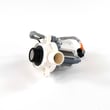
If the drain path is clear and GTW460ASJ7WW still won’t drain reliably, replacing the pump is often the fix. Use the model-matched washer drain pump assembly WH23X28418.
A washer that can’t drain leaves clothes soaking wet and can interrupt cycles because the control won’t allow a full-speed spin with water still in the tub.
Last updated: January 2026
What is the most common problem with GE washers?
For GE top-load washers like model GTW460ASJ7WW, the most common problem we see is drain and spin trouble: the washer will not drain, will not reach full spin, or clothes come out too wet. These issues are often caused by a drain restriction, an out-of-balance load, or a lid-lock or drive component problem.
- Won’t drain or drains slowly: kinked drain hose, standpipe/siphoning issue, or a weak/blocked pump
- Won’t spin or leaves clothes wet: out-of-balance load, lid not locking, or belt/drive issue
- Spin light blinking: the washer detected an out-of-balance condition and may reduce spin speed
- Stops mid-cycle: lid left open too long, paused too long, or a control/drive fault
- Humming during drain with little or no water movement: often points to a pump that is jammed or failing
Use the troubleshooting section in the GTW460ASJ7WW owner’s manual to match your symptom to the right check.
- Run Drain & Spin with an empty basket to confirm strong draining
- Check the drain hose for kinks and confirm the standpipe height is correct (not too low)
- Make sure the drain hose is not pushed too far into the standpipe (helps prevent siphoning)
- Redistribute the load evenly if the cycle ended with very wet laundry
- Confirm the lid closes fully and the washer is not in a “lid must be opened” condition
If your GTW460ASJ7WW won’t drain or won’t spin, these model-matched parts are often the first to inspect.
| Symptom | Part to inspect | What it does |
|---|---|---|
| Won’t drain / drains poorly | Washer drain pump assembly WH23X28418 | Pumps water out of the tub during drain and spin |
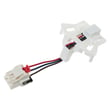
| Won’t spin / lid-related stopping | Washer lid lock WH08X37938 | Confirms the lid is locked so the washer can safely spin |
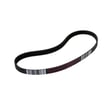
| Weak spin / slipping | Washer drive belt WH01X24697 | Transfers motor power to the drive system |
Drain and spin problems are the issues you notice fastest because they leave standing water or soaking-wet laundry. Fixing a drain restriction or an out-of-balance condition early can also reduce wear on the motor, belt, and shifter.
Last updated: January 2026
What parts fail in a washing machine?
On the GE GTW460ASJ7WW washer, the manual does not rank “most common” failures by part, but the parts that typically wear out first are the ones that move water, control filling, lock the lid, or transfer power for spin and agitation. Use the GTW460ASJ7WW owner’s manual to match symptoms to checks.
- Drain system: pump and drain hoses; problems show up as water left in the tub or a humming sound during drain.
- Fill system: inlet valve and inlet screens; problems show up as slow fill or no fill.
- Drive system: belt and pulleys; problems show up as squealing, weak spin, or no agitation.
- Lid safety system: lid lock and related wiring; problems show up as no start or stopping when the lid won’t lock.
- Balance and support: suspension components; problems show up as repeated out-of-balance events.
The GTW460ASJ7WW troubleshooting guidance prioritizes simple causes before parts replacement:
- Make sure the washer is level and all legs are firmly on the floor.
- Load items loosely and evenly; avoid overloading.
- If the load ends wetter than normal, redistribute and run Drain & Spin.
- For slow fill, turn off water, then clean inlet hose screens.
- For drain issues, check for kinks or improper drain hose installation.
| Symptom you see | System to focus on | Example compatible part |
|---|---|---|
| Water left in tub, humming during drain | Drain | Washer drain pump assembly WH23X28418 |
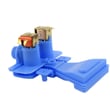
| Won’t fill or fills slowly | Fill | Washer water inlet valve assembly WH13X26535 |
| Won’t start or stops due to lid lock behavior | Lid safety | Washer lid lock WH08X37938 |
| Squealing or weak spin | Drive | Washer drive belt WH01X24697 |
Starting with the manual’s leveling, loading, and hose checks helps prevent unnecessary parts replacement and can resolve common “no drain,” “no fill,” and vibration complaints before you open the cabinet.
Last updated: January 2026


