Owner’s manual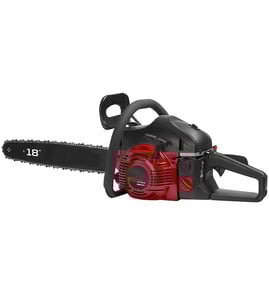




What is the best gas chainsaw on the market?
There is no single “best” gas chainsaw for everyone; the best choice depends on what you cut (limbs vs. firewood vs. felling), how often you use it, and how comfortable you are with weight and kickback control. For safe operation and setup details on your Poulan 3450, use the owner's manual.
- Bar length and wood size: Match bar length to typical log diameter; longer bars add weight and kickback risk.
- Power-to-weight: A lighter saw that you can control safely often outperforms a heavier “more powerful” saw for homeowners.
- Anti-vibration and ergonomics: Reduces fatigue; fatigue increases mistakes.
- Chain brake and kickback rating: Prioritize strong safety features and correct bar and chain combinations.
- Serviceability: Easy access to air filter, spark plug, and carburetor tuning points matters long-term.
| Use case | What “best” usually means | Typical priorities |
|---|---|---|
| Occasional homeowner | Easy starting, lighter weight | Safety features, simple maintenance |
| Firewood (regular) | Strong mid-range torque | Durability, air filtration, vibration control |
| Professional | Maximum productivity | Power-to-weight, rugged build, fast service |
A gas chainsaw is a high-speed cutting tool; controlling kickback and maintaining the saw correctly matters more than brand rankings.
- Operate with two hands and stable footing.
- Keep bystanders and animals away while starting and cutting.
- Wear protective gear (eye/face protection, hearing protection, gloves, and sturdy footwear).
- Stop the engine before setting the saw down or making most adjustments.
For more practical selection and maintenance guidance, we recommend reviewing chainsaw common questions.
The “best” saw is the one you can run safely and maintain consistently. A properly matched bar and chain, sharp chain, correct lubrication, and safe technique reduce kickback risk and help you cut faster with less strain.
Last updated: February 2026
Are Husqvarna and Poulan the same?
Poulan and Husqvarna are not the same brand, but they are closely related; Poulan is owned by Husqvarna, so some designs, parts sourcing, and service practices can overlap. For your Poulan 3450 chainsaw, always match parts and procedures to the model-specific information in the owner's manual.
Even when brands share ownership, chainsaws can use different carburetors, ignition parts, and bar and chain setups. The safest approach is to identify your exact model (3450) and then confirm fit by part number and diagram.
Common areas where overlap can happen:
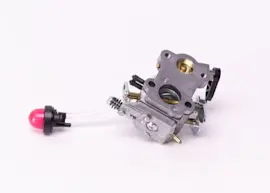
- Engine and fuel system components (carburetor kits, fuel lines)
- Starter and recoil parts
- Fasteners and small hardware
- Bar and chain related wear items
Use your model number and the illustrated parts list to avoid ordering a similar-looking part that does not fit.
Checklist:
- Confirm the model number is 3450 on the data plate
- Compare the part number, not just the description
- Match bar and chain specs (pitch, gauge, drive link count)
- Use the maintenance and adjustment procedures in the manual
| What you are replacing | Best way to confirm fit | Example from this model’s parts list |
|---|---|---|
| Chain | Match pitch, gauge, and drive links | Chain 577180501 |
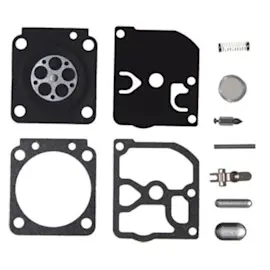
| Carburetor service parts | Match kit to carburetor family and symptoms | Engine carburetor diaphragm and gasket kit 530069844 |
| Starter components | Match recoil design and mounting | Recoil starter pulley 530023817 |
Chainsaws are sensitive to small differences in fuel delivery and cutting hardware. Using the correct Poulan 3450 parts helps prevent hard starting, rough running, overheating, and premature bar and chain wear.
Last updated: February 2026
Will an Oregon chain fit a Poulan chainsaw?
Yes, an Oregon chain can fit a Poulan chainsaw, including model 3450, as long as the chain matches your saw’s exact bar and chain specs (pitch, gauge, and drive link count). We recommend confirming those specs in your Poulan 3450 owner's manual before buying a replacement chain.
To get the right fit and safe cutting performance, match these items exactly:
- Pitch (distance between chain rivets, expressed like 3/8)
- Gauge (drive link thickness, expressed like .050)
- Drive link count (number of drive links on the chain)
- Bar length (the chain must be sized for the installed guide bar)
- Sprocket type/condition (a worn sprocket can cause poor fit and rapid chain wear)
Use this as a fast way to verify an Oregon replacement chain will work.
| Item to match | Where to find it | What “wrong” looks like |
|---|---|---|
| Pitch | Bar stamp, chain packaging, or manual | Chain will not seat or runs rough |
| Gauge | Bar stamp or manual | Chain binds in bar groove or feels loose |
| Drive links | Count links or use old chain info | Chain is too long or too short |
| Bar length | Bar stamp or manual | Chain cannot be tensioned correctly |
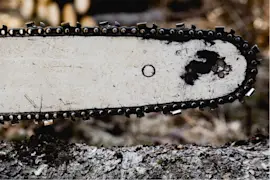
If your current chain is worn, stretched, or damaged, replacing it with the correct spec chain is the right move. We stock a compatible replacement chain for this model: chain 577180501.
A chain that does not match pitch, gauge, and drive links can derail, overheat, or damage the bar and sprocket. Keeping the bar and chain properly lubricated also protects against rapid wear (the manual notes the bar and chain require continuous lubrication). Refer to your Poulan 3450 owner's manual for lubrication and maintenance guidance.
Last updated: February 2026
What happened to Poulan chainsaws?
Poulan chainsaws, including the Poulan 3450, are still supported as a brand, but the product line has changed over time as ownership and manufacturing shifted. Today you will commonly see Poulan-branded saws positioned as value, occasional-use equipment, with parts and maintenance guidance covered in the Poulan 3450 owner's manual.
Poulan has gone through brand and production changes that affected how the saws were built and marketed. The biggest practical impact for owners is that parts availability and service procedures can vary by model and production era.
Common changes customers notice:
- More emphasis on “occasional use” homeowner saws
- More plastic external components on many models
- Greater importance of using the exact model number (3450) when ordering parts
- More reliance on routine maintenance (fuel system, bar oiling, chain condition)
- Different part designs across similar-looking Poulan models
For the Poulan 3450, the best approach is to maintain it by the book and replace wear items as needed.
Parts that commonly need attention on gas chainsaws:
- Chain and bar lubrication items (keep the oil tank filled)
- Fuel system components (especially after storage)
- Starter components if recoil action gets weak
- Muffler area parts if the saw runs hot or gets noisy
If you are sourcing parts for this model, examples of parts available for the 3450 include the chain 577180501 and the carburetor diaphragm and gasket kit 530069844.
| Topic | Older Poulan perception | What matters now for owners |
|---|---|---|
| Build style | Heavier, more metal | Many models are lighter-duty homeowner saws |
| Service | Local repair focus | DIY maintenance plus correct part matching |
| Parts | Fewer variations | Model-specific parts lookup is critical |
When a brand evolves, the safest way to keep a saw reliable is to follow the model-specific operating and maintenance instructions. For example, the manual stresses continuous bar and chain lubrication and warns that lack of oil can quickly ruin the bar and chain; it also notes fuel storage practices that help prevent fuel-system damage.
Last updated: February 2026
Is Poulan a good brand chainsaw?
Poulan chainsaws, including the Poulan 3450, are a solid value for homeowners who need a gas chainsaw for occasional cutting and are willing to keep up with basic maintenance. For frequent, heavy-duty use, most owners get better long-term results from higher-end pro-grade saws.
Poulan built the 3450 for occasional use, so it typically fits best when you need:
- Storm cleanup and light firewood cutting
- Limbing and small-to-medium diameter cuts
- A budget-friendly saw that you maintain regularly
- A saw you can store between seasons and bring back reliably
For day-in, day-out cutting, the tradeoff is usually more sensitivity to fuel quality, carburetor tuning, and general wear.
Most “Poulan is good” experiences come down to fuel, lubrication, and chain setup. We recommend these habits:
- Mix fuel correctly at 40:1 (3.2 oz 2-cycle oil per 1 gallon unleaded gas), as specified in the owner's manual.
- Use fresh fuel; for storage longer than 30 days, drain the tank and run the engine until the carburetor is empty.
- Keep the bar oil tank full; lack of oil quickly ruins the bar and chain.
- Check chain tension often, especially during the first 30 minutes on a new chain (new chains stretch).
- If the chain moves at idle, adjust idle speed per the manual before using the saw.
| Expectation | What you’ll usually get with a Poulan 3450 | What improves it most |
|---|---|---|
| Easy starting every time | Can be finicky if fuel is old or mixture is off | Fresh 40:1 mix, clean carb, correct choke use |
| Strong cutting | Good power for homeowner tasks | Sharp chain, correct tension |
| Long life | Good lifespan with maintenance | Proper storage, steady lubrication |
| Low upkeep | More upkeep than premium saws | Routine checks, fuel system care |
A chainsaw’s “brand quality” shows up most in how forgiving it is. With the Poulan 3450, correct 2-cycle fuel mix, steady bar-and-chain lubrication, and proper chain tension prevent the most common performance complaints.
Last updated: February 2026