Installation guide
 Error Codes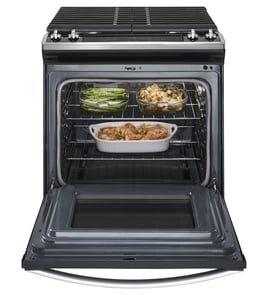



Where is the model number on a KitchenAid gas range?
On the KitchenAid KSGB900ESS3 gas range, the model number is printed on the model/serial/rating plate located behind the oven door on the top right-hand side of the oven frame. You can read it by opening the oven door and looking along the upper-right front frame area.
How to find it quickly
- Turn the oven light on so the frame area is easier to see.
- Open the oven door fully.
- Look at the top right of the oven frame (not the door itself).
- Find the model/serial/rating plate label.
- Write down the full model number (including any suffix) before ordering parts.
What the label is used for
The model/serial/rating plate is the reference for key details used in installation and service, including clearances and gas information. It is also the best way to match the correct replacement parts for your exact KSGB900ESS3 configuration.
Model number vs. serial number
| Item | What it tells you | When you need it |
|---|---|---|
| Model number | Exact design and parts fit | Ordering parts, looking up diagrams |
| Serial number | Production-specific identifier | Service history, age tracking |
Why it matters
KitchenAid ranges often have similar-looking models with different igniters, controls, or burner components. Using the model number from the rating plate helps ensure you get the right part the first time (for example, an oven ignition part like the range oven igniter WPW10324262 must match the model).
For more location and installation details, use the KSGB900ESS3 installation guide.
Last updated: February 2026
Does KitchenAid sell replacement parts?
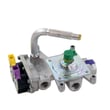
Yes. For your KitchenAid KSGB900ESS3 gas range, we offer a wide selection of replacement parts you can order by model, including common repair items like an igniter, spark module, knobs, and a cooling fan.
The easiest way to get the right part
Use your model number KSGB900ESS3 to match parts to your exact range configuration. The installation guide also helps you identify installation-related hardware and requirements (like the anti-tip bracket and gas connection details).
- Match parts by model number first (KSGB900ESS3)
- Compare the part ID and part name before ordering
- Replace the failed component, not the whole assembly, when possible
- Keep your old part nearby to confirm connectors, mounting points, and finish
- If the range is gas, confirm whether the issue is bake, broil, or surface burner related
Popular replacement parts for KSGB900ESS3
These are examples of parts we commonly see customers replace on this model:
| Symptom | Part to check | Example part on this model |
|---|---|---|
| Oven will not heat or heats slowly | Bake igniter | Range oven igniter WPW10324262 |
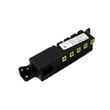
| Burners click but do not light correctly | Spark module | Spark module (red) WPW10475149 |
| Control knob is cracked or missing | Burner knob | Knob, ka, si W10872668 |
| Range runs hot around controls or shows cooling issues | Cooling fan | Cooling fan assembly W11107275 |
Why it matters
Using model-matched parts helps prevent fit issues, gas ignition problems, and repeat repairs. On a gas range, the correct igniter and ignition components are especially important for safe, consistent lighting and proper oven temperature control.
Last updated: February 2026
How long do KitchenAid gas ranges last?
Most KitchenAid gas ranges, including model KSGB900ESS3, last 13 to 15 years with normal household use. Regular cleaning, correct flame adjustment, and promptly fixing ignition or burner issues help you reach the full service life.
Typical lifespan and what affects it
A gas range’s life depends more on heat, grease, and ignition wear than on the cabinet itself. These factors have the biggest impact:
- How often you bake and broil (high-heat cycles accelerate wear)
- Burner cleanliness (clogged ports cause poor ignition and uneven flames)
- Ventilation and cooling (overheating can stress controls and wiring)
- Power quality (surges can damage the control and display)
- Fast repairs when symptoms start (delaying can damage additional parts)
What “end of life” usually looks like
Many ranges still heat, but become unreliable. Common end-of-life symptoms include:
- Oven takes longer to ignite or does not light consistently
- Weak or uneven bake heat
- Repeated clicking or burner ignition problems
- Display or keypad becomes intermittent
- Strong odor, soot, or yellow flames that will not adjust correctly
Quick checks that protect the range (KSGB900ESS3)
Your installation instructions include basic operational checks and what to verify if the range does not heat (power supply, breaker/fuse, and gas shut-off valves). Use the steps in the installation guide as your baseline.
| What you notice | What to do first | Why it matters |
|---|---|---|
| Oven does not heat | Confirm gas shut-off valve is open; confirm grounded outlet has power | Prevents misdiagnosing a part failure |
| Oven slow to light | Allow extra time on first ignition; then retest | Air in the gas line can delay ignition |
| Burners won’t light | Turn knobs off; check power and gas supply | Avoids unburned gas buildup |
Parts that commonly extend service life
Replacing a worn ignition or cooling component often restores reliable operation:
- Range oven igniter WPW10324262 (common fix for slow or failed oven ignition)
- Cooling fan assembly W11107275 (helps protect controls from heat)
- Light bulb 8009 (restores oven visibility, reduces door-opening heat loss)
Why it matters
A range that lights quickly and burns cleanly runs cooler, wastes less gas, and puts less stress on the gas valve, controls, and wiring. That is how most owners get the full 13 to 15 years from a KitchenAid gas range.
Last updated: February 2026
What are the most common stove parts to replace?
For the KitchenAid KSGB900ESS3 gas range, the most commonly replaced parts are the ignition and burner-related components (when burners will not light or click properly), plus wear items like knobs and oven lights. Oven heating problems often trace back to the igniter or burner system.
Most common replacement parts on a gas range
These are the parts we see replaced most often because they affect lighting, flame quality, and everyday usability:
- Oven igniter (weak igniter can prevent the bake burner from lighting)
- Bake burner components (if the burner is damaged or won’t carry flame)
- Spark/ignition components (if burners keep clicking or won’t spark)
- Surface burner base and related burner hardware (clogging, corrosion, spill damage)
- Control knobs and bezels (cracks, stripped inserts, heat damage)
- Oven light bulb (burns out over time)
- Cooling fan (if the range overheats or the fan gets noisy)
Parts on this model that match those common failures
Here are examples of common KSGB900ESS3 parts that align with typical “won’t light” and “won’t heat” complaints:
| Symptom | Common part category | Example part for KSGB900ESS3 |
|---|---|---|
| Oven won’t bake or takes too long to heat | Oven ignition | Range oven igniter WPW10324262 |
| Oven flame issues or uneven bake heat | Oven burner | Bake burner W10764654 |
| Cooktop burners won’t spark or keep clicking | Spark/ignition module | Spark module (red) WPW10475149 |
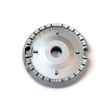
| Burner flame is uneven or burner won’t light consistently | Burner base | Range surface burner base WPW10256028 |
| Oven light out | Light bulb | Light bulb 8009 |
Quick checks before you order a part
We recommend these basic checks first because they often point to the correct part the first time:
- Confirm the range has power (electronic ignition needs electricity).
- Verify the gas shut-off valve is fully open.
- For cooktop issues, clean and dry burner parts after boilovers.
- For oven bake issues, watch for delayed ignition or no ignition (often igniter-related).
- If flames look abnormal after a fuel change, follow the conversion and flame-adjustment steps in the guide.
Why it matters
On a gas range like the KSGB900ESS3, ignition and flame quality control everything from “burner won’t light” to “oven not heating.” Replacing the correct ignition or burner component restores safe, consistent lighting and stable cooking temperatures.
For model-specific setup, gas connection, ignition checks, and flame adjustment guidance, use the installation guide.
Last updated: February 2026