


Are KitchenAid blenders lifetime warranty?
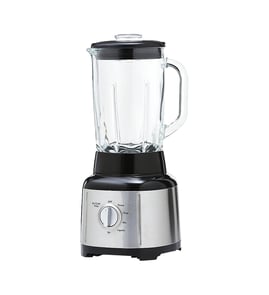
No. KitchenAid blenders like model KSB4027CU0 are not covered by a lifetime warranty; coverage is typically a limited-term warranty (commonly 5 years from the purchase date for eligible regions). If your blender is out of warranty, we can still help you fix common failures by replacing the worn part.
Warranty terms vary by model and where the blender was purchased/used, but most KitchenAid blender warranties are time-limited and cover defects in materials or workmanship.
- Keep your proof of purchase; the warranty period is based on the purchase date.
- Coverage usually excludes normal wear items and damage from misuse.
- If the blender runs but the blades do not spin, the drive system is a common wear point.
- If the blender is completely dead, power and control components are common suspects.
Unplug the blender before inspecting anything.
- Confirm the outlet works by testing another small appliance.
- Reseat the jar and make sure it is fully locked into place.
- Check for a stripped or slipping coupler (you may hear the motor but see no blade movement).
- Look for a damaged cord or loose connection at the base.
- If controls act erratically, a control board issue is possible.
| Symptom | Likely area | Example part for this model |
|---|---|---|
| Motor runs, blades do not | Drive connection | Blender drive coupling W11627528 |
| Leaks, cracked jar, worn seal area | Jar system | Jar assembly W11433178 |
| No power or intermittent power | Power feed | Power cord W11392823 |
| Buttons/knob not responding | User interface/control | Electronic control W11580224 |
Knowing it is not a lifetime warranty helps you choose the fastest path: warranty service (if still within the term) or a targeted repair using the correct KitchenAid parts for KSB4027CU0.
Last updated: February 2026
Can a broken blender be fixed?
Yes, many KitchenAid blenders like model KSB4027CU0 can be fixed when the problem is a worn coupling, a damaged jar, a bad power cord, or a failed control. The fastest path is to identify whether the issue is mechanical (jar and drive) or electrical (power and controls), then replace the failed part.
- Unplug the blender and remove the jar.
- Spin the drive area by hand (it should turn smoothly without grinding).
- Inspect the jar bottom and blade area for cracks, leaks, or wobble.
- Check the cord for cuts, kinks, or a loose plug.
- Smell for a burnt odor from the base after a failure (often points to motor or control issues).
Here are the most common repair paths we see for this model.
| Symptom | Most likely cause | Typical fix |
|---|---|---|
| Motor runs but blades do not spin | Stripped drive coupling | Replace the blender drive coupling W11627528 |
| Leaks, cracked container, or blade assembly damage | Jar damage or worn sealing surfaces | Replace the jar assembly W11433178 |
| No power, intermittent power | Damaged cord or internal connection | Replace the power cord W11392823 and inspect wiring |
| Buttons/knob not responding | Control or knob issue | Check the electronic control W11580224 or knob - rotar W11611304 |
A repair is usually worth it when the fix is a wear item (coupling, cord, jar). Consider replacing the blender if the motor is noisy, seized, or repeatedly trips power after basic checks.
- Drive coupling: low cost, moderate DIY effort
- Jar assembly: higher cost, easy swap
- Control or motor: higher cost, more involved repair
Continuing to run a blender with a slipping coupling, cracked jar, or damaged cord can cause poor blending results, leaks, and additional wear on the motor and electronic control.
Last updated: February 2026
Does KitchenAid sell replacement parts?
Yes. For your KitchenAid KSB4027CU0 blender, KitchenAid sells replacement parts, and we also carry model-matched parts so you can repair common wear items (like the drive coupling or jar assembly) and keep the blender running smoothly.
These are some of the most frequently replaced items we see for this model:
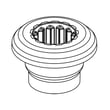
- Blender drive coupling W11627528 (connects the motor drive to the jar blade system)
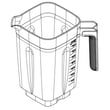
- Jar assembly W11433178 (complete jar that mounts to the base)
- Power cord W11392823 (replaces a damaged or intermittent cord)
- Electronic control W11580224 (helps address dead controls or unresponsive operation)
Use these quick checks before ordering:
- Match the model number exactly: KSB4027CU0
- Compare the part name and part ID to what you are replacing
- Inspect for visible wear (cracks, stripped drive teeth, burning smell, loose connection)
- If the blender leaks, focus on the jar and sealing surfaces first
- If the blender will not power on, check the outlet and cord before replacing controls
| Symptom | Most likely area | Part example for KSB4027CU0 |
|---|---|---|
| Motor runs but blades do not spin | Drive connection | Blender drive coupling (W11627528) |
| Leaking or cracked container | Jar components | Jar assembly (W11433178) |
| No power or power cuts in and out | Power supply | Power cord (W11392823) |
| Controls do not respond | Control system | Electronic control (W11580224) |
Using the correct, model-matched replacement part helps restore performance and prevents repeat failures (for example, a worn coupling can slip and overheat, and a damaged cord can cause intermittent shutoffs).
Last updated: February 2026
How do I contact KitchenAid about parts?
For KitchenAid KSB4027CU0 blender parts help, use the replacement parts list for your model and contact Sears PartsDirect support if you need help identifying the correct part. Ordering by model number ensures the jar, coupler, and base components match your blender.
Have these details ready so we can match the right parts to your blender:
- Model number: KSB4027CU0
- A short symptom description (for example: “jar leaks,” “won’t start,” “burning smell,” “coupler slipping”)
- The part you think you need (if known), such as the blender drive coupling W11627528 or jar assembly W11433178
- Where you purchased the blender and approximate purchase date
- Photos of the base label and the problem area (jar, coupling, cord)
These are frequent replacement items for KitchenAid blenders when performance or fit issues show up:
| What you’re replacing | What it affects | Example part for KSB4027CU0 |
|---|---|---|
| Drive coupling | Jar engagement, slipping, grinding | W11627528 |
| Jar assembly | Leaks, cracks, blade/jar fit | W11433178 |
| Power cord | Intermittent power, damaged insulation | W11392823 |
| Electronic control | No response, erratic operation | W11580224 |
Blender parts can look similar across KitchenAid models, but small differences in the base, coupler, or jar interface can cause leaks, noise, or poor blending. Confirming the exact model and part ID helps ensure proper fit and safe operation.
Last updated: March 2026
How do I tell which KitchenAid model I have?
To tell which KitchenAid blender model you have, we look for the model number on the rating label on the blender base. For your KitchenAid blender, the model number format will match KSB4027CU0 when you are on the correct parts list.
Check these common spots on the blender base (not on the jar):
- Bottom of the base (flip the blender over and read the label)
- Back of the base near the power cord exit
- Underside of the base rim (around the rubber feet area)
- On a sticker or plate that also lists electrical ratings (volts/amps)
If the label is hard to read, wipe it with a damp cloth and dry it; avoid soaking the label.
Once you find the model number, match it exactly, character for character. Even one digit or letter difference can change the correct jar, coupling, or control parts.
| What you see on the label | What it means | What to do next |
|---|---|---|
| KSB4027CU0 | Exact match | Use the KSB4027CU0 parts list |
| KSB4027 (no suffix) | Incomplete model | Recheck the label for the missing characters |
| Different letters/numbers | Different model | Search using the exact model number |
KitchenAid blenders often share a similar look across model families, but internal parts like the drive system and jar interface can differ. Using the exact model number helps ensure the replacement part fits and the blender runs smoothly.
If you are troubleshooting fit or performance issues, these parts are model-sensitive:
- Blender drive coupling W11627528 (connects the motor drive to the jar blade system)
- Jar assembly W11433178 (the complete jar that mates to the base)
- Power cord and internal electrical components (vary by revision)
For additional help confirming the model number format before ordering, use how to find your appliance model number (and what it means for parts).
Last updated: February 2026
How to fix a KitchenAid blender leak?
A leak on your KitchenAid KSB4027CU0 blender almost always comes from the jar area: the jar not seated flat, a worn sealing surface, or a cracked jar assembly. We fix it by cleaning and reseating the jar, then replacing the jar assembly if the leak returns.
- Unplug the blender and remove the jar.
- Empty the jar and dry the outside completely so you can spot the exact drip point.
- Reseat the jar straight down on the base; a slight tilt can let liquid escape.
- Check for food residue on the jar bottom and base pad; even a thin film can prevent a good seal.
- Confirm you are not overfilling; splashing up under the lid can look like a jar leak.
| Where you see liquid | Most likely cause | What we do next |
|---|---|---|
| Under the jar, dripping down the base | Jar sealing surface worn or jar assembly damage | Replace the jar assembly W11433178 |
| Jar wobbles or sits unevenly | Jar not seated, pad worn, or base surface dirty | Clean surfaces; inspect pad and base |
| Leak appears only with thick blends | Excess pressure from overfilling or blocked circulation | Reduce fill, add liquid first, pulse to start |
Replace the jar assembly when you see any of these:
- Hairline cracks in the jar (often near the bottom)
- Persistent seepage after cleaning and reseating
- Warped or damaged sealing surfaces
If the jar is fine but you hear grinding or see poor engagement between the jar and base, inspect the drive interface; a worn coupling can contribute to vibration and poor seating. The model-specific part to check is the blender drive coupling W11627528.
Even a small leak can drip into the base area and lead to odor, corrosion, or electrical issues. Fixing the seal early protects the motor and electronic control.
Last updated: February 2026
What are the parts of a blender called?
Most blenders, including the KitchenAid KSB4027CU0, are made up of a motorized base plus a jar and drive components that transfer power to the blade system. When you’re shopping for replacement parts, these pieces are usually listed by the function they serve (drive, jar, controls, power).
- Base: houses the motor and supports the jar
- Motor: spins the drive system that powers blending
- Jar assembly: the container that holds ingredients (often includes blade and sealing pieces)
- Drive coupling: connects the motor shaft to the jar’s drive interface
- Controls: knob, buttons, or electronic control board that sets speed/programs
- Power cord: supplies power to the blender
Here are examples of how parts for this model are named on parts lists:
| Part name (as listed) | What it’s for | Example part ID |
|---|---|---|
| Base | Outer base structure and support | W11684609 |
| Motor | Provides rotation power | W11433014 |
| Jar assembly | Holds food; interfaces with drive | W11433178 |
| Blender drive coupling | Transfers motor power to the jar | W11627528 |
| Electronic control | Runs the blender’s functions | W11580224 |
If you’re replacing a worn drive interface or you hear grinding, start with the blender drive coupling W11627528. If the container is cracked, leaking, or won’t seat correctly, the jar assembly W11433178 is the typical replacement.
Using the correct part name helps you match the right component to the symptom. For example, “jar” and “jar assembly” can mean different things; on many models, the jar assembly is the complete container system that mates to the drive coupling.
- Noise or slipping under load: check the drive coupling first
- No power: inspect the power cord and controls
- Runs but won’t blend: look at the jar assembly interface and coupling wear
- Intermittent operation: suspect the electronic control or knob
Last updated: February 2026
What is the color of the year for the KitchenAid KSB4027CU0 blender?
KitchenAid’s “Color of the Year” is a brand-wide annual color, not a feature that’s assigned to a specific blender model like the KitchenAid KSB4027CU0. For 2023, KitchenAid’s Color of the Year was Hibiscus (a bold fuchsia tone) for the K400 Color of the Year release.
Your KSB4027CU0 can be sold in multiple finishes, and those finishes are separate from the annual “Color of the Year” promotion.
Common ways color shows up on this model:
- The upper base finish (the visible housing color)
- Trim pieces (such as a trim band)
- The jar and pad components (typically neutral, but can vary by revision)
If you’re trying to keep your blender looking consistent after a repair, match parts by the finish name used for the base components.
Here are model-specific examples of color-coded base parts we list for KSB4027CU0:
- Upper base (white) W11245949
- Upper base (pistachio) W11330944
- Upper base (black matte) W11245946
- Upper base (contour silver) W11279715
| Item | What it refers to | What to use for KSB4027CU0 repairs |
|---|---|---|
| Color of the Year | KitchenAid’s annual featured color | A marketing color release (varies by year) |
| Blender color/finish | The actual housing finish on your unit | The matching upper base finish part |
Color-matching is usually the difference between a repair that looks factory-correct and one that looks mismatched. Choosing the correct upper base finish helps your KitchenAid blender keep its original appearance after replacing cosmetic or structural parts.
Last updated: February 2026
What parts of the KitchenAid blender are dishwasher safe?
For the KitchenAid KSB4027CU0 blender, the jar and lid are typically dishwasher safe, and the blade area is usually cleaned as part of the jar assembly. The motor base and any electrical components should never go in the dishwasher; wipe them clean by hand.
Most cleaning routines focus on the removable, non-electrical pieces.
- Jar (container)
- Lid and any removable cap/plug
- Jar sealing surfaces that are part of the jar assembly
- Non-electrical accessories that detach from the base
If your jar is cracked, leaking, or the blade area is worn, replacing the complete jar assembly W11433178 is the most reliable fix.
These parts contain electrical components or finishes that can be damaged by heat and water.
- Blender base (motor housing)
- Control knob and electronic control area
- Power cord and plug
- Any part that does not fully detach from the base
- Unplug the blender.
- Wipe the base with a damp cloth and a small amount of mild dish soap.
- Dry immediately.
- For odors or residue in the jar, blend warm water plus a drop of dish soap for 20 to 30 seconds, then rinse.
| Item | Best placement | Tip |
|---|---|---|
| Jar | Bottom rack | Avoid high-heat dry if you notice clouding or warping |
| Lid/cap | Top rack | Use a utensil basket or secure small pieces |
| Base | Not applicable | Wipe only; keep water out of controls |
Dishwasher heat and moisture can shorten the life of the motor base and controls, while proper dishwasher placement helps protect the jar seal and reduces leaks during blending.
Last updated: February 2026
Why is my KitchenAid blender leaking from the bottom?
A KitchenAid blender like model KSB4027CU0 typically leaks from the bottom when the jar assembly seal area is loose, worn, or contaminated with residue, letting liquid travel down to the drive area. Start by inspecting the jar base for cracks, then clean and re-seat the jar components; replace the jar if the sealing surfaces are damaged.
- Unplug the blender and remove the jar.
- Check the jar base and bottom for hairline cracks, chips, or warping.
- Clean sticky residue from the jar bottom and the base where the jar sits.
- Reinstall the jar and make sure it sits flat and fully engaged.
- If the leak happens only with hot liquids, let contents cool slightly; heat can increase pressure and push liquid past worn seals.
In many cases, the most reliable fix is replacing the complete jar rather than trying to “patch” a seal.
| Symptom | Most likely area | What to do |
|---|---|---|
| Drips appear under the jar after blending | Jar sealing surfaces or jar damage | Replace the jar if cracked or if leak persists after cleaning |
| Liquid seems to run down onto the drive area | Jar not seated flat, residue on mating surfaces | Clean and re-seat jar; verify it locks in evenly |
| Grinding noise plus leaking | Drive interface wear plus jar issues | Inspect drive area; replace worn components as needed |
If you find damage or the leak continues after cleaning and proper seating, replace the jar assembly W11433178. If the leak is accompanied by slipping, rattling, or poor coupling between jar and base, inspect the blender drive coupling W11627528 for wear.
Bottom leaks can let liquid reach the drive coupling and internal components, which can cause slipping, noise, and premature wear of the motor drive system.
- Always unplug before inspecting the base or drive area.
- Do not run the blender if liquid is pooling under the base; dry everything completely first.
Last updated: February 2026
Why is my KitchenAid blender not working?
If your KitchenAid KSB4027CU0 blender won’t run, the most common causes are a power issue, an overheated motor (temporary shutoff), a jar not seated/locked correctly, or a worn drive connection between the base and jar. Start with simple checks, then inspect the coupling and cord.
- Unplug the blender, wait 1 minute, then plug it directly into a known-good outlet (no power strip).
- If it stopped mid-blend, let the base cool for 10 to 15 minutes; many blenders pause when the motor overheats.
- Reseat the jar and lid; make sure the jar is fully down on the base and aligned.
- Reduce load: add more liquid, cut ingredients smaller, and avoid packing thick mixtures.
- Check for a jam: remove the jar and confirm the blade area spins freely by hand (with the unit unplugged).
A blender can “sound like it’s running” but not spin if the drive connection is stripped.
- Drive coupling: look for rounded, cracked, or melted drive teeth on the blender drive coupling W11627528.
- Jar fit: if the jar won’t seat or wobbles, inspect the jar assembly W11433178 and the base contact area.
- Power cord: if the unit is completely dead or cuts out when the cord moves, inspect the power cord W11392823 for damage.
| What you notice | Most likely cause | What to do next |
|---|---|---|
| No lights, no sound | Outlet/cord issue | Try a different outlet; inspect cord and plug |
| Stops after heavy blending | Overheat protection | Cool 10 to 15 minutes; blend in shorter bursts |
| Motor runs but blades don’t | Worn drive coupling | Inspect and replace drive coupling |
| Hums, struggles, or stalls | Jam or mixture too thick | Clear jam; add liquid; reduce batch size |
Running a jammed jar or thick load can overheat the motor and quickly wear the drive coupling, turning a simple fix into a bigger repair.
Last updated: February 2026