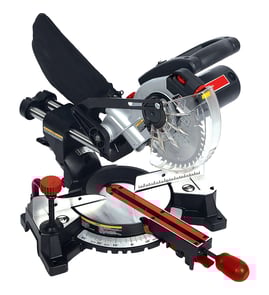

What is the 31.6 on a miter saw?
On the Delta 36-412 miter saw, 31.6 is a common miter detent angle used for cutting crown molding laid flat. It is typically paired with a 33.9-degree bevel setting so the two cuts combine to form tight inside and outside corner joints.
What the 31.6-degree setting is used for
When you see 31.6 on the miter scale, it is there to speed up repeatable trim work, especially crown molding.
- Helps cut crown molding flat on the table instead of nested against the fence
- Works with a matching bevel setting (commonly 33.9 degrees) to create the correct compound angle
- Uses the saw’s detent (positive stop) so the angle locks in consistently
- Reduces measuring and test cuts when you are doing multiple corners
- Common for standard crown spring angles (most often 38 degrees)
Typical crown molding angle pairs (quick reference)
These are the most common “lay it flat” settings people use. Always confirm with a test cut on scrap because crown profiles and spring angles vary.
| Crown spring angle | Typical miter setting | Typical bevel setting |
|---|---|---|
| 38° (common) | 31.6° | 33.9° |
| 45° (less common) | 35.3° | 30.0° |
How to use it correctly on a miter saw
Use this checklist to avoid upside-down or backwards cuts.
- Identify the crown’s spring angle (often 38° or 45°)
- Set the miter to 31.6° (left or right depending on the corner)
- Set the bevel to the matching value (often 33.9°)
- Keep the molding oriented consistently (mark ceiling and wall edges)
- Make a scrap test cut and dry-fit before cutting finish pieces
Why it matters
That 31.6 detent exists because crown molding corners need a precise compound angle. Using the detent makes the Delta 36-412 faster and more accurate for trim carpentry than “eyeballing” the miter scale.
For general DIY safety and best practices before making angled cuts, review are diy appliance repairs safe.
Last updated: February 2026
What should you never cut with a miter saw?
You should never cut anything you cannot hold and control securely on your Delta 36-412 miter saw, especially tiny offcuts, loose stacks, or warped stock that will not sit flat against the fence and table. These situations commonly cause binding, kickback, and thrown workpieces.
Never cut these materials or setups
- Small pieces you cannot clamp or hold safely (short offcuts, narrow slivers, tiny blocks)
- Freehand cuts (work not against the fence, not supported on the table)
- Metal unless you are using the correct blade and the saw is set up for it (most wood miter saw setups are not)
- Bowed, twisted, or cupped lumber that rocks or leaves gaps at the fence
- Multiple pieces at once unless they are rigidly clamped and fully supported
- Round stock (dowel, pipe) unless it is secured in a V-block or jig and clamped
Safe alternatives that work better
If the cut is risky on a miter saw, we switch tools or add proper workholding.
| If you need to cut... | Better approach | Why it’s safer |
|---|---|---|
| Very short pieces | Cut long first, then trim to final length with a stop block and clamp | Keeps hands away from the blade path |
| Metal | Use a metal-cutting saw or the correct metal blade and secure clamping | Reduces grabbing and sparks-related hazards |
| Warped lumber | Joint/plane first or choose straighter stock | Prevents rocking and binding |
| Dowels/pipe | Use a V-jig plus clamp, or a different saw designed for it | Prevents rolling and kickback |
Quick safety checks before every cut
- Keep the work flat on the table and tight to the fence
- Use a clamp for short, narrow, or awkward pieces
- Let the blade reach full speed; then cut with steady pressure
- Keep hands out of the “no-hands zone” near the blade path
- Keep guards in place and wear eye and hearing protection
Why it matters
A miter saw is designed for controlled crosscuts and miters with the work fully supported. When the piece can move, roll, or lift, the blade can grab it and launch it, which is the main cause of miter saw injuries.
For general DIY safety guidance before starting repairs or adjustments, see are diy appliance repairs safe.
Last updated: February 2026
Is the Delta 36-412 suitable for beginners?
Yes. The Delta 36-412 miter saw is a solid choice for beginners because it handles common DIY crosscuts and basic miter cuts with a straightforward setup; the key is using safe technique, keeping the blade sharp, and taking time to square the fence and set the miter stops.
What makes it beginner-friendly
- Simple, repeatable cuts for trim, framing lumber, and small projects
- Faster learning curve than many table saw operations (mostly guided crosscuts)
- Portable jobsite-style format (easy to store and move)
- Common wear items (blade, brushes on some motors, switches) are typical power-tool service parts
What beginners should watch out for
A miter saw is safer than many tools when used correctly, but it can still kick a board, bind a blade, or pull hands too close to the cut line.
- Keep hands at least 6 inches from the blade path (use clamps when needed)
- Let the blade reach full speed before cutting; wait for a complete stop before lifting
- Support long boards so they do not tip or pinch the blade
- Use the right blade for the job (fine-tooth for trim, fewer teeth for framing)
- Lock the miter and bevel settings before every cut
Quick setup checklist (best results on day one)
| Setup item | What “good” looks like | Why it matters |
|---|---|---|
| Fence to blade | Square at 90° | Prevents gaps and out-of-square cuts |
| Miter detents | Stops land accurately | Speeds up repeat cuts |
| Blade condition | Sharp, clean, not warped | Reduces burning and wandering |
| Work support | Board stays flat and stable | Prevents binding and kickback |
Why it matters
For a beginner, accuracy and confidence come from repeatability. When the fence is square, the miter lock holds tight, and the work is supported, the Delta 36-412 produces cleaner cuts with fewer surprises, which is exactly what helps new users build skills safely.
For general DIY safety habits that apply to power tools, see are diy appliance repairs safe.
Last updated: February 2026
Is Delta a good miter saw brand?
Yes. Delta is a solid, long-running power tool brand, and Delta miter saws like model 36-412 are generally a good choice when you want dependable cutting performance, straightforward adjustments, and widely available replacement parts over time. Use your workload and accuracy needs to decide if it is the right fit.
What “good” means for a miter saw
A miter saw brand is a good fit when it consistently delivers these basics:
- Holds miter and bevel settings without drifting
- Cuts square when the fence and blade are properly aligned
- Has a stable base and smooth pivot action
- Uses common wear parts (brushes, switches, guards) that can be replaced
- Has clear, repeatable detents for common angles
Quick checklist: is Delta right for your projects?
Use this to match the saw to how you work.
| If you mostly do... | Delta miter saws are a good fit when you want... | Consider upgrading when you need... |
|---|---|---|
| DIY trim, shelving, framing | Reliable crosscuts and basic angle cuts | Higher-end dust collection and premium fences |
| Hobby woodworking | Repeatable miters with careful setup | Sliding capacity for very wide boards |
| Frequent jobsite use | Durable, serviceable design | Maximum portability and top-tier calibration features |
What to check on your Delta 36-412 before you judge it
Even a good saw brand can cut poorly if it is out of adjustment or using the wrong blade.
- Verify the blade is sharp and appropriate (fine-tooth for trim, fewer teeth for framing)
- Check fence alignment and that the fence faces are clean and flat
- Confirm the miter detent plate locks firmly at 0°, 45° left, and 45° right
- Inspect the blade guard for smooth movement and full return
- Listen for motor strain (often a dull blade, binding, or worn brushes)
Why it matters
A miter saw is only as “good” as its ability to cut accurately and safely every time. Delta is a good brand choice when you want a dependable saw you can maintain, tune, and keep running with routine service.
For help finding the correct model identification details before ordering parts, use how to find your appliance model number (and what it means for parts).
Last updated: February 2026
What is the most reliable miter saw?
The most reliable miter saw is the one that matches your workload and stays accurate over time: a rigid fence, smooth slide or pivot action, consistent bevel and miter detents, and easy-to-find replacement parts. For a proven corded jobsite saw, many pros choose a 12-inch Bosch Axial-Glide style saw; for fine trim work, a premium Festool-style saw is known for accuracy.
What “reliable” means for a miter saw
Reliability is less about one brand name and more about repeatable performance and durability.
- Holds calibration (miter and bevel stay square)
- Motor starts strong and does not bog down in hardwood
- Slide rails or glide arms stay smooth with minimal play
- Detents lock positively at common angles (0°, 15°, 22.5°, 31.6°, 45°)
- Guard returns freely and does not stick
- Common wear items (brushes, switches, belts, bearings) are serviceable
Quick checklist to pick a reliable saw for your use
Use this to decide what “best” looks like for you.
| Your main use | Best fit | What to prioritize |
|---|---|---|
| Framing, decks, general carpentry | 12-inch corded compound slider | Power, rugged fence, easy bevel lock |
| Trim, cabinetry, woodworking | Premium 10-inch to 12-inch slider | Low deflection, fine detents, dust control |
| Punch-list, mobile work | Cordless 7-1/4-inch to 10-inch | Battery platform, weight, cut capacity |
How this relates to your Delta 36-412
If you already own a Delta 36-412 miter saw, the most reliable upgrade is usually maintenance and calibration: keep the pivot points clean, verify the fence is straight, and re-square the blade to the table and fence after transport or heavy use.
Maintenance steps that improve reliability
- Unplug the saw; blow out dust from the motor vents and guard area
- Check fence bolts and table fasteners for tightness
- Inspect the power cord for nicks and strain relief damage
- Confirm the blade is sharp and installed correctly (warped or dull blades mimic “bad saw” symptoms)
- Test the switch action; intermittent starts point to wiring or switch wear
For electrical troubleshooting (switch, cord, motor), we use a meter to confirm power flow safely; see how to use a multimeter to test electrical parts video.
Why it matters
A “reliable” miter saw protects accuracy and safety: a saw that stays square reduces rework, prevents binding and kickback, and produces cleaner cuts in wood, MDF, and trim.
Last updated: February 2026