
Where can I buy Craftsman replacement parts?
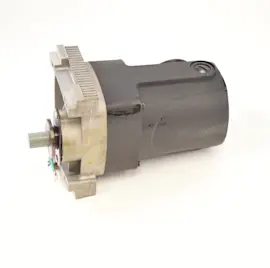
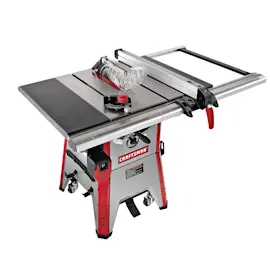
You can buy replacement parts for your Craftsman table saw model 137248480 by using the model number to match the exact part in a parts list or diagram, then ordering through the parts options available for that model. For broader Craftsman parts searches by model, use Sears PartsDirect.
Using the correct model number is the fastest way to avoid ordering the wrong switch, arbor hardware, guard components, or motor-related parts.
- Confirm the model number is 137248480 (from the ID plate on the saw)
- Match the part by location in the diagram (blade area, height/tilt mechanism, motor area)
- Compare the part description to the symptom (won’t start, slow blade, bad cuts)
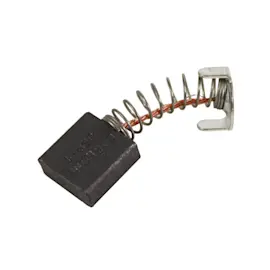
- Replace worn consumables together when it makes sense (for example, brush set pairs)
- Keep your blade type and cut type in mind (rip vs crosscut) when selecting accessories
Start from the symptom, then narrow down to the most likely assemblies.
| What’s happening | Common area to check | Typical next step |
|---|---|---|
| Saw won’t start | Power switch, cord, overload | Use a symptom guide to isolate the failed component |
| Blade spins too slow | Motor brushes, drive motor, binding | Inspect for drag, then check motor wear items |
| Cuts are not square/consistent | Blade alignment, bevel/tilt mechanism | Verify blade alignment and angle settings |
A helpful starting point is our DIY symptom content such as table saw won't start or table saw blade spins too slow.
Table saw parts are often model-specific; even small differences in the arbor, guard, or height adjustment mechanism can change fit and safety. Searching by 137248480 keeps the repair accurate and reduces downtime.
Last updated: February 2026
What are the common table saw mistakes?
Common table saw mistakes include skipping basic safety steps, using the wrong setup (fence, miter gauge, blade height), and forcing stock through a dull or misaligned blade. For the Craftsman 137248480 table saw, these errors typically show up as kickback risk, burning, and inaccurate cuts.
- Not wearing PPE (eye and hearing protection at minimum)
- Cutting without a riving knife or splitter (when your saw is equipped for it)
- Standing directly behind the workpiece (puts you in the kickback line)
- Using the rip fence and miter gauge together for the same cut (can pinch and bind)
- Running a dull, dirty, or wrong-tooth blade for the material
- Setting the blade too high above the workpiece
- Cutting freehand instead of using the fence, miter gauge, or a sled
- Not using push sticks/push blocks for narrow rips
Use these checks before you blame the motor or the blade:
| Check | What “good” looks like | What goes wrong if it’s off |
|---|---|---|
| Blade height | Gullets just above the top surface | More tearout, more exposed blade, higher kickback risk |
| Fence alignment | Parallel to blade | Burning, drift, binding |
| Miter gauge use | Used alone for crosscuts | Pinching if paired with fence |
| Feed rate | Steady, not forced | Stalling, scorch marks, rough edges |
Most table saw injuries and “mystery” cut problems come from stock binding at the blade. Good alignment, correct blade height, and proper support reduce binding, improve accuracy, and protect the saw’s arbor, bearings, and motor.
If your main issue is accuracy, start with table saw bad angle cuts. If the cut quality is rough or burning, use table saw bad cuts to narrow down alignment vs blade condition.
For replacement parts for Craftsman model 137248480, shop the model parts list or search by model number on Sears PartsDirect.
Last updated: February 2026
What size blade is a Craftsman 137248480 table saw?
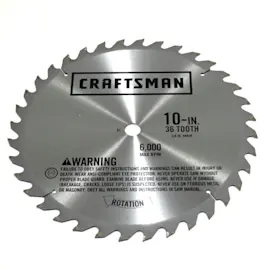
For the Craftsman table saw model 137248480, the blade size is typically 10 inches (measured by blade diameter). Use a 10-inch table saw blade with the correct arbor (center hole) size and rated RPM for safe, accurate cutting.
Even when the diameter is 10 inches, the blade still has to match the saw’s mounting and clearance.
- Blade diameter: 10 inches (most common for this Craftsman class of table saw)
- Arbor size: commonly 5/8 inch on 10-inch table saws (match your flange and nut)
- Kerf (thickness): thin-kerf blades reduce load; full-kerf blades are more rigid
- Max RPM rating: the blade’s rated RPM must meet or exceed the saw’s no-load speed
- Tooth count: choose based on cut type (rip vs crosscut vs combination)
| What you’re doing | Recommended blade type | Typical tooth count |
|---|---|---|
| Ripping lumber | Rip blade | 24T to 30T |
| Crosscutting | Crosscut blade | 60T to 80T |
| General purpose | Combination blade | 40T to 50T |
| Plywood/veneers | Fine-finish blade | 80T+ |
Using the correct blade diameter and arbor size on your Craftsman 137248480 helps prevent vibration, burning, slow cutting, and unsafe blade mounting. The right tooth count also improves cut quality and reduces strain on the drive motor.
- If you’re swapping blades, follow a safe, step-by-step process in how to replace a table saw blade.
- If your cuts look off after a blade change, use how to adjust a table saw blade to re-check alignment.
We recommend using the model-specific diagrams first to match the blade-related hardware (arbor nut, flange, washers, guard components). If you need to search beyond the model diagrams, use Sears PartsDirect and search by model number 137248480.
Last updated: February 2026
Can you use an 8 inch blade on a 10 inch table saw?
Yes. On a Craftsman table saw model 137248480, you can use an 8-inch blade as long as it fits the saw’s arbor (shaft) diameter and the blade’s rated RPM meets or exceeds the saw’s no-load speed. Expect reduced maximum cut depth compared with a 10-inch blade.
Using a smaller diameter blade is usually straightforward, but it affects capacity and setup.
- Less cutting depth: an 8-inch blade cuts shallower than a 10-inch blade.
- Guard and riving knife alignment: the blade may sit lower, so the guard and riving knife may need adjustment to stay properly aligned.
- Throat plate clearance: confirm the blade does not contact the insert at full height or bevel.
- Cut quality can improve: some users choose smaller blades for specific materials or finer tooth counts.
- Dado note: many dado sets are 8-inch diameter and are commonly used on 10-inch saws for non-through cuts.
- Arbor size match: the blade bore must match the saw arbor (commonly 5/8 inch on many 10-inch saws).
- Kerf compatibility: very thin-kerf blades can require a matching riving knife or careful alignment to prevent binding.
- RPM rating: the blade’s maximum RPM rating must be at least the saw’s speed.
- Blade type: use the right blade for the job (rip, crosscut, combination, plywood/laminate).
These are typical maximum depths for common blade sizes; your exact depth varies by saw design and height mechanism.
| Blade diameter | Typical max depth at 90° | Typical max depth at 45° |
|---|---|---|
| 10-inch | ~3-1/8 inches | ~2-1/4 inches |
| 8-inch | ~2-1/8 inches | ~1-1/2 inches |
Choosing the right blade diameter helps prevent binding, kickback risk, and poor cut accuracy. If your goal is cleaner cuts or specialty joinery, an 8-inch blade (including many dado sets) can be a practical option on a 10-inch table saw when the arbor fit and safety components are set correctly.
For step-by-step blade change and setup tips, use our guide: how to replace a table saw blade. If you need to look up compatible replacement parts by model number, search on Sears PartsDirect.
Last updated: February 2026