




How many quarts of oil does a 19D horsepower Briggs & Stratton hold?
Most Briggs 19 HP-class lawn and garden engines hold about 2 quarts (64 oz) of oil when you do a full drain and refill. For your Briggs model 19D, the exact capacity depends on the specific type (vertical vs. horizontal shaft) and whether it has an oil filter; use the dipstick to set the final level.
Quick fill method (most accurate)
- Park the equipment on a level surface and let the engine cool.
- Drain old oil completely; replace the drain plug/washer if it seeps.
- Add about 1.5 quarts, then wait 1 minute for oil to settle.
- Check the dipstick (do not overfill); top off in small amounts.
- Run the engine 30 to 60 seconds, shut it off, recheck, and top off to the full mark.
Typical oil capacity ranges you will see
Because “19D” is a model family identifier, oil capacity varies by configuration. These are the common ranges we see for engines in this class:
| Engine configuration | Typical oil capacity | Notes |
|---|---|---|
| No oil filter | 1.5 to 2.0 quarts | Often slightly lower capacity |
| With oil filter | 1.8 to 2.2 quarts | Filter and passages add volume |
Why it matters
Running low oil can cause rapid wear to the crankshaft and piston assembly, while overfilling can lead to smoking, fouled plugs, and oil leaks. Setting the level by dipstick protects the engine regardless of the exact published capacity.
Parts that help with an oil change
If you are seeing seepage or a loose cap after service, these model-matched parts are commonly involved:
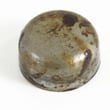
- Plug oil fil 281658S (oil fill cap)
- Washer 690264 (sealing washer used in various locations)
Last updated: February 2026
How many cc is a 19D hp Briggs and Stratton?
Briggs model 19D is a Briggs & Stratton gas engine model family, not a single fixed “19 HP” engine size; the cc (displacement) depends on the exact type code (0010 through 0030) on your engine. Use the model and type numbers to match the correct specs and parts for your specific 19D engine.
How to identify the correct cc for your 19D engine
To get the right displacement, match the engine’s model, type, and code from the ID label (often on the blower housing or valve cover area).
- Find the engine ID stamp or label and write down 19D plus the type code (0010, 0020, 0030, etc.)
- Match that exact type code to the parts breakdown for this model page
- Use the matched breakdown to confirm the correct carburetor and fuel system configuration
- If you are rebuilding or tuning, confirm whether your engine uses the correct carb parts and gaskets
A common parts clue is the carburetor setup; if your engine is running lean/rich or surging, the correct carb kit and bowl gasket often depend on the exact type.
Parts that commonly relate to engine size and tuning
These parts do not directly state cc, but they help you match the correct configuration for your 19D type code:
- Carb kit 394693 (carburetor rebuild and calibration components)
- Gskt filter 692190 (fuel bowl gasket; helps prevent leaks and air intrusion)
- Plug oil fil 281658S (oil fill cap; helps maintain proper crankcase sealing)
Quick comparison: what “cc” means vs “HP”
| Term | What it describes | Why it matters |
|---|---|---|
| cc (displacement) | Cylinder volume | Helps identify engine family and correct carb/governor setup |
| HP (horsepower) | Power output rating | Varies by RPM, tune, and application |
| Model/type code | Exact build configuration | Ensures you get the right parts for your specific engine |
Why it matters
Ordering parts by “19 HP” alone often leads to mismatches. When you match 19D + the exact type code (0010-0030), you get the correct carburetor kit, gaskets, and hardware for reliable starting, smooth running, and proper governor control.
Last updated: February 2026
What are common B&S engine problems?
Common Briggs engines like model 19D usually act up because of fuel delivery problems (stale gas, dirty carburetor), air restriction (dirty filter), ignition issues (spark plug), or basic maintenance problems (low or dirty oil). Most symptoms show up as hard starting, surging, rough running, or stalling.
Most common symptoms and what they usually mean
- Won’t start or starts then dies: stale fuel, clogged carburetor passages, plugged fuel bowl, fouled spark plug
- Surging at idle or hunting: partially clogged carburetor, air leak, governor linkage issue
- Runs rough or lacks power: restricted air intake, fuel restriction, throttle control not moving freely
- Stalls under load: fuel starvation, dirty carburetor, weak ignition, overheating from dirty cooling fins
- Oil leaks or oil consumption: loose/missing oil fill cap, worn seals, overfilled crankcase
Quick checks we recommend first (fast, high success rate)
- Drain old fuel and refill with fresh gasoline.
- Check the oil level and condition; change oil if it is dark or smells like fuel.
- Inspect and clean the air intake and filter area.
- Remove and inspect the spark plug; replace if fouled or damaged.
- If it still runs poorly, plan on cleaning or rebuilding the carburetor.
Parts that commonly solve these problems
If fuel or oil-related symptoms match what you’re seeing, these model-appropriate parts are common fixes:
| Problem you see | Likely area | Part that often helps (when applicable) |
|---|---|---|
| Hard start, surging, won’t stay running | Carburetor | Carb kit 394693 |
| Fuel seepage at bowl, inconsistent fueling | Fuel bowl sealing | Gskt filter 692190 |
| Oil mist or oil leak near fill | Oil fill | Plug oil fil 281658S |
Why it matters
Small engines usually fail in predictable ways: fuel varnish forms quickly in a carburetor, and restricted airflow or low oil can cause overheating and rapid wear. Fixing the root cause early prevents repeat no-starts and protects internal parts like valves and cam components.
Last updated: February 2026
How do I find the specs for my Briggs & Stratton engine?
To find the correct specs for your Briggs engine, match the identification numbers stamped on the engine (Model, Type, and Code) to your exact engine version. For the Briggs 19D family, those numbers are what determine the right tune-up specs, torque values, and parts.
Where to find the Model, Type, and Code numbers
On most Briggs lawn and garden engines, the numbers are stamped directly into the blower housing, valve cover area, or near the spark plug or muffler.
- Look for a flat, smooth metal area with numbers stamped (not a sticker)
- Wipe off dirt and oil; use a flashlight at an angle to read shallow stamping
- Write the numbers exactly as shown (including dashes)
- If the engine is installed on equipment, check the side facing away from the operator
- Take a clear photo; zooming in often makes the stamping easier to read
How to use those numbers to get the right specs
Once you have Model, Type, and Code, use them to confirm:
- Spark plug type and gap
- Oil type and oil capacity
- Air filter style
- Carburetor settings and rebuild kit match
- Governor and throttle linkage setup
Quick guide: what each number means
| ID number | What it identifies | Why it matters |
|---|---|---|
| Model | Engine family and basic design | Narrows down the correct spec set |
| Type | Exact build configuration | Determines carburetor, ignition, and fuel system details |
| Code | Production date code | Helps match running changes by year |
Why it matters
Briggs 19D engines can have multiple Type and Code variations; using only “19D” can lead to the wrong maintenance specs or mismatched parts. Matching the full ID set prevents hard starting, surging, and fuel leaks after service.
Parts that commonly relate to “spec” questions
If your specs search is tied to a maintenance or fuel issue, these model-related parts are often involved:
- Carb kit 394693 (carburetor rebuild parts for fuel and running issues)
- Gskt filter 692190 (fuel bowl gasket that can stop seepage and leaks)
- Plug oil fil 281658S (oil fill cap to prevent oil loss and contamination)
Last updated: February 2026