Installation guide
 Owner’s manual
 Error Codes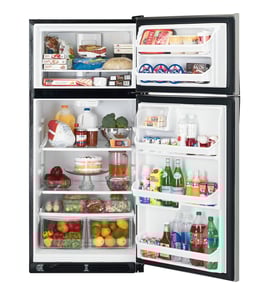


How do I tell what model Kenmore fridge I have?
Your Kenmore refrigerator’s model number is printed on the serial plate inside the fresh food (refrigerator) compartment. On Kenmore model 25368179800, the Use and Care information notes the serial plate is located inside the refrigerator compartment; record both the model and serial number for parts and service.
- Open the refrigerator door and look along the inside walls of the fresh food compartment
- Check near the top corners and side walls where labels are commonly placed
- Look for a serial plate or rating label that lists Model and Serial
- Write the full model number exactly as shown (numbers and any letters)
- Take a clear photo of the label for reference when ordering parts
| Label item | What it’s used for | Example for this page |
|---|---|---|
| Model number | Matching the correct parts diagrams and parts list | 25368179800 |
| Serial number | Identifying production details and version changes | Varies by unit |
| Electrical info | Verifying power requirements | Varies by unit |
Kenmore refrigerators can look similar across multiple series, but parts like a door bin, thermostat, or gasket can differ by model. Using the exact model number helps us match the correct Kenmore top-mount refrigerator parts and avoid returns.
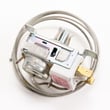
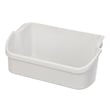
Once you have the model number, use it to match parts by description and ID. For example, common fit-dependent items include the frigidaire refrigerator door bin 240338101 and the refrigerator temperature control thermostat 241537103.
For more model-specific details (including where labels and components are located), use the owner's manual.
Last updated: February 2026
What's the average lifespan of a Kenmore refrigerator?
Most Kenmore refrigerators average 10 to 15 years of service life. For a Kenmore top-mount like model 25368179800, lifespan depends most on basic care (clean airflow, good door sealing, stable power) and replacing wear items before they strain the compressor.
- 10 to 15 years: common for many household refrigerators
- 15 to 20 years: achievable with consistent maintenance and timely repairs
- Under 10 years: usually tied to poor airflow, dirty condenser area, power issues, or unresolved cooling problems
| What affects lifespan | What to do | How often |
|---|---|---|
| Heat buildup around condenser | Keep the condenser area clean and ventilated | Every 6 to 12 months |
| Air leaks at doors | Check gasket seal and door alignment | Every 3 to 6 months |
| Frost buildup and defrost performance | Watch for heavy frost, warm temps, or long run times | As symptoms appear |
| Electrical supply quality | Use a dedicated, properly grounded outlet (no extension cords) | Always |
These steps reduce compressor run time and help prevent temperature swings:
- Vacuum dust from the condenser area and surrounding vents
- Keep food from blocking interior air vents (freezer and fresh food sections)
- Confirm doors close fully and stay closed (no sagging or bouncing)
- Set reasonable temperatures (freezer near 0°F, refrigerator near 37°F)
- Address unusual noises early (fan rubbing, clicking, or buzzing)
For model-specific operating and care guidance, follow the cleaning and operating sections in the 25368179800 owner's manual.
When cooling performance drops, these parts are often involved:
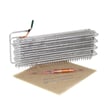
- Evaporator airflow issues: consider the refrigerator evaporator motor 5303918549 if the evaporator fan is not running
- Defrost timing problems on some designs: check the refrigerator timer 215846602 if you see recurring frost buildup and warming
- Door sealing problems: a worn gasket can cause long run times and moisture issues
A refrigerator that runs longer than it should (from dirty condenser airflow, air leaks, or frost restriction) puts extra load on the sealed system and compressor. Keeping airflow clear and doors sealing tightly is the most reliable way to extend service life.
Last updated: February 2026
How many cubic feet is my Kenmore refrigerator by model number?
We identify the cubic-foot capacity for your Kenmore refrigerator by checking the model’s rating/serial plate inside the fresh food compartment, then matching that information to the specifications listed for model 25368179800 in the 25368179800 owner's manual. This method is the most accurate because it ties the capacity to your exact unit.
On Kenmore model 25368179800, the model and serial information is located on the serial plate inside the refrigerator compartment. Use that plate to confirm you have the correct model number before looking up specs.
- Open the refrigerator (fresh food) door and look along the interior walls for the serial/rating plate
- Write down the full model number (25368179800) and serial number
- Check the specifications section in the 25368179800 owner's manual
- If the manual lists multiple versions, match by model prefix and configuration (top-mount)
- Keep the model and serial recorded for future parts and service reference
If you need an estimate before you locate the spec listing, you can approximate capacity by measuring the interior and converting to cubic feet.
- Measure usable interior width, depth, and height (in inches) of the refrigerator compartment
- Do the same for the freezer compartment
- Multiply each compartment’s measurements (W x D x H)
- Add the two totals together
- Divide by 1,728 (cubic inches per cubic foot)
| What you have | What to do | Result |
|---|---|---|
| Interior measurements in inches | Multiply W x D x H | Cubic inches |
| Total cubic inches | Divide by 1,728 | Cubic feet |
Cubic-foot capacity helps you choose correctly sized replacement items and accessories (like shelves, bins, and drawers) and set realistic expectations for storage. For repairs, the model number matters even more than capacity because parts vary by design.
If you are replacing broken storage components, match by model first; for example, the frigidaire refrigerator door bin 240338101 is a common door-shelf style part listed for this model.
Last updated: February 2026
Can you still get parts for Kenmore refrigerators?
Yes. We still offer replacement parts for Kenmore refrigerators, including model 25368179800; you can match parts by model number and then choose the exact component you need (like door bins, gaskets, fan motors, or a thermostat) to restore proper cooling and door sealing.
Use your model number to confirm fit, then identify the system you are repairing (cooling, door sealing, shelving, or defrost).
- Look up the part by appliance section (door, cooling system, controls, shelves)
- Compare your original part to photos and descriptions
- Check color and orientation (left/right, black/white/bisque)
- Verify symptoms before ordering (warm fridge, frost buildup, door not closing)
- Use the wiring and component diagrams in the owner's manual when troubleshooting
These are examples of parts available for model 25368179800 that often solve everyday problems:
| Problem you notice | Part that commonly fixes it | Example part on this model |
|---|---|---|
| Door won’t seal, moisture or frost near door | Door gasket | Refrigerator door gasket (black) 242193214 |
| Fridge warm but freezer cold, weak airflow | Evaporator fan motor or blade | Refrigerator evaporator motor 5303918549 |
| Door storage cracked or won’t stay in place | Door bin | Frigidaire refrigerator door bin 240338101 |
| Temps drift, hard to keep food cold | Temperature control thermostat | Refrigerator temperature control thermostat 241537103 |
Using the correct Kenmore model-specific part helps restore airflow, temperature control, and door sealing. That prevents food spoilage, reduces frost buildup, and keeps the compressor from running longer than necessary.
From the use and care guidance for this style of refrigerator:
- Plug into a dedicated 115V, 60 Hz grounded outlet
- Do not use an extension cord or adapter
- After moving/installation, confirm the refrigerator is plugged in and power is on
- If your unit has an ice maker, connect the water supply and check for leaks
Last updated: February 2026
What are the most common problems with Kenmore refrigerators?
The most common Kenmore refrigerator problems are cooling issues, water leaks, ice maker problems, and unusual noises. On Kenmore model 25368179800, these often trace back to airflow restrictions (blocked vents or dirty condenser area), defrost-system icing, or worn door seals; our owner's manual also lists quick checks before service.
- Not cooling or warm fridge section: blocked air vents, heavy frost on the evaporator (defrost issue), or a failed evaporator fan.
- Freezer cold but fridge warm: airflow blocked by food packages, iced-over evaporator, or evaporator fan problem.
- Water puddles or leaks: clogged/iced defrost drain, door left ajar, or poor door seal.
- Ice maker not making ice: first-day startup delay, air in new plumbing lines, water supply shut off, or low water flow.
- Noises (gurgling, hissing, fan noise): normal refrigerant flow sounds, defrost heater sizzling during defrost, or fan moving air.
Use these steps before replacing parts; they match common items called out in the manual.
- Confirm the temperature control is not set to "0" (OFF).
- If the unit just stopped, wait 20 minutes; it may be in a defrost cycle.
- Allow 24 hours after changing controls for temperatures to stabilize.
- Level the refrigerator so doors close tightly.
- Do not overcrowd shelves; keep cold air vents clear.
- Clean the condenser area periodically for efficiency (especially with dust, grease, or pet traffic).
| Sound | Usually means | When it becomes a problem |
|---|---|---|
| Gurgling/boiling | Refrigerant moving through the evaporator | Cooling is poor or frost is heavy |
| Hissing/sizzling | Water dripping on the defrost heater during defrost | Loud, frequent, and paired with warming temps |
| Fan airflow | Evaporator fan circulating cold air | Grinding, squealing, or fan stops |
When symptoms point to airflow or temperature control problems, these model-compatible parts are common solutions:
- Refrigerator evaporator motor 5303918549 (no/weak airflow, warm fridge)
- Refrigerator evaporator fan blade 5308000010 (rattling, wobble, poor airflow)
- Refrigerator temperature control thermostat 241537103 (temps too warm or too cold)
- Refrigerator timer 215846602 (defrost-related cooling problems)
- Refrigerator door gasket (black) 242193214 (moisture, frost, warm spots near the door)
Most “Kenmore refrigerator not cooling” complaints come down to airflow and efficiency. Keeping vents clear, doors sealing tightly, and the condenser area clean helps the compressor run less, improves temperature stability, and reduces frost and moisture buildup.
Last updated: February 2026