 Installation guide
 Owner’s manual
 Error Codes




Can you buy parts for a dishwasher?
Yes. You can buy replacement parts for a dishwasher, including the Samsung DMR77LHS, to fix leaks, improve cleaning, restore rack movement, or complete an installation. The best results come from matching the part to your exact model and following the steps in the DMR77LHS installation guide.
What parts are commonly replaced on a dishwasher?
Most dishwasher repairs are routine and part-related. Common replacements include:
- Door sealing parts (baffles, seals) to stop leaks
- Spray arms and nozzles to restore wash coverage
- Drain hoses and internal hoses to fix draining or leaking
- Rack rollers and rack hardware to fix sticking or derailing racks
- Sensors (water level, turbidity) to correct fill and wash issues
- Pump and motor components when circulation is weak or noisy
Examples of parts available for Samsung DMR77LHS
Here are a few model-matched examples customers often shop for:
| Symptom or need | Example part | What it helps with |
|---|---|---|
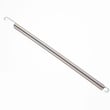
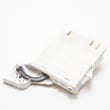
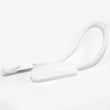
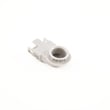
| Water leaking at the door | Dishwasher door baffle DD69-00017A | Helps direct water back into the tub opening area |
| Lower rack hard to roll | Dishwasher dishrack roller, lower DD66-00023A | Restores smooth rack movement |
| Poor wash coverage | Dishwasher spray arm, middle DD97-00126A | Improves mid-level spray and cleaning |
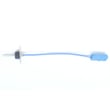
| Drain problems or leaks | Dishwasher drain hose DD97-00137A | Restores proper draining and prevents hose leaks |
How we recommend choosing the right part
Using the correct part prevents fit issues and repeat repairs.
- Match the part to model number DMR77LHS (and your full model tag if it includes a suffix)
- Compare the part name and part number before ordering
- Replace seals and hoses at the first sign of cracking, swelling, or seepage
- If you are installing or reinstalling the dishwasher, use the correct electrical and water-supply materials
- Follow grounding and power-off steps before any repair or installation work
Why it matters
A dishwasher uses electricity, water, and moving parts; using model-correct parts and following the documented installation and safety steps helps prevent leaks, poor cleaning, and avoidable damage. For installation requirements (like proper grounding and not installing on carpet), use the DMR77LHS installation guide.
Last updated: February 2026
Can you replace parts in a dishwasher?
Yes, you can replace many parts in a Samsung DMR77LHS dishwasher, as long as you shut off power and water first and follow safe disassembly and reassembly steps from the DMR77LHS installation guide.
What we recommend before you start
- Switch off the circuit breaker; do not work on a live dishwasher.
- Shut off the water supply valve under the sink.
- Let the unit cool and dry; avoid handling wiring with wet hands.
- Use basic safety gear (gloves, safety glasses) and good lighting.
- Plan for the dishwasher’s weight; use two people if it must be moved.
Common dishwasher parts you can replace
Many repairs are straightforward when the symptom matches the part and you can access it without disturbing sealed components.
| Symptom | Often-related part | Example for this model |
|---|---|---|
| Leaks at the door | Door baffle or seals | Dishwasher door baffle DD69-00017A |
| Poor cleaning, weak spray | Spray arm or nozzle components | Dishwasher spray arm, middle DD97-00126A |
| Not draining or slow drain | Drain hose or drain path restriction | Dishwasher drain hose DD97-00137A |
| Loud grinding during wash | Chopper area issue | Dishwasher chopper blade DD70-01001A |
Safe replacement basics (works for most repairs)
- Disconnect electrical power at the breaker.
- Turn off water supply; place towels under the unit.
- Remove racks as needed for access.
- Take photos of wire and hose routing before disconnecting anything.
- Replace the failed part with the correct Samsung-compatible part number.
- Reassemble, restore water, then restore power and run a short test cycle.
Why it matters
Replacing the right part restores wash performance, prevents water damage from leaks, and helps your dishwasher run quietly and efficiently. Following the documented safety steps also reduces shock and injury risk.
Last updated: February 2026
How can I get my Samsung dishwasher to drain?
To force a drain on your Samsung DMR77LHS dishwasher, cancel the cycle and start a drain function from the control panel. If it still will not drain, clear the filter area and check the drain hose routing and connection before replacing parts. See the DMR77LHS owner's manual for the exact cancel-drain steps for your control panel.
Quick steps to force a drain
- Press Power to wake the control panel.
- Press and hold Start/Cancel for about 4 to 5 seconds to cancel and trigger a drain (common on many Samsung models).
- Close the door fully and listen for the drain pump to run.
- If the unit is full of water, wait 60 to 120 seconds for the drain portion to finish.
- If the drain pump hums but water stays, move to the checks below.
Check the most common drain blockers
- Filter and sump area: Remove standing water, then clear food debris around the filter and sump.
- Drain hose: Make sure it is not kinked, crushed, or routed too low.
- Air gap or garbage disposal connection (if used): Clear the air gap and confirm the disposal inlet plug was removed.
- Sink drain: Verify the sink drains normally; a slow sink can back up the dishwasher.
Drain path checklist
| What to check | What “good” looks like | What to fix |
|---|---|---|
| Drain hose loop | High loop up under the counter | Re-route and secure the loop |
| Hose condition | No kinks, no pinches | Replace damaged hose |
| Connection point | Clear, not blocked | Clean the air gap/disposal port |
When a part is likely involved
If the hose and filter area are clear but the dishwasher still will not drain, the issue is often a restriction in the drain line or a weak drain pump. If you find cracks, soft spots, or internal blockage in the hose, replace the dishwasher drain hose DD97-00137A.
Why it matters
A dishwasher that cannot drain can leave dirty water in the tub, trigger error codes, and cause poor cleaning. Your manual also notes that the dishwasher should be drained before extended storage to prevent water from sitting in hoses and internal components.
Last updated: February 2026
How long does the Samsung Express 60 take?
On the Samsung DMR77LHS dishwasher, the Express (quick) cycle is designed to finish in about 60 minutes for lightly soiled dishes. The displayed time can run longer when the dishwasher has to heat water to temperature or when extra drying options are selected.
How to confirm the time for your exact settings
The most accurate way is to check the cycle chart for DMR77LHS and then verify the countdown once the cycle starts.
- Look up the Express cycle in the DMR77LHS owner's manual
- Start the cycle and read the time remaining on the control panel
- Turn off options that add time (for example, sanitize or heated dry)
- Run hot water at the sink for 30 to 60 seconds before starting the dishwasher
- Avoid opening the door mid-cycle; pausing can extend the finish time
What commonly makes “Express 60” run longer
Even on a 60-minute program, the dishwasher can add time to meet temperature and drying targets.
| What changes | What the dishwasher does | Typical effect on time |
|---|---|---|
| Incoming water is cool | Extends heating | Longer cycle |
| Heated dry or sanitize selected | Adds heat and/or dry time | Longer cycle |
| Heavy load or heavier soil | Adjusts wash action | Longer cycle |
| Door opened during cycle | Pauses and may re-balance | Longer cycle |
Why it matters
Express cycles work best for smaller loads and light soil. If you need stronger cleaning, a normal or heavy cycle takes longer but delivers better results.
Last updated: February 2026
How to fix error 4C Samsung dishwasher?
Error code 4C on a Samsung DMR77LHS dishwasher points to a water supply problem (the dishwasher is not filling correctly). We fix it by confirming the supply valve is fully open, the inlet line is not kinked or clogged, and the incoming water is not excessively hot.
Quick checks that solve most 4C errors
- Make sure the water supply valve is fully open under the sink.
- Check the water supply line to the dishwasher for kinks, crushing, or freezing.
- Verify the supply line connection at the dishwasher inlet is tight and not leaking.
- If you recently installed the unit, confirm the inlet elbow was sealed correctly (Teflon tape or sealing compound should not block the valve).
- Run the kitchen faucet for 30 seconds to confirm you have steady water flow and pressure.
What to inspect next (fill system)
If the basics look good, focus on the components that control or sense fill level.
| What to check | What you’re looking for | Why it can trigger 4C |
|---|---|---|
| Water supply valve and line | Closed valve, clogged screen, restricted flow | Dishwasher cannot reach the correct fill level |
| Inlet connection/elbow | Debris or sealant blocking the inlet | Water flow is reduced or stopped |
| Water-level sensing | Incorrect level reading | Dishwasher thinks it is not filling |
A common part involved in fill-level detection is the dishwasher water-level sensor DD61-00236A.
Safety and reset guidance
- Turn off power at the breaker before checking wiring or internal components (we follow the safety steps in the DMR77LHS installation guide).
- After correcting the water supply issue, restore power and try a new cycle.
- If the code returns immediately after confirming good water flow, the issue is typically in the inlet valve circuit, sensor circuit, or control.
Why it matters
A 4C condition prevents proper filling, which leads to poor cleaning, pump cavitation noise, and repeated cycle interruptions. Fixing the water supply restriction first avoids unnecessary part replacement.
Last updated: February 2026
How to reset Samsung dishwasher error?
To reset an error on your Samsung DMR77LHS dishwasher, we recommend a power reset first (turn the breaker off, then back on). If the dishwasher is stuck mid-cycle, cancel and drain the cycle using the correct button combination from the DMR77LHS user manual.
Quick reset steps (most errors)
- Turn the dishwasher OFF.
- Switch the dishwasher circuit breaker OFF for 5 minutes.
- Switch the breaker ON.
- Start a normal cycle and watch for the code to return.
If the dishwasher is running: cancel and drain
On DMR77 series models, we cancel and drain a running cycle by holding Heavy and Delicate together for 3 seconds. This clears many “stuck cycle” situations and lets you restart cleanly.
What to check if the code comes back
Many Samsung “information codes” are pointing to a condition that must be corrected before the code will clear.
- Water supply issues: confirm the supply valve is open; check for a kinked or frozen fill line.
- Drain issues: check for a kinked or clogged drain hose; verify the sink drain or disposer connection is clear.
- Water temperature: extremely hot incoming water can trigger faults; keep supply water under about 176°F (80°C).
- Control lock: if buttons seem unresponsive, toggle Control Lock per the manual.
Common symptoms and likely next step
| What you see | What it usually means | What we do next |
|---|---|---|
| Code returns immediately after reset | Active fault still present | Check water supply, drain hose routing, and filters |
| Dishwasher won’t respond to buttons | Control lock or cycle state | Cancel/drain, then toggle Control Lock |
| Draining problems with standing water | Drain restriction | Inspect hose, air gap (if used), and sink connection |
Why it matters
Resetting clears the control, but the dishwasher will keep protecting itself if it still senses a fill, drain, or functional problem. Correcting the underlying cause prevents repeat errors and helps avoid poor cleaning or water left in the tub.
For code definitions and model-family troubleshooting patterns, we also use the Samsung dishwasher error codes reference alongside your manual.
Last updated: February 2026
What are the commonly replaced parts in a dishwasher?
In a Samsung dishwasher like model DMR77LHS, the most commonly replaced parts are the ones that see constant movement, water flow, heat, and sealing pressure: door sealing parts, rack rollers, spray arms, hoses, and sensors. These parts typically fail from wear, mineral buildup, or leaks.
Commonly replaced dishwasher parts (and what they do)
- Door sealing parts: help prevent leaks at the door; worn seals or baffles can cause water to drip during a cycle.
- Rack hardware: rollers and clips keep racks gliding smoothly; broken rollers can make the lower rack bind or derail.
- Spray arms and wash components: keep water circulating and spraying; clogged jets reduce cleaning performance.
- Drain and fill plumbing: hoses and seals handle constant hot water exposure; aging hoses can crack or loosen at clamps.
- Sensors: water-level and turbidity sensors help control fill and wash performance; failures can cause poor washing or error codes.
Model DMR77LHS parts customers replace often
| Symptom | Likely part type | Example part for this model |
|---|---|---|
| Leaking at the door | Door baffle or door sealing surfaces | Dishwasher door baffle DD69-00017A |
| Lower rack won’t roll smoothly | Rack roller | Dishwasher dishrack roller, lower DD66-00023A |
| Poor cleaning, weak spray | Spray arm | Dishwasher spray arm, middle DD97-00126A |
| Not draining or slow drain | Drain hose | Dishwasher drain hose DD97-00137A |
| Overfilling, underfilling, fill errors | Water-level sensing | Dishwasher water-level sensor DD61-00236A |
Quick checks before you order a part
- Confirm the door closes evenly and latches without forcing.
- Inspect hoses for swelling, cracking, or dampness at connections.
- Clean the filter area and check spray arm holes for debris.
- Look for standing water after a cycle (drain issue) versus dirty dishes (wash issue).
- If an information code appears, match it to the code description before replacing parts.
Why it matters
Replacing the right “high-wear” part first saves time and prevents repeat problems. For example, a small leak at the door can lead to moisture damage, and a restricted spray arm can make detergent performance look like a bigger pump problem.
For part locations, safety notes, and installation basics (grounding, water supply, and hose checks), use the DMR77LHS installation guide and the DMR77LHS manual.
Last updated: February 2026
What is the code e7 on a Samsung dishwasher?
On a Samsung DMR77LHS dishwasher, an E7 code points to a water level or filling issue. The dishwasher is detecting that the water level is not reaching the expected range, so it stops and displays an information code on the control panel.
What to check first (quick fixes)
- Make sure the water supply valve under the sink is fully open.
- Confirm the inlet hose is not kinked, crushed, or leaking.
- Check that the dishwasher door is fully latched and the cycle actually started.
- Cancel the cycle and restart; listen for water entering during the first few minutes.
- Verify the sink drain is not backing up (a backup can interfere with normal filling and draining).
Likely causes and what they mean
| What you notice | Most likely cause | What to do |
|---|---|---|
| No water sound at start | Water supply off or restricted | Open valve; straighten hose; check household water pressure |
| Fills a little, then errors | Restricted flow or sensing problem | Clean inlet screen (if accessible); check for debris |
| Fills but stops early | Water level sensing issue | Inspect the water level system; consider replacing the sensor |
Parts that commonly relate to E7 symptoms
If the supply and hose checks look good, the issue is often in the water level sensing circuit.
Why it matters
A dishwasher that cannot confirm the correct fill level will not wash correctly and can protect itself by stopping the cycle. Fixing the fill or water level sensing problem restores normal wash performance and helps prevent repeat error codes.
Where to find the exact code definition for your model
Your DMR77 series control panel displays remaining time and error messages; the model-specific information code list is in the DMR77LHS owner's manual.
Last updated: February 2026
What is the most common problem with Samsung dishwashers?
The most common Samsung dishwasher complaint is poor cleaning (dishes come out with food soil or film). On the Samsung DMR77LHS, this usually traces back to water flow and spray coverage issues, plus loading and detergent choices; start with the checks in the DMR77LHS user manual.
Most common causes of poor cleaning
- Spray arms are clogged or not spinning freely (blocked by tall items).
- Filter area is dirty, restricting circulation.
- Water temperature is too low at the start of the cycle.
- Detergent is old, damp, or the dispenser is blocked by dishes.
- Overloading or incorrect rack loading reduces spray reach.
- Low fill or inconsistent water level can reduce wash pressure.
Quick checks we recommend first (10 minutes)
- Spin the spray arms by hand; confirm nothing hits them.
- Clear the spray arm holes with a toothpick and rinse debris away.
- Run hot water at the sink until it is hot, then start the dishwasher.
- Re-load with open spacing; keep large pans from “shadowing” the lower rack.
- Use fresh detergent; avoid overfilling and keep the dispenser door clear.
When it is not cleaning vs. not draining vs. leaking
| Symptom | What you usually notice | What to check first |
|---|---|---|
| Not cleaning | Grit, film, stuck-on food | Spray arms, filter, loading, hot water |
| Not draining | Water left in bottom | Drain path, hose routing, sink/disposal connection |
| Leaking | Water on floor, wet insulation | Door seal area, door alignment, hoses |
Parts that commonly relate to these symptoms
If you confirm a specific failure, these model-matched parts are often involved:
- Low fill or fill errors: dishwasher water-level sensor DD61-00236A
- Poor spray coverage: dishwasher spray arm, middle DD97-00126A
- Drain problems: dishwasher drain hose DD97-00137A
Why it matters
Poor cleaning is usually a circulation problem; when spray pressure or coverage drops, detergent cannot do its job and soil redeposits. Fixing the root cause improves results and helps prevent odors and repeat clogs.
Last updated: February 2026





