
Is a string trimmer good for edging?
Yes. A string trimmer like the Craftsman 24086820 can maintain an existing edge and clean up along sidewalks, driveways, and beds; a dedicated edger still makes a cleaner, straighter new edge when you are redefining the border.
- Touching up an edge that is already established
- Trimming grass that creeps over concrete or pavers
- Cleaning along fences, posts, and landscape borders
- Tight spots where an edger wheel cannot fit
- Light weekly maintenance to keep lines crisp
A dedicated edger is the right choice when you need a true cut line and a consistent trench.
| Task | String trimmer | Dedicated edger |
|---|---|---|
| Maintain an existing edge | Good | Excellent |
| Create a brand-new edge line | Fair | Best |
| Keep a perfectly straight line | Fair | Excellent |
| Cut through thick overgrowth | Fair | Good to excellent |
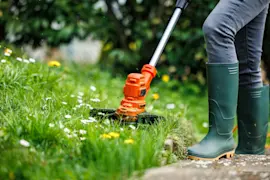
- Hold the head vertical and keep the string tip just off the hard surface.
- Work in short passes; do not force the trimmer into soil.
- Keep the guard positioned correctly and wear eye protection.
- Use steady speed; fast sweeping usually leaves a wavy edge.
- Replace worn line often; dull, short line tears instead of cuts.
Edging is mostly about control and consistency. A string trimmer is versatile for trimming and touch-up edging, but an edger’s guide and cutting geometry make it easier to produce a sharp, uniform border.
For help identifying the exact model number before ordering line, guards, or other replacement items, use how to find your appliance model number (and what it means for parts).
Last updated: February 2026
What type of grass trimmer is best?
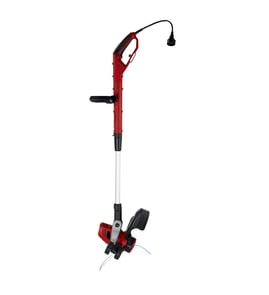
For most homeowners, the best grass trimmer is the one that matches your yard size and how long you trim at a time. For a small-to-medium yard, an electric trimmer like the Craftsman 24086820 is typically the easiest to handle; for large or heavy weeds, a higher-power option is usually the better fit.
- Corded electric: Best for small-to-medium yards near an outlet; consistent power and lighter weight.
- Cordless (battery): Best for small-to-medium yards where you want freedom to move; runtime depends on battery size.
- Gas: Best for large properties and thick weeds; longer runtime and more power, but heavier and more maintenance.
- Straight shaft vs. curved shaft: Straight shafts usually reach under shrubs better; curved shafts often feel lighter and are easier for quick edging.
| Trimmer type | Best for | Typical trade-offs |
|---|---|---|
| Corded electric | Regular trimming around sidewalks, fences, and beds | Extension cord management, outlet distance |
| Cordless (battery) | Quick trimming without a cord | Battery runtime, battery replacement cost |
| Gas | Long sessions, dense weeds, larger lots | Fuel mixing (2-cycle), noise, tune-ups |
- Cutting width: Wider cuts finish faster; narrower cuts give more control in tight spots.
- Line feed style: Bump-feed is common; auto-feed is convenient but can use more line.
- Power and torque: More power helps prevent bogging down in thick grass.
- Weight and balance: A lighter trimmer reduces fatigue; a shoulder strap helps for longer sessions.
- Line size compatibility: Using the correct line diameter helps prevent jams and poor cutting.
Choosing the right trimmer type reduces fatigue, improves cut quality, and helps prevent common issues like line tangles, overheating, and frequent stops to reload line.
For help finding the correct replacement parts or diagrams for your Craftsman 24086820 electric line trimmer/weedwacker, use the model parts list or search by model on Sears PartsDirect.
Last updated: February 2026
Is a grass trimmer the same as a strimmer?
Yes. “Grass trimmer” and “strimmer” refer to the same type of tool; “strimmer” is simply a common regional nickname. Your Craftsman 24086820 electric line trimmer uses a spinning nylon line to cut grass and tidy lawn edges, which is different from a hedge trimmer.
- Grass trimmer (strimmer): trimming grass, edging along fences, sidewalks, and around trees
- Hedge trimmer: cutting hedge growth and small woody stems with a reciprocating blade
- Brush cutter (different tool): heavier-duty cutting with a blade or heavy line for thick weeds
| Tool name | Cutting method | Best for | Typical material |
|---|---|---|---|
| Grass trimmer (strimmer) | Nylon line | Lawn edges and light weeds | Grass, thin weeds |
| Hedge trimmer | Reciprocating blade | Shaping hedges | Shrubs, hedge branches |
| Brush cutter | Blade or heavy line | Overgrown areas | Thick weeds, brush |
Using the right tool helps you get cleaner results and prevents damage. For example, a line trimmer is designed for flexible line impacts; forcing it into woody hedge branches can overwork the motor and wear the cutting head faster.
When you are shopping for replacement items (like a spool, cutting head components, or guards) for the Craftsman 24086820, match parts by the full model number to avoid fit issues. A fast way to confirm you are using the correct identifier is our guide: how to find your appliance model number (and what it means for parts).
Last updated: February 2026
Can a string trimmer cut weeds?
Yes. A string trimmer (weedwacker) like the Craftsman 24086820 electric line trimmer can cut most common yard weeds and tall grass, especially when you use the correct line diameter, keep the spool feeding properly, and trim in controlled passes.
A string trimmer is designed for flexible cutting line, so it excels at light to medium vegetation.
- Cuts well: grass, dandelions, clover, small broadleaf weeds, weeds along fences and edging
- Cuts with slower technique: thicker stems, dense patches, wet or matted weeds
- Not ideal for: woody brush, thick vines, saplings (these usually need a brush cutter blade or other tool)
Use these setup and technique tips for better performance and less line breakage.
- Use fresh trimmer line; old line gets brittle and snaps
- Keep the guard installed and the line length controlled (too long reduces power)
- Trim in short sweeps; let the line do the work instead of forcing the head into the weeds
- For thick weeds, work from the top down in layers
- If the head stops often, check for wrapped weeds around the shaft or head and clear them
| Situation | Best approach | Why it helps |
|---|---|---|
| Tall weeds | Top-down passes | Prevents bogging and stalling |
| Dense patch | Slow, shallow sweeps | Reduces line snapping |
| Along edging | Hold head level, steady pace | Cleaner cut and less scalping |
| Wet weeds | Let them dry if possible | Wet growth drags and clumps |
Using the right technique protects the motor and trimmer head, reduces nuisance line breaks, and gives a cleaner finish around sidewalks, landscaping, and fence lines.
For more DIY help with basic electrical troubleshooting tools (useful if the trimmer won’t start or keeps cutting out), see how to use a multimeter to test electrical parts video.
Last updated: February 2026
Is it cheaper to repair or replace a trimmer?
For a Craftsman electric line trimmer/weedwacker model 24086820, repairing is usually cheaper when the fix is simple (cord, switch, spool head, or minor wiring). Replace the trimmer when the repair total (parts plus labor) is more than about 50% of the cost of a comparable new trimmer.
- Repair if the trimmer still has good power and the issue is isolated (won’t start, intermittent power, line won’t feed).
- Replace if the motor is failing (burning smell, heavy sparking, loss of torque) or the housing is damaged.
- Repair if you can do the work yourself with basic tools and safe electrical testing.
- Replace if multiple components are failing at once (switch plus wiring plus motor).
- Replace if the trimmer is near the end of its typical lifespan.
Use this table to make a fast call before you order parts.
| Scenario | What you pay for | Usually makes sense |
|---|---|---|
| Simple electrical issue | Cord, plug, switch, wire repair | Repair |
| Line feed problem | Spool, bump head, spring, cap | Repair |
| Motor problem | Motor assembly, brushes (if applicable), major teardown | Replace |
| Shop repair needed | Diagnostic fee plus labor plus parts | Replace if total exceeds ~50% |
Once a repair crosses about half the price of a replacement, you are paying a lot for an older tool that may still have wear in the motor, bearings, and wiring. Replacing at that point typically improves reliability and reduces repeat downtime.
- Unplug the trimmer and inspect the power cord for cuts, kinks, or a loose strain relief.
- Check for a jammed head or wrapped line that is stalling the motor.
- If you have a multimeter, test continuity through the cord and switch.
Helpful DIY references:
- How to tell if a fuse is blown
- How to use a multimeter to test electrical parts video
- How to repair broken or damaged wires video
Last updated: February 2026